
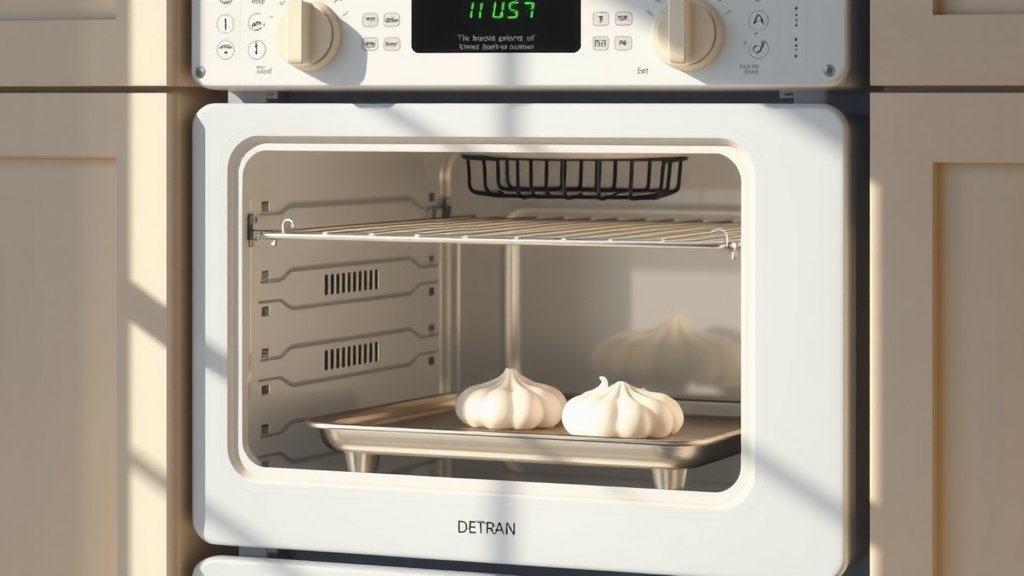
To make meringue in a gas oven, you need a low, consistent temperature, often around 200-225°F (95-107°C), to gently dry them out rather than bake them.
Success involves careful temperature management, recognizing hot spots, and allowing the meringues to cool slowly inside the turned-off oven.
Here’s a quick guide to mastering meringue in a gas oven:
- Achieve success with low, consistent heat (around 200-225°F).
- Identify and work around your oven’s hot spots for even drying.
- Use room temperature egg whites and gradually add sugar for stiff peaks.
- Prop the oven door slightly during baking to manage moisture and airflow.
- Allow meringues to cool completely inside the oven after turning it off.
How To Make Meringue In A Gas Oven?
Making meringue in a gas oven involves understanding its heat distribution to achieve perfectly crisp, melt-in-your-mouth results.
You can create beautiful meringues by controlling temperature and managing moisture effectively, turning a potential challenge into a sweet triumph.
Understanding Your Gas Oven’s Quirks
Gas ovens often operate with a bottom heat source, which can create distinct temperature zones. This means some areas might be hotter than others, a bit like a campfire with varying flame intensity.
Many experts say that understanding these hot spots is your first step to even meringue baking (Cleveland Clinic).
Preheat is Your Best Friend
Always preheat your gas oven for at least 20-30 minutes, even after it signals it’s ready. This helps the oven stabilize its temperature.
A well-preheated oven reduces temperature fluctuations, giving your delicate meringues a better start.
The Meringue Foundation: Ingredients Matter
Great meringues start with great ingredients. You don’t need many, but their quality and preparation make a big difference.
Think of it like building a house; strong foundations create a sturdy structure.
Egg Whites: Fresh vs. Carton
Fresh egg whites, separated carefully with no trace of yolk, generally perform best. They offer the most stable foam.
We found that room temperature egg whites whip up with more volume and stability compared to cold ones.
Sugar Type and Role
Superfine or castor sugar dissolves more easily, preventing a grainy meringue. Granulated sugar can work, but add it very slowly.
Sugar provides structure and stability to your meringue, giving it that classic crisp texture.
Whipping to Perfection: The Right Consistency
The magic happens as you whip air into the egg whites and sugar. You are aiming for stiff, glossy peaks that hold their shape.
Many recipes point to a “bird’s beak” consistency when you lift the whisk, where the peak gently curls (Mayo Clinic).
Avoiding Over-Whipping
Over-whipping can lead to a dry, clumpy meringue that’s hard to pipe. The mixture might even separate.
Stop whipping as soon as you achieve firm, shiny peaks; your meringues will thank you for it.
Piping and Shaping Your Meringues
Once your meringue is ready, transfer it to a piping bag fitted with your desired nozzle, or simply use a spoon.
Pipe onto parchment-lined baking sheets, leaving some space between each meringue.
Baking Meringue in a Gas Oven: The Gentle Approach
Baking meringues isn’t really baking; it’s more like drying them out very slowly. Low heat is key to preventing browning and cracks.
Imagine sun-drying fruit, but in your oven – slow and steady wins the race.
Ideal Temperature Settings
Set your gas oven to a very low temperature, typically between 200-225°F (95-107°C). Some ovens might even go lower.
If your gas oven runs hot, consider using an oven thermometer to verify the actual temperature inside.
The “Door Ajar” Trick
Many bakers find it helpful to slightly prop open the gas oven door during baking. This helps moisture escape, preventing a chewy interior.
You can use a wooden spoon to keep the door ajar, creating a tiny gap for airflow. This method also helps reduce the ambient temperature.
Don’t Rush the Cooling
After the baking time (which can be 1-2 hours or even longer, depending on size), turn off your oven.
Leave the meringues inside the closed or ajar oven for several hours, or even overnight, until completely cool and dry. This prevents cracking.
Gas Oven Meringue Troubleshooting Guide
Even with the best intentions, meringues can sometimes be a bit fussy. Here’s a quick problem-solver table:
| Problem | Possible Cause (Gas Oven Specific) | Solution |
|---|---|---|
| Sticky/Chewy Meringues | Oven too humid, not enough drying time, oven temp too low. | Prop door more, bake longer, verify oven temperature. |
| Cracked Meringues | Oven too hot, cooled too quickly, meringue over-whipped. | Lower temp, cool slowly in oven, don’t over-whip. |
| Browned Meringues | Oven too hot, too close to heat source. | Lower temp, use middle rack, tent with foil if needed. |
| Meringues Spreading | Egg whites not whipped to stiff peaks, added sugar too fast. | Whip longer, add sugar gradually. |
| Grainy Texture | Sugar not dissolved completely. | Use superfine sugar, add sugar slower, whip longer. |
Your Meringue Success Checklist
Before you even preheat, run through these quick points for a smooth meringue journey:
- Are your egg whites at room temperature?
- Is your mixing bowl spotlessly clean and grease-free?
- Do you have superfine or castor sugar ready?
- Is your oven thermometer checked and calibrated?
- Do you have a wooden spoon to prop the oven door?
Storing Your Perfect Meringues
Once your meringues are completely cool and crisp, store them in an airtight container at room temperature.
Keep them away from humidity, which can quickly turn them sticky. They can last for several weeks if stored correctly.
Conclusion
Making meringue in a gas oven might seem tricky, but with a bit of patience and understanding of your oven’s unique personality, you can certainly master it. The key lies in gentle heat, slow drying, and careful temperature management.
Don’t be discouraged by a few less-than-perfect batches. Each attempt helps you learn your oven better, bringing you closer to those perfectly crisp, delightful meringues.
How do I prevent my meringues from cracking in a gas oven?
To prevent cracking, ensure your oven temperature is consistently low and stable. Cooling meringues slowly inside the turned-off oven is also essential, allowing them to adjust gradually to the room temperature.
Can I open the gas oven door while baking meringues?
It’s generally best to avoid opening the oven door frequently, as it causes temperature drops. However, many find propping the door ajar with a wooden spoon for continuous moisture release is a beneficial technique for gas ovens.
Why are my meringues chewy instead of crisp?
Chewy meringues often mean they haven’t dried out enough. This can happen if the oven temperature was too low, the baking time was too short, or too much humidity was trapped inside the oven. Try increasing drying time or propping the door more.
What is the best rack position for meringues in a gas oven?
The middle rack is usually the best position. It helps keep your meringues away from the direct heat source at the bottom of a gas oven, promoting more even drying without excessive browning.
Do I need an oven thermometer for making meringue in a gas oven?
Yes, an oven thermometer is highly recommended. Gas ovens can have temperature fluctuations, and their internal thermostat might not always be accurate. A thermometer ensures you are truly baking at the precise low temperature meringue requires.
