
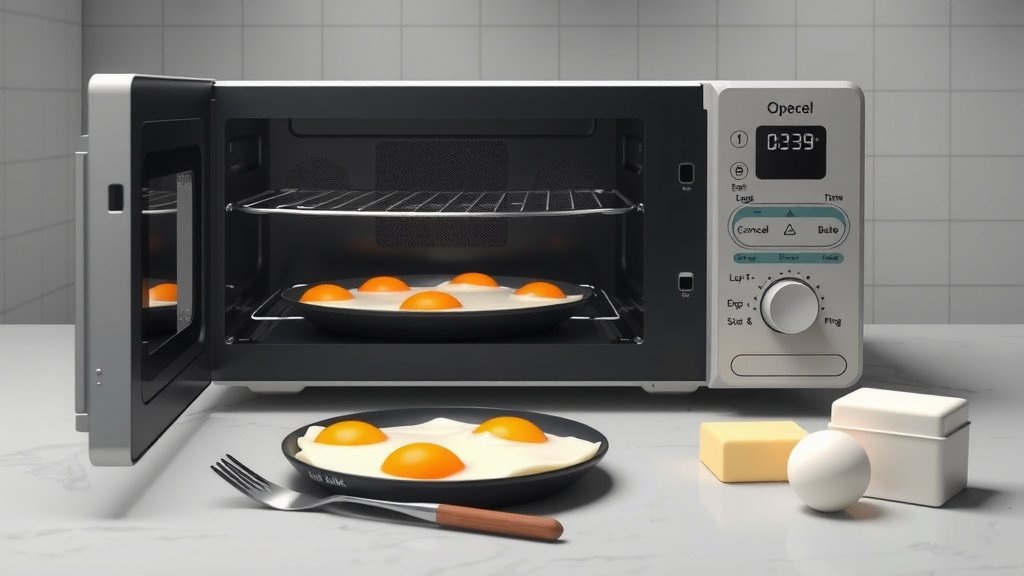
Making scrambled eggs in a microwave oven is surprisingly simple and fast, requiring just a few basic ingredients and a microwave-safe bowl.
You can achieve fluffy, delicious scrambled eggs in under two minutes by following some simple steps and a quick cooking process for your microwave scrambled eggs.
For those in a hurry, here’s a quick overview of how to cook scrambled eggs in your microwave:
- Crack 2-3 eggs into a microwave-safe bowl.
- Whisk them well with a fork, adding a splash of milk or water if you like.
- Microwave on high for 30-45 seconds.
- Stir the eggs thoroughly with a fork.
- Microwave again for 20-30 seconds, or until just set.
- Stir one last time and enjoy your quick scrambled eggs!
How To Make Scrambled Eggs In Microwave Oven?
Making scrambled eggs in a microwave oven is quite straightforward and a perfect solution for busy mornings. You just need eggs, a bowl, and your microwave to create a satisfying meal quickly.
Why Choose the Microwave for Scrambled Eggs?
Ever find yourself short on time but craving a warm, protein-packed breakfast? The microwave oven can be your best friend. It offers speed, convenience, and super easy cleanup, making it a favorite for quick meals.
Gather Your Essentials
Before you begin, make sure you have the right tools. You will need a microwave-safe bowl or mug, a fork for whisking, and, of course, fresh eggs. A little milk, cream, or water can also improve the texture.
Step-by-Step Guide to Perfect Microwave Scrambled Eggs
Let’s walk through the simple steps to create delicious scrambled eggs without a stovetop. This method is incredibly forgiving and delivers great results every time.
Step 1: Crack and Whisk Your Eggs
Crack two large eggs into your chosen microwave-safe container. Add a tablespoon of milk, water, or cream if you prefer a softer texture. Now, whisk the eggs vigorously with a fork until the yolks and whites are completely combined and a little frothy. This helps achieve a fluffy texture.
Step 2: Add Your Flavor
This is where you make them yours! Sprinkle in a pinch of salt and black pepper to taste. You can also mix in a dash of hot sauce, chives, or a tiny bit of shredded cheese now for more flavor.
Step 3: Microwave in Short Bursts
Place your bowl in the microwave. Cook on high for 30 to 45 seconds. Microwaves cook food from the inside out, so this first burst starts the process without overcooking the edges. Many experts say shorter bursts yield better results (food safety guidelines).
Step 4: Stir and Repeat
Carefully remove the bowl from the microwave – it might be hot! Use your fork to stir the eggs thoroughly, pushing the cooked portions to the center. This helps ensure even cooking. Return the bowl to the microwave for another 20 to 30 seconds.
Step 5: Check for Doneness and Serve
After the second burst, stir again. Are they still a bit runny? Pop them back in for 10-15 second intervals, stirring after each, until they are set to your liking. Remember, they continue to cook a little even after leaving the microwave. Serve them immediately for the best taste!
Key Tips for Fluffy Scrambled Eggs
Getting that perfect fluffy texture is easier than you think. Here are a few tricks that we found truly make a difference for microwave scrambled eggs.
- Do Not Overcook: This is the golden rule! Overcooked eggs become rubbery. Stop cooking just as they look slightly wet.
- Stir Often: Frequent stirring breaks up the curd and helps distribute heat, making your eggs light and airy.
- Cover Lightly: Some people like to loosely cover the bowl with plastic wrap or a plate. This traps steam and can result in softer eggs.
- Add a Splash of Liquid: A small amount of milk, cream, or water helps create steam, which translates to fluffier scrambled eggs.
Common Mistakes to Avoid
We’ve all had an egg cooking mishap or two! Avoid these common pitfalls for superior microwave scrambled eggs. Forgetting to stir, for example, often leads to unevenly cooked eggs.
Amp Up Your Scrambled Eggs: Delicious Add-ins
Why stick to plain scrambled eggs when you can customize them? Adding other ingredients is a great way to make your breakfast more satisfying and flavorful. Consider what you have in your fridge!
| Add-in Category | Ideas | When to Add |
|---|---|---|
| Dairy | Shredded cheddar, Monterey Jack, a splash of half-and-half | Before microwaving (mix in) |
| Veggies | Chopped spinach, diced bell peppers, green onions | After the first stir (or pre-cook if hard) |
| Meats | Cooked bacon bits, diced ham, sausage crumbles | Before microwaving (mix in) |
Understanding Microwave Wattage
Microwave ovens come with different power levels, measured in wattage. A higher wattage microwave cooks faster, so you might need to adjust your cooking times. Most recipes assume a 1000-watt microwave, so if yours is lower, you might need a few extra seconds per interval.
Microwave Egg Safety Checklist
Safety in the kitchen is always important, even with something as simple as eggs. Following these guidelines helps keep you and your food safe.
- Always use a microwave-safe dish to prevent melting or chemical leaching.
- Never cook eggs in their shell in the microwave; they can explode due to steam buildup.
- Watch your eggs closely to prevent overcooking, which can lead to dry, rubbery results.
- Handle hot dishes with care, using oven mitts or a towel.
- Always ensure eggs are cooked through to a safe temperature, as recommended by food safety experts.
Conclusion
Making scrambled eggs in your microwave oven is a truly simple and efficient method for a quick, wholesome meal. It is a fantastic option for busy mornings or whenever you want a hot breakfast without the fuss of a stovetop. With just a few simple steps and quick bursts of microwave cooking, you can enjoy perfectly fluffy and delicious scrambled eggs. So, next time you are pressed for time, remember your microwave is ready to help you whip up a satisfying meal. Happy cooking!
Can I make more than two eggs at a time in the microwave?
While possible, it is usually best to stick to 1-3 eggs for optimal results. Cooking too many eggs at once can lead to uneven cooking and a longer microwave time, increasing the chance of rubbery eggs. For larger batches, cooking in several smaller rounds is often more effective.
How do I prevent my microwave scrambled eggs from becoming rubbery?
The main secret to preventing rubbery eggs is to avoid overcooking them. Cook in short intervals (e.g., 30-45 seconds, then 20-30 seconds, then 10-15 seconds), stirring well between each burst. Remove them from the microwave when they still look slightly moist, as they will continue to cook a bit from residual heat.
Do I need to add milk or water to my microwave scrambled eggs?
Adding a splash of milk, cream, or water is not strictly necessary but highly recommended. This extra liquid helps create steam during cooking, which makes the scrambled eggs lighter and fluffier. It can make a noticeable difference in texture.
Can I add vegetables to my microwave scrambled eggs?
Absolutely! Adding vegetables can make your scrambled eggs more nutritious and flavorful. For harder vegetables like bell peppers or onions, it is a good idea to finely dice them or even pre-cook them slightly before adding them to your eggs to ensure they soften properly in the microwave.
How do I clean a microwave after cooking eggs?
Cleaning up after microwave cooking is usually quite simple. If there are any splatters, immediately wipe them with a damp cloth. For tougher spots, place a bowl of water with a lemon slice or a little vinegar in the microwave and heat it for 2-3 minutes. The steam will loosen any dried-on food, making it easy to wipe away.
