
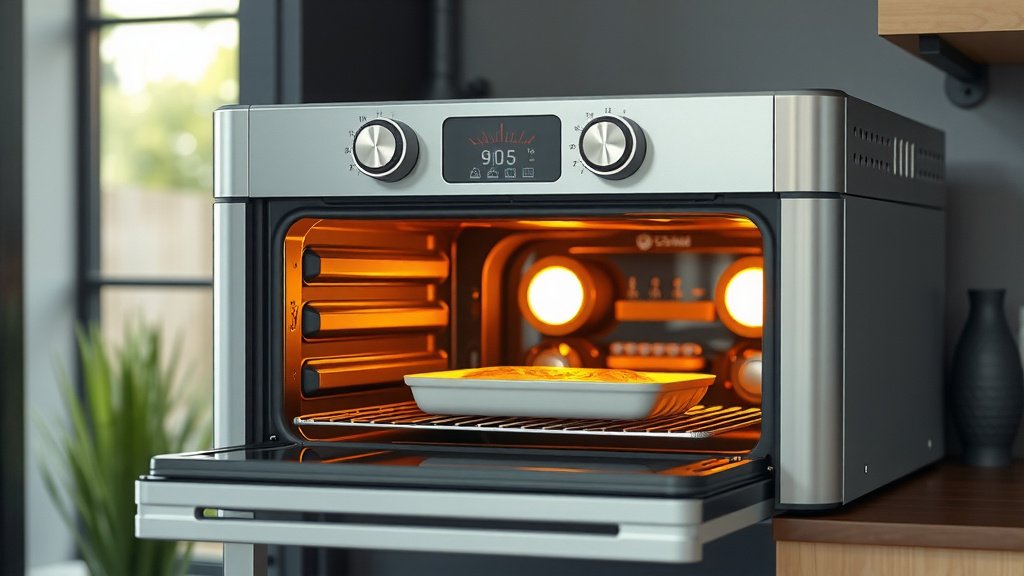
To ensure your electric oven is accurate, the most reliable method is using a quality oven thermometer to compare its reading against your oven’s set temperature.
You can verify its precision by placing the thermometer inside the oven and observing if the displayed temperature matches the internal reading over time, especially after a 20-minute preheat.
- Always use a dedicated oven thermometer for the most accurate checks.
- Preheat your oven fully before taking any temperature readings.
- Expect minor temperature swings; perfection is rare.
- Calibrate your oven if it shows a consistent temperature difference.
- Consider professional help for major or unresolved accuracy issues.
How To Make Sure Electric Oven Is Accurate?
Testing your electric oven’s accuracy involves a few straightforward steps you can do at home, primarily using a dedicated oven thermometer.
This simple tool helps you confirm if your oven is heating to the temperature you expect, ensuring better cooking and baking results.
Why Oven Temperature Accuracy Matters
Imagine following a recipe perfectly, only for your meal to come out undercooked or burnt. It is incredibly frustrating, right?
Often, the culprit is an oven that does not heat to the temperature you set. An inaccurate oven can turn baking into a guessing game.
The Baking Battle
Baking is truly a science. It relies on precise temperatures for proper chemical reactions, creating that perfect rise or golden-brown crust.
Even small deviations can cause cookies to spread too thin or cakes to sink in the middle, leaving you disappointed with the outcome.
Cooking Confidence
Beyond baking, accurate temperatures are vital for roasting meats and cooking casseroles safely and deliciously.
Knowing your oven is hitting its marks gives you the confidence to try new recipes and achieve consistent results every time.
The Essential Tool: An Oven Thermometer
The single most important tool for checking oven accuracy is a reliable, standalone oven thermometer. Think of it as your oven’s personal truth-teller.
Your oven’s display might show 350°F, but the actual internal temperature could be quite different.
Choosing the Right Thermometer
Look for an oven thermometer specifically designed for high heat, often found in kitchenware stores.
Many experts suggest opting for models from reputable brands, and we found that some digital versions offer easier reading (NIST).
Where to Place Your Thermometer
Position the thermometer in the center of the middle rack. Avoid placing it too close to the heating elements or the oven door.
This central spot gives you the best average temperature reading, away from potential hot or cold spots.
Testing Your Oven’s Accuracy Step-by-Step
Ready to put your oven to the test? This simple process will help you understand its true temperature performance.
You will need about an hour of uninterrupted time to get a reliable reading.
Preheating is Key
Start by setting your oven to a common baking temperature, like 350°F (175°C).
Allow the oven to preheat fully for at least 20 minutes *after* the preheat light goes off or the oven beeps, as it needs time to stabilize.
Observing the Readings
After the 20-minute stabilization period, check the oven thermometer through the door without opening it.
Record the temperature shown on the thermometer and compare it to your oven’s set temperature.
Check every 15-20 minutes for an hour, noting any fluctuations. Many experts suggest taking an average of these readings (Consumer Reports).
What If Your Oven Isn’t Accurate?
So, you have tested your oven, and the numbers do not quite match up. Don’t panic just yet.
Understanding what’s normal and what’s a real problem helps you decide your next steps.
Understanding Normal Fluctuations
Ovens rarely maintain a perfectly static temperature. It is normal for the temperature to cycle a bit, typically within 15 to 25 degrees of the set point.
Your oven works by cycling the heating elements on and off to maintain an average temperature, so slight swings are expected.
Identifying Persistent Problems
If your oven thermometer consistently reads 25 degrees or more above or below the set temperature, then you likely have an accuracy issue.
This consistent difference is what truly impacts your cooking and might require adjustment.
Calibrating Your Electric Oven
Many electric ovens allow for temperature calibration, meaning you can adjust their internal thermostat to align with the actual temperature.
This is a great feature if your oven is consistently off by a certain number of degrees.
Checking Your Oven Manual
The first and most important step is to consult your oven’s user manual. It will detail whether your model has a calibration feature and how to access it.
If you cannot find your physical manual, most manufacturers provide digital versions on their websites.
The Calibration Process (General Steps)
While steps differ by model, calibration usually involves accessing a setting in the control panel or through a hidden button sequence.
You then typically input the number of degrees you want to adjust the oven by (e.g., +20 degrees or -15 degrees).
Common Reasons for Inaccurate Oven Temperatures
Beyond simple calibration needs, several factors can cause an oven to be inaccurate. Knowing these can help in troubleshooting.
Sometimes, a component might be failing or simply needing a little attention.
| Issue Type | Common Symptoms | Potential Solutions |
|---|---|---|
| Faulty Thermostat/Sensor | Wild temperature swings, oven too hot or cold | Professional diagnosis, sensor replacement |
| Weak/Broken Heating Element | Uneven heating, oven not reaching desired temp | Replace element (can be DIY or pro) |
| Leaky Door Seal | Heat escaping, oven feels cool, longer cooking times | Replace the door gasket/seal |
| Control Board Malfunction | Display errors, erratic behavior, no heat | Professional diagnosis, control board replacement |
Heating Element Issues
If your oven isn’t heating evenly or not reaching the set temperature, a heating element might be weakening or failing.
The elements on the top (broil) or bottom (bake) can burn out or lose efficiency over time, leading to cold spots.
Thermostat Problems
The thermostat or temperature sensor inside your oven is critical for accurate readings.
If this sensor is dirty, damaged, or faulty, it can send incorrect information to the control board, leading to inconsistent temperatures.
Door Seal Leaks
An often overlooked problem is a worn or damaged oven door seal, also called a gasket.
If the seal is not tight, heat escapes, making your oven work harder and leading to lower actual temperatures inside.
When to Call a Professional
While home calibration and minor troubleshooting are helpful, some issues are best left to the experts.
Knowing when to seek professional help saves you time, frustration, and potentially costly mistakes.
Beyond Home Calibration
If your oven consistently shows extreme temperature differences (e.g., 50+ degrees off) or if calibration does not fix the issue, it is time for a professional.
Issues with the control board or complex electrical components typically require a trained technician.
Safety First
Working with electrical appliances carries risks. If you are uncomfortable inspecting internal components or suspect an electrical fault, please call a qualified appliance repair technician.
Your safety and the proper functioning of your appliance are both very important.
Accuracy Checklist
- Purchase a reliable oven thermometer.
- Place thermometer in the oven’s center.
- Preheat oven for at least 20 minutes after the light goes out.
- Record thermometer readings over an hour.
- Compare average reading to your oven setting.
- Consult manual for calibration steps if needed.
- Call a professional for persistent or severe accuracy issues.
Conclusion
Ensuring your electric oven is accurate is a simple process that yields big rewards in the kitchen. A reliable oven thermometer is your best friend here, offering a clear window into your oven’s true temperature.
By regularly checking and calibrating your appliance, you can confidently tackle any recipe, knowing your food will cook exactly as it should. Happy baking and cooking!
Is a New Oven Thermometer Worth It?
Absolutely! A new, quality oven thermometer is a small investment that can significantly improve your cooking and baking results. It removes the guesswork and helps you identify if your oven is truly heating to the temperature you expect.
How often should I check my oven’s accuracy?
It is a good idea to check your oven’s accuracy every six months or so, or whenever you notice inconsistencies in your cooking or baking. Regular checks help you catch minor deviations before they become major problems.
Can I use a meat thermometer to check oven temperature?
No, you should not use a meat thermometer to check your oven’s ambient temperature. Meat thermometers are designed to measure internal food temperatures and are not typically built to withstand the prolonged high heat of an empty oven, nor are they calibrated for air temperature readings.
What is the acceptable temperature variance for an oven?
Most ovens will cycle within a range of about 15 to 25 degrees Fahrenheit (8-14 Celsius) above and below the set temperature. If your oven consistently deviates by more than 25 degrees, it might need calibration or repair.
My oven reads too high; how can I fix it?
If your oven consistently reads too high, first consult your owner’s manual for calibration instructions. Many electric ovens allow you to adjust the temperature settings by a few degrees. If calibration does not resolve the issue, a faulty temperature sensor or control board might be the cause, requiring professional service.
