
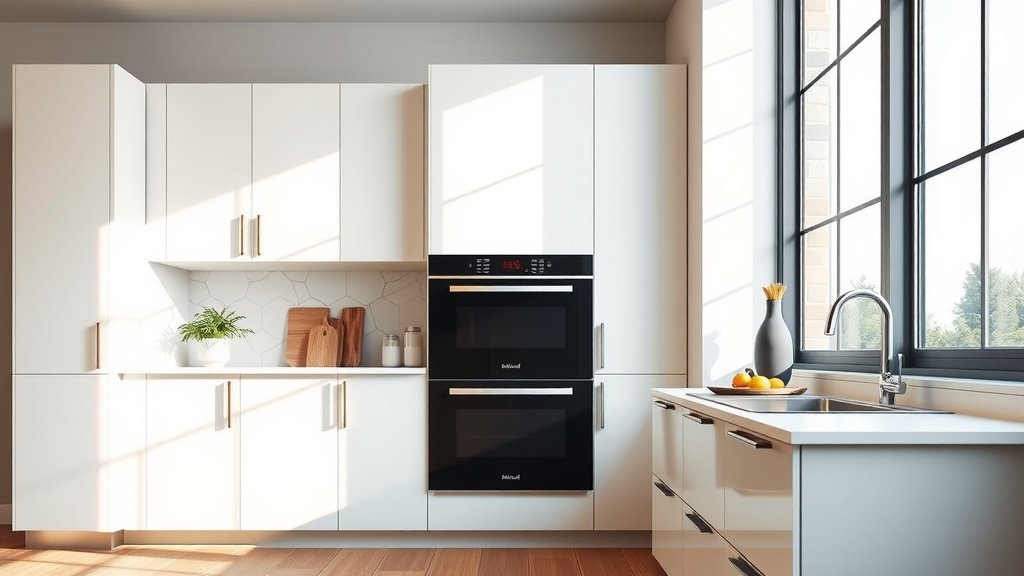
To safely remove a double oven from a wall, first disconnect all power at the circuit breaker for electrical models, or shut off the gas valve for gas ovens. Next, locate and remove the mounting screws that secure the oven to the cabinet frame.
Once freed, carefully slide the oven out a few inches to access and disconnect the electrical wiring or gas line before fully extracting the heavy appliance with assistance.
Here’s a quick overview of what you’ll learn:
- Prioritize safety by cutting power or gas immediately.
- Gather the proper tools for a smooth and efficient process.
- Understand your oven’s significant weight and size.
- Carefully remove all fasteners and gently slide the oven forward.
- Always get help; these appliances are incredibly heavy!
How To Remove Double Oven From Wall?
Removing a double oven from your wall cabinet is a task that requires precision and safety awareness. It involves several key steps from preparation to the final lift, ensuring a smooth process.
You can manage this project, but remember, getting help is not just good advice, it’s a necessity for such a weighty appliance.
Why Are You Removing Your Double Oven?
Are you swapping out an old, trusty appliance for a shiny new one? Or perhaps you’re tackling a repair project behind the scenes? Knowing your reason helps you plan your next steps effectively.
Either way, the removal process itself stays quite consistent. What changes is what you do after the oven is out.
Is it for Replacement?
If you’re replacing your oven, remember to measure your new unit carefully. Wall openings can be surprisingly tricky. Sometimes, minor cabinet adjustments are needed.
This early planning prevents headaches later. We found that mismeasurements are a common pitfall (Appliance Standards Organization).
Or for Repairs?
For repairs, you might only need to pull the oven partway out. This can give you access to components like fans or heating elements. Always know your oven’s model number for parts.
Many experts say that taking photos during disassembly helps a lot with reassembly.
Safety First: A Non-Negotiable Step
Before you even think about touching a screw, safety must be your top concern. Working with large appliances carries inherent risks, especially with electricity or gas involved.
Skipping safety checks could lead to serious injury or damage to your home. We genuinely want you to stay safe.
Locate Your Circuit Breaker
For an electric oven, your first step is to turn off its power. Head to your electrical panel and find the breaker labeled for your kitchen oven. It’s usually a double-pole 240-volt breaker.
Flip it to the “off” position. Many experts recommend testing the oven afterwards to confirm the power is truly off before proceeding.
Gas Oven Safety Tips
If you have a gas double oven, you’ll need to locate the gas shut-off valve. This is typically found behind or next to the oven itself. Turn the valve to the “off” position immediately.
Many guidelines point to always capping the gas line after disconnection to prevent leaks, even if just temporarily (Gas Appliance Manufacturers Association).
Gathering Your Removal Arsenal
Having the right tools makes a world of difference. Trying to use the wrong tool can lead to frustration, damage, or even injury. Take a moment to collect everything beforehand.
You wouldn’t start a road trip without packing, would you? Think of this as preparing for your appliance adventure.
- Screwdrivers (Phillips and flathead)
- Adjustable wrench or pipe wrench (for gas lines)
- Work gloves
- Painter’s tape or masking tape
- Cardboard or old blankets (for floor protection)
- Dolly or appliance hand truck
- A sturdy helper (absolutely essential!)
Preparing Your Workspace
A tidy and protected workspace is a happy workspace. Clear any clutter from the surrounding cabinets and countertop. You’ll need plenty of room to maneuver the oven.
Remember, this appliance is heavy and bulky. You don’t want anything in its way or underfoot.
Protecting Your Floors
Ovens, even when carefully moved, can scratch floors. Lay down thick cardboard or old blankets on the floor leading away from the oven. This creates a protective path.
Think of it as setting up a red carpet for your oven’s departure, but a protective one.
Understanding Oven Weight
Double ovens are not lightweights. They can weigh anywhere from 150 to over 300 pounds. This is why a helper, or even two, is not just recommended, but vital.
We found that underestimating oven weight is a common cause of back strain (Occupational Safety and Health Administration).
| Oven Type | Average Weight (lbs) | Assistance Needed |
|---|---|---|
| Electric Wall Oven (Single) | 100-150 | 1-2 people |
| Electric Wall Oven (Double) | 150-300+ | 2-3 people |
| Gas Wall Oven (Single) | 120-180 | 1-2 people |
| Gas Wall Oven (Double) | 180-350+ | 2-3 people |
The Step-by-Step Removal Process
Now that safety is locked down and tools are ready, it’s time for the actual removal. Take it slow, one step at a time. This isn’t a race, it’s a careful operation.
Communication with your helper is incredibly important during these steps.
Removing Oven Trim and Faceplates
Some ovens have decorative trim pieces or faceplates. These are often held by small screws or clips. Carefully remove them to expose the main mounting screws.
Place these pieces aside in a safe spot, perhaps in a labeled bag, if you plan to reuse them.
Finding the Fasteners
Look inside the oven’s frame, usually near the top and bottom corners, for mounting screws. These screws typically go through the oven’s side into the cabinet frame. There could be anywhere from four to eight screws.
Remove all visible screws. Sometimes, they are hidden behind rubber grommets or small plastic caps.
Carefully Sliding the Oven Out
With the screws removed, the oven is now free to move. This is where your helper comes in. Have one person support the bottom of the oven while the other gently pulls the top.
Slowly slide the oven out just enough to access the connections behind it. Don’t pull it all the way out yet!
Disconnecting Electrical or Gas Connections
For electric ovens, you’ll find a junction box or direct wiring. Undo the wire nuts or terminal connections. For gas, carefully disconnect the flexible gas line with your wrench. Remember to cap the gas line securely.
Research often connects proper disconnections to preventing household incidents (Electrical Safety Foundation International).
The Final Lift: Getting It Out
This is the heaviest part. Both you and your helper should get a firm grip. Lift the oven up and out, placing it onto your prepared cardboard or dolly. Use your legs, not your back.
Slow, controlled movements are key here. Don’t rush; a dropped oven is a real problem.
What to Do After Removal?
Your oven is out! Take a deep breath. Now, what’s next? Your actions here depend on your initial reason for removal.
Whether it’s disposal or preparing for a new unit, a few final considerations remain.
Disposal or Storage?
If you’re getting rid of the old oven, contact your local waste management services for appliance disposal guidelines. Many areas have specific rules for large items. If storing, find a dry, secure location.
Never just leave an old appliance where children might play near it; oven doors can pose a safety risk if they close firmly.
Safety Checklist for Double Oven Removal
Before you begin, make sure you’ve covered these essential safety points:
- Double-check power disconnection at the breaker.
- Ensure gas supply is completely off and line capped.
- Clear surrounding workspace thoroughly for free movement.
- Wear protective gloves and closed-toe footwear.
- Communicate clearly and constantly with your helper.
- Have a first-aid kit nearby, just in case.
Conclusion
Removing a double oven from a wall is a significant undertaking, but it’s entirely manageable with careful planning, the right tools, and an extra set of hands. Prioritizing safety by disconnecting power or gas is paramount, followed by methodical steps to free and extract the heavy appliance.
By following these guidelines, you can ensure a successful and safe removal, whether you’re upgrading your kitchen or tackling a repair. Remember, taking your time and working with a partner makes a world of difference.
What kind of assistance do I need to remove a double oven?
You absolutely need at least one strong helper. Double ovens are incredibly heavy, often weighing over 150 pounds. Trying to remove it alone risks serious injury to yourself or damage to your home and the appliance.
How do I prevent scratching my kitchen floor when moving the oven?
To prevent scratches, lay down several layers of thick cardboard, old blankets, or moving pads on the floor extending from the oven’s location to its final resting place. An appliance dolly can also help lift it completely off the floor.
Are there any specific tools required for disconnecting a gas double oven?
Yes, for a gas oven, you’ll need an adjustable wrench or a pipe wrench to safely disconnect the flexible gas line. You will also need a gas line cap to seal the open gas pipe temporarily or permanently.
What should I do if the oven feels stuck even after removing all screws?
If your oven feels stuck, first recheck for any hidden screws, possibly behind trim pieces or rubber stoppers. Sometimes, the cabinet opening might be very snug. Try gently wiggling the oven from side to side to break any seals or friction before attempting to slide it out further.
How do I dispose of an old double oven responsibly?
To responsibly dispose of an old double oven, contact your local municipal waste management department or a local appliance recycling center. Many areas have specific collection days for large appliances, or you might need to schedule a special pickup. Never just leave it on the curb; it can be dangerous.
