
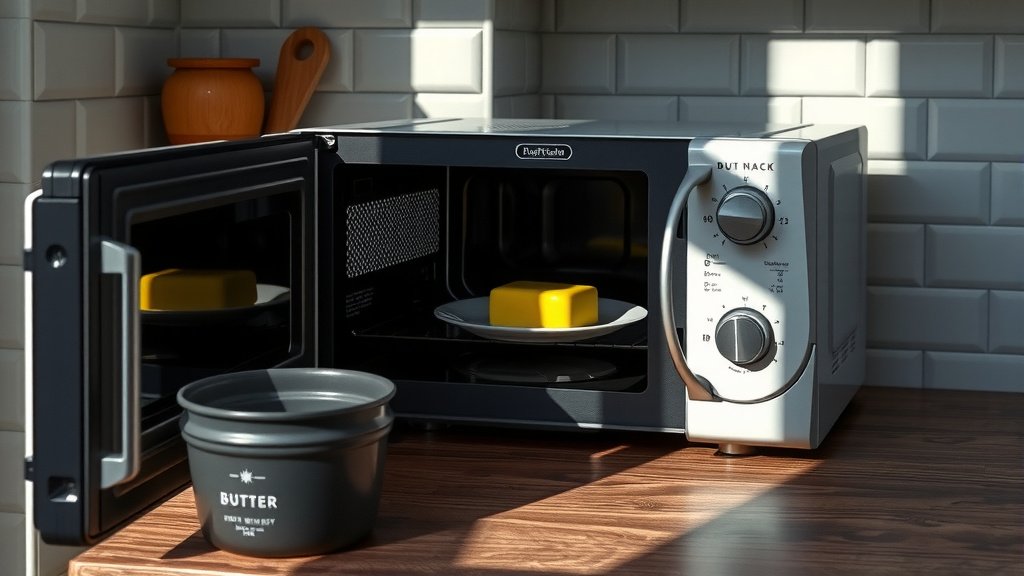
To soften butter in a microwave oven, use short, controlled bursts of low power, typically 10-15 seconds at a time, until it reaches the desired pliable texture without melting.
You can gently soften butter in a microwave by cutting it into smaller pieces, placing it in a microwave-safe dish, and heating it at 30% power for very short intervals, flipping or rotating it between zaps for even warming.
- Get your butter to room temperature quickly using a microwave.
- Always use low power settings and short bursts to prevent melting.
- Cut butter into smaller, uniform pieces for more even softening.
- Flip or rotate your butter between brief microwave intervals.
- Avoid heating butter for too long, as it can quickly turn into liquid.
How To Soften Butter In Microwave Oven?
Softening butter in a microwave oven is simple when you use the right technique. You want it pliable, not melted, for perfect baking results.
The goal is a spreadable consistency, similar to soft serve ice cream, without any liquid spots.
Why Soften Butter?
Have you ever tried to cream cold butter with sugar? It’s a real arm workout, isn’t it?
Softened butter blends smoothly into recipes, creating light, airy textures in cakes and cookies. It helps incorporate sugar and other ingredients much better.
Many baking recipes, from cookies to frostings, depend on softened butter for optimal results (King Arthur Baking).
The Microwave Magic
Your microwave is a powerful tool, but it needs a gentle hand for butter. Think of it as a delicate warming process, not a full-on cooking session.
We are just trying to take the chill off, not make soup.
Prepping Your Butter
Before microwaving, unwrap your stick of butter. For faster, more even softening, cut the butter into smaller, uniform pieces.
You can slice it into half-inch cubes or even grate it if you are in a real hurry.
Choosing the Right Dish
Always place your butter in a microwave-safe dish. A small plate or a shallow bowl works perfectly.
Avoid metal or anything with metallic accents to prevent sparks in your oven.
Power Settings Are Key
This is where many people go wrong. Never use your microwave at full power for butter.
We found that 30% power is often the sweet spot. Some microwaves even have a “soften” or “defrost” setting that works wonders.
Using lower power lets you control the process better, reducing the chance of accidental melting.
The “Zap” Time Guide
Short bursts are your best friends here. You are aiming for a slow, gentle warmth.
Stop, check, and turn is the mantra for perfect results.
| Butter Amount | Power Level | Initial Time | Subsequent Intervals |
|---|---|---|---|
| 1/2 stick (4 tbsp) | 30% | 10 seconds | 5 seconds |
| 1 stick (8 tbsp) | 30% | 15 seconds | 5-7 seconds |
| 2 sticks (16 tbsp) | 30% | 20 seconds | 7-10 seconds |
Watching for Softness
After each interval, check your butter. Gently press it with your finger.
If you can easily make an indentation, it’s ready. If not, give it another short zap.
Remember to flip or rotate the butter between zaps. This helps distribute the heat more evenly.
What Not To Do
It is easy to get impatient, but rushing the process often leads to disaster.
Patience will give you perfectly softened butter every time.
Common Mistakes to Avoid
- Don’t microwave butter at full power. It will melt before you know it.
- Never leave butter unattended in the microwave. It changes fast.
- Avoid heating it too long in one go. You will end up with a puddle.
- Don’t assume all microwaves heat the same. Yours might be more powerful.
Microwave Safety First
Always use microwave-safe dishes. Glass or ceramic plates are ideal.
Keep a watchful eye on your butter throughout the process.
Checking for Doneness
How do you know when it’s just right?
- Can you easily press a finger into it?
- Does it still hold its shape?
- Are there any melted puddles forming?
- Is it cool to the touch, not warm or hot?
- Does it feel pliable, like a thick lotion?
Other Ways to Soften Butter
If the microwave feels too risky, other methods work well. You can cut butter into small pieces and let it sit on the counter for 30 minutes.
Another trick is placing it in a sealed bag and submerging it in warm water for about 10 minutes. These methods give you more control if time permits.
Troubleshooting
Sometimes things don’t go as planned. It’s okay; we all have those moments.
Learning from them helps for next time.
When It Melts Too Much
Did your butter turn into a liquid puddle? Don’t fret too much.
Depending on the recipe, you might be able to salvage it. For some recipes, like certain cookies, slightly melted butter can still work, though the texture might change (Serious Eats).
If you need truly softened, not melted, butter, your best bet is to chill the melted butter until it solidifies again, then try to soften it slowly on the counter.
The Cold Hard Truth
Starting with very cold butter straight from the fridge takes a bit more effort. Room temperature butter softens more quickly and evenly.
Planning ahead by taking butter out 30-60 minutes before baking is always the easiest solution.
Conclusion
Softening butter in a microwave oven is a handy trick when you are short on time. Remember to always use low power, short intervals, and constant checking.
This careful approach ensures your butter is perfectly pliable for all your baking adventures, avoiding any unwanted melted messes. A little patience goes a long way to achieving that ideal consistency for your recipes.
Can I soften butter in the microwave directly from the freezer?
Yes, you can soften butter directly from the freezer in a microwave, but it will take longer. We found that cutting it into small pieces and using even shorter, more frequent bursts (e.g., 5 seconds) on 20-30% power is best to prevent the edges from melting while the center remains frozen.
What is the ideal temperature for softened butter?
The ideal temperature for softened butter is generally between 65-68°F (18-20°C). At this temperature, butter is pliable and spreadable but still cool to the touch and holds its shape.
Why does my butter sometimes explode in the microwave?
Butter “exploding” or spattering in the microwave usually happens when it’s heated too quickly or at too high a power setting. The water content in the butter heats up rapidly and turns to steam, causing it to burst. Using lower power and shorter bursts helps prevent this.
Can I use the “defrost” setting on my microwave to soften butter?
Yes, many experts say the “defrost” setting is an excellent option for softening butter. It typically uses very low power, allowing for a gentler, more controlled warming process compared to regular power settings, which reduces the risk of melting.
How do I fix butter that has melted too much in the microwave?
If your butter melts too much, chill it in the refrigerator until it solidifies again, then remove it and let it come to room temperature naturally. For some recipes where the precise texture isn’t critical, you might be able to use slightly melted butter, but re-chilling is best for most baking.
