
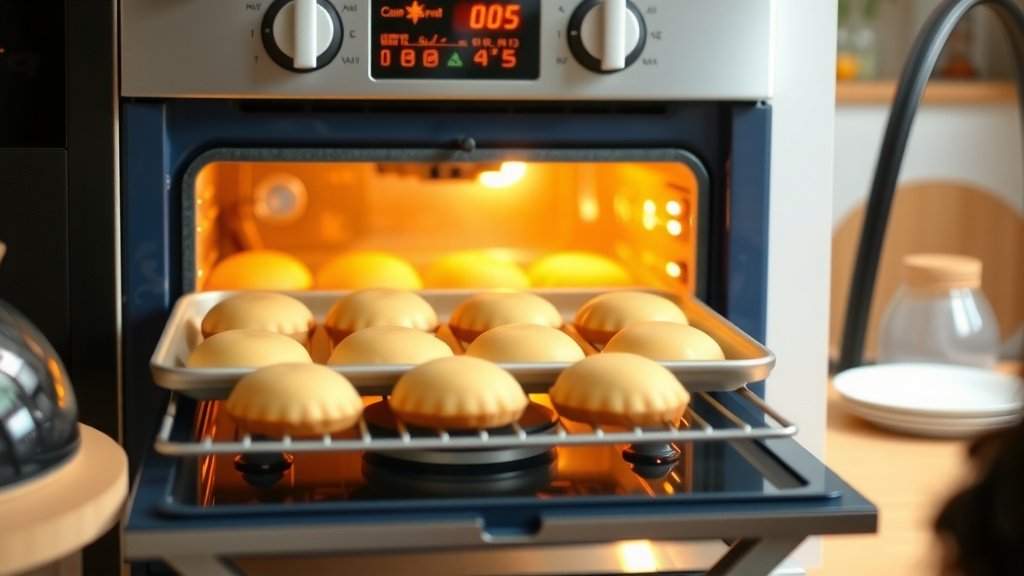
To stop your gas oven from burning food, first check its internal temperature accuracy with an oven thermometer and consider calibrating it if it runs hot.
You can also adjust rack placement, rotate dishes, and use lighter-colored bakeware to promote more even cooking, preventing burnt bottoms.
- Grab an oven thermometer to quickly **verify your oven’s true temperature**.
- Calibrate your oven if you find it’s **consistently running too hot**.
- Rotate your food halfway through cooking for **even browning and less charring**.
- Choose lighter, reflective bakeware over dark metal for **less intense heat transfer**.
- Ensure you use the **proper oven rack placement** for ideal heat distribution.
How To Stop Gas Oven From Burning Food?
Stopping your gas oven from burning food often involves a few simple adjustments, like verifying its temperature accuracy and understanding heat distribution.
You can achieve much better results by checking for hot spots and using appropriate bakeware, which makes a big difference.
Is Your Oven Temperature Accurate?
The first step is to question if your oven’s dial matches its actual temperature inside. Many experts say that **ovens can be off by 25-50 degrees** Fahrenheit (USDA).
This temperature drift is a common culprit behind unexpected burning or undercooking.
Get an Oven Thermometer
This little gadget is your best friend here. Just place an **oven-safe thermometer** inside your oven on a middle rack.
Preheat your oven to a common temperature, say 350°F, and wait at least 20 minutes before checking the reading.
Consider Oven Calibration
If your thermometer consistently shows a temperature different from your setting, your oven may need calibration. Many ovens allow you to **adjust the temperature offset** in their settings.
Check your oven’s manual for specific instructions on how to do this safely and effectively.
Understanding Uneven Heat Distribution
Gas ovens often have a heating element at the bottom, which can create hotter zones. This means some areas inside are **naturally warmer than others**.
Recognizing this helps you adjust your cooking strategy to prevent scorching.
Rotate Your Food Regularly
Are you baking a tray of cookies or roasting vegetables? Try rotating your dish halfway through the cooking time. This simple action helps **expose all sides to similar heat levels**.
It’s like giving everyone a fair turn in the sun, leading to more even cooking.
Find Your Oven’s Hot Spots
You can easily map out your oven’s hot spots. Place slices of bread across an entire oven rack, then bake them for a few minutes until they toast.
The areas where the bread browns fastest are your oven’s **hottest zones, which you can then avoid** with delicate items.
Using the Right Bakeware
The type of pan you use has a surprisingly large impact on how your food cooks. Different materials conduct and **reflect heat in unique ways**.
Choosing the right pan can significantly reduce burning, especially on the bottom.
Light-Colored vs. Dark Bakeware
Dark metal pans absorb more heat and can cause bottoms to brown too quickly. Lighter-colored pans, especially those made of aluminum, **reflect heat away from the food**.
This reflection promotes a more even bake and helps stop the gas oven from burning food.
Glass, Ceramic, and Silicone Options
Glass and ceramic bakeware hold heat very well, sometimes too well for gas ovens, leading to over-browning. Silicone bakeware, on the other hand, is **more forgiving and non-stick**.
We found that many home bakers prefer glass for casseroles but metal for quick breads (America’s Test Kitchen).
| Bakeware Type | Heat Absorption | Best For | Risk of Burning |
|---|---|---|---|
| Dark Metal | High | Crispy crusts, pizzas | Higher, especially bottoms |
| Light Metal | Moderate | Cookies, cakes, sheet pans | Lower, more even |
| Glass/Ceramic | High (retains) | Casseroles, slow roasts | Medium, can overcook edges |
| Silicone | Low | Muffins, delicate items | Lowest, very even |
Optimizing Oven Rack Placement
Where you place your food inside the oven directly affects its exposure to heat. Because gas ovens often heat from the bottom, **rack position is very important**.
Understanding this can save many meals from being overcooked or undercooked.
Top, Middle, or Bottom Rack?
If the bottom of your food is burning, try moving it to a higher rack. The middle rack is usually the **most versatile for even cooking**.
For delicate items needing gentle heat, the top rack can be a good choice.
Preheating Properly
Rushing the preheating process is a common mistake. Your oven needs enough time to not just reach the set temperature but also to **stabilize its internal heat**.
Don’t just wait for the light; give it an extra 10-15 minutes.
Avoid Overcrowding Your Oven
It’s tempting to fit everything in at once, but overcrowding restricts air circulation. When air can’t move freely, **hot spots become worse** and cooking uneven.
Give your food space to breathe; consider baking in batches if needed.
Keep Your Oven Clean
Built-up grease and food particles on the oven floor can absorb heat differently. These residues can also **smoke and affect food flavors**.
A clean oven helps ensure heat is distributed as evenly as possible.
When to Call a Professional
If you’ve tried all these tips and your gas oven still consistently burns food, there might be a deeper issue. A **faulty temperature sensor or igniter** could be the problem.
Many experts suggest professional service when self-help tips don’t make a difference.
Quick Checklist to Stop Burning
- Get an oven thermometer.
- Calibrate your oven if needed.
- Rotate dishes halfway through.
- Use light-colored bakeware.
- Adjust rack position.
- Allow proper preheating time.
- Don’t overcrowd the oven.
- Keep your oven clean.
Conclusion
Taming a gas oven that burns food can seem tricky, but with these practical steps, you are well-equipped. From checking temperature accuracy to choosing the right bakeware, each small adjustment contributes to **better, more consistent baking and roasting**.
You’ll soon be enjoying perfectly cooked meals without the frustration of charred bottoms. Happy cooking!
What is the best type of bakeware for a gas oven?
Light-colored metal bakeware, like aluminum, is generally best for gas ovens. It reflects heat, which helps prevent the bottom of your food from burning due to the oven’s direct bottom heat source.
How often should I check my oven’s temperature?
It’s a good idea to check your oven’s temperature with an oven thermometer every six months, or anytime you notice inconsistent cooking results. This helps ensure ongoing accuracy.
Can a dirty oven cause food to burn?
Yes, a dirty oven can definitely contribute to burning food. Baked-on grease and food debris on the oven floor can create hot spots, smoke, and even affect how heat is distributed throughout the cavity.
Is it normal for a gas oven to have hot spots?
Yes, it is very common for gas ovens to have hot spots due to the primary heat source being at the bottom. Understanding where these spots are, and rotating your food, helps manage them effectively.
Should I open the oven door less often when baking?
Absolutely, try to keep the oven door closed as much as possible. Each time you open it, warm air escapes, causing temperature fluctuations that can slow cooking and contribute to uneven baking.
