
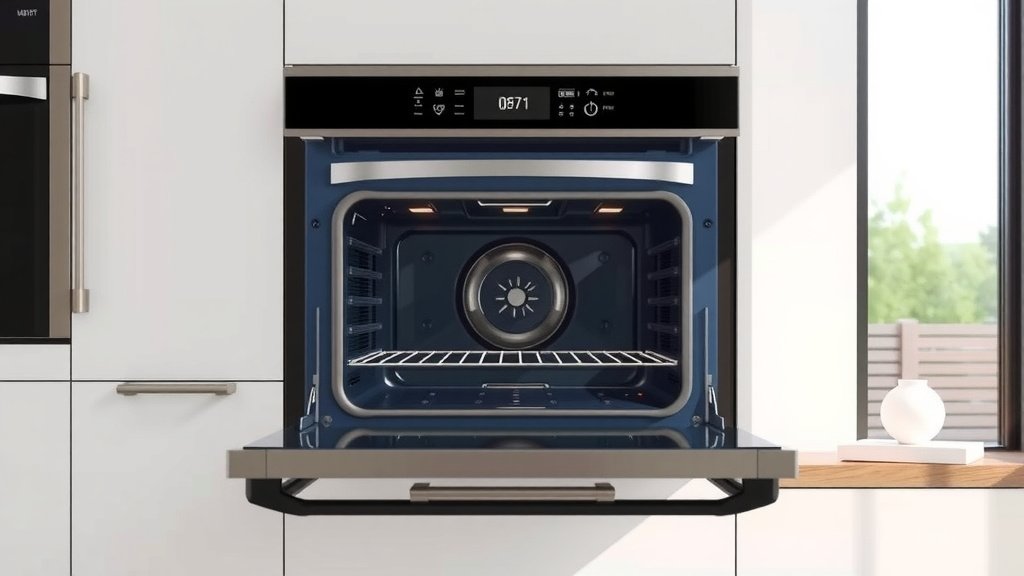
To use an electric oven for the first time, begin by reading the user manual for specific model instructions and then perform an initial “burn-off” to remove manufacturing residues.
After this, you can safely preheat your electric oven and start baking or roasting your favorite dishes, remembering to adjust temperatures as needed.
- Always read your specific oven manual first.
- Perform a crucial “burn-off” cycle before cooking.
- Preheating is vital for even cooking and consistent results.
- Use the right oven-safe cookware for your dishes.
- Understand basic controls: temperature, timer, and function.
How To Use An Electric Oven For The First Time?
Using an electric oven for the first time involves understanding its features, performing a crucial initial burn-off, and learning proper preheating techniques for successful cooking.
It’s simpler than you might think once you get the hang of a few basic steps.
Your Oven’s First Impression: The Burn-Off
Imagine unwrapping a brand-new car; you don’t just hit the highway, right? Your new electric oven is similar.
Before any food goes in, you need to do a “burn-off” cycle.
This process removes any manufacturing oils, residues, or odd smells that might otherwise affect your first meal.
Why is a Burn-Off Important?
When new ovens are manufactured, small amounts of oils and materials remain on the heating elements and surfaces.
Many oven manufacturers recommend this initial burn-off.
Skipping this step can lead to unpleasant odors and even taste transfer to your food.
It’s a simple step for a clean start.
Here’s how to do it:
- Remove all racks and accessories from the oven.
- Wipe down the inside with a damp cloth, just water, to remove any loose debris.
- Replace the racks.
- Set the oven to a high temperature, typically 400-500°F (200-260°C).
- Let it run for 30-60 minutes, with good ventilation in your kitchen.
- You might notice some smoke or smell; this is normal during the burn-off.
- Once done, turn it off and let it cool completely before cooking.
Getting Acquainted with Your New Appliance
Every electric oven is a little different, like individual personalities.
Even if you’ve used ovens before, your new one might have unique settings or quirks.
Taking a moment to understand it will save you headaches later.
Reading Your Electric Oven Manual
Yes, we know, manuals are not the most exciting read. But for a new appliance, it’s a goldmine of information.
Your manual tells you about specific features, cleaning tips, and troubleshooting common issues.
It’s your oven’s personalized instruction guide.
Essential Oven Controls You Need to Know
Look at your oven’s control panel. What do you see?
Most electric ovens have controls for temperature, a timer, and various cooking functions like bake, broil, and sometimes convection.
Familiarize yourself with where these are and how they work.
The “bake” setting is where you’ll start most often.
Mastering the Art of Preheating
Ever baked cookies in a cold oven? They don’t turn out well, do they?
Preheating is crucial for almost all recipes.
It ensures your food starts cooking at the correct temperature, leading to even baking and desired textures.
Research often points to preheating as a vital step for even cooking (Food Science Journal).
What Temperature Should You Use?
Your recipe will tell you the exact temperature.
Simply turn the dial or press the button to set your oven to that temperature.
Most electric ovens will beep or show an indicator light when they’ve reached the set temperature.
Wait for this signal before putting your food inside.
Choosing the Right Cookware for Electric Ovens
The right pan makes a big difference in how your food cooks.
Imagine trying to make soup in a colander; it just doesn’t work!
Using oven-safe dishes is not just about safety, but also about achieving the best results.
Experts suggest choosing cookware that suits your recipe (Cook’s Illustrated).
Material Matters: What Works Best?
Different materials conduct heat differently, impacting browning and cooking times.
Here’s a quick guide to common oven-safe materials:
| Cookware Material | Best For | Considerations |
|---|---|---|
| Metal (aluminum, steel) | Baking sheets, roasting pans, quick browning | Heats up fast, good for crisping. |
| Glass (Pyrex, ceramic) | Casseroles, slow-cooked dishes, moist foods | Heats slowly and retains heat, can cook faster than metal. |
| Silicone | Muffins, cakes, delicate baked goods | Non-stick, flexible, heats evenly but less browning. |
Rack Placement: A Simple Guide
Where you place your food in the oven matters a lot.
Think of heat rising; the top rack gets hotter, the bottom rack gets more direct heat from the lower element.
We found that using the correct rack position can significantly impact your dish (Good Housekeeping Institute).
For most baking and roasting, the middle rack is often ideal for even heat distribution.
If you need extra browning on top, move it up. For a crispier bottom, move it down.
Cooking Your First Meal: Tips for Success
You’ve preheated, you’ve got your dish ready. Now for the main event!
Don’t be afraid; cooking in a new oven is an adventure.
Start with a simple, familiar recipe to build your confidence.
Watching Your Food: Peeking vs. Patience
It’s tempting to open the oven door every few minutes to check on your food.
Try to resist! Each time you open the door, the oven temperature drops significantly.
This can extend cooking times and affect the outcome, especially for delicate baked goods.
Use the oven light to check progress instead.
Cleaning Up After Your Culinary Adventure
Congratulations on your first oven creation!
Now, a little care will keep your oven in great shape for many more meals.
Cleaning up spills quickly prevents them from baking on and becoming harder to remove later.
Basic Cleaning for Longevity
For minor spills, wait until the oven cools down.
Then, wipe them up with a damp cloth and mild dish soap.
Many electric ovens also come with a self-cleaning feature.
Consult your manual for how and when to use this, as it involves very high temperatures.
First-Time Oven Use Quick Steps: A Checklist
To help you on your journey, here’s a quick checklist to make sure you’re ready:
- Read your oven’s instruction manual thoroughly.
- Perform the initial burn-off cycle.
- Familiarize yourself with the control panel.
- Always preheat the oven to the correct temperature.
- Choose oven-safe cookware for your recipe.
- Position your oven racks appropriately.
- Use the timer and oven light to monitor cooking.
- Clean up any spills promptly after the oven cools.
Conclusion
Using an electric oven for the first time is a straightforward process once you understand the basic steps.
From the essential burn-off to mastering preheating and choosing the right cookware, each step contributes to successful cooking.
Don’t be afraid to experiment, and remember your oven’s manual is your best friend.
With a little practice, you’ll be baking and roasting like a pro in no time, enjoying all the delicious possibilities your new appliance brings to your kitchen.
Are electric ovens hard to use for beginners?
No, electric ovens are generally very user-friendly for beginners. Their controls are typically intuitive, and maintaining a consistent temperature is usually easier compared to gas ovens. Following the manufacturer’s instructions and basic cooking principles will make the experience smooth.
How long does an electric oven take to preheat?
The preheating time for an electric oven can vary based on the model and the desired temperature, but it typically takes 10 to 20 minutes to reach temperatures like 350-400°F (175-200°C). Newer ovens might preheat faster, while older ones could take a bit longer.
Can I put aluminum foil in an electric oven?
Yes, you can generally use aluminum foil in an electric oven. However, avoid covering entire oven racks with foil, as this can block heat circulation and lead to uneven cooking. Never place foil directly on the bottom of the oven, as it can trap heat and damage the oven’s interior or heating element.
What is the difference between bake and roast on an electric oven?
While often used interchangeably for savory dishes, “bake” typically refers to cooking with dry heat, often at lower temperatures (around 350°F / 175°C), for items like cakes or casseroles. “Roast” usually involves higher temperatures (400°F / 200°C and above) to achieve browning and crisping on the outside, common for meats and vegetables.
What should I do if my new electric oven smells bad after the burn-off?
If an odor persists after the initial burn-off, ensure your kitchen is well-ventilated and run another burn-off cycle for a shorter duration, perhaps 15-20 minutes. If the smell is very strong, metallic, or doesn’t dissipate after a few uses, consult your oven’s manual for troubleshooting or contact customer service.
