
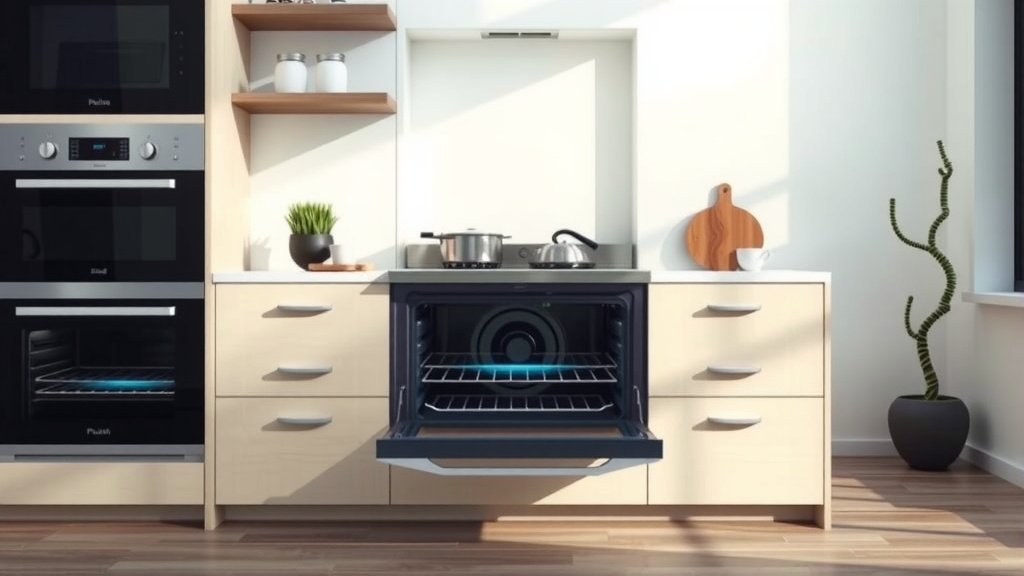
To use self-clean on a double oven, begin by removing all racks and large food debris from both oven cavities. Then, select the self-clean cycle for one oven at a time, ensuring proper ventilation.
Each oven in a double unit typically operates its self-clean function independently, allowing you to clean either the upper or lower oven without affecting the other’s operation.
Here’s a quick rundown of how to effectively use the self-clean function on your double oven:
- Always remove all racks, oven accessories, and any large food particles before starting.
- Ensure good ventilation by opening windows or turning on a range hood to manage fumes.
- Select the self-clean function for one oven cavity at a time, never both simultaneously.
- Allow the oven to cool completely for several hours after the cycle finishes.
- Wipe away any remaining white ash with a damp cloth once the oven is cool.
How To Use Self Clean On A Double Oven?
You use the self-clean function on a double oven by preparing each cavity separately and running the cycle one oven at a time.
Always prioritize removing all internal accessories and ensuring your kitchen is well-ventilated during this high-heat process.
Before You Start: Essential Prep Steps
Before you even think about hitting that “clean” button, some important steps need your attention. Think of it like getting ready for a big baking project – preparation makes all the difference.
Skipping these initial actions can lead to unexpected issues, or even a less effective cleaning job, which nobody wants after waiting for hours.
Clear Out Every Item
Your oven racks, any baking sheets, and even thermometers need to come out. The extreme heat of the self-clean cycle can warp or damage these items.
Many experts advise removing everything from inside the oven cavity, as this helps protect your oven’s interior coating and accessories (appliance safety guidelines).
Wipe Away Loose Bits
Got crumbs, cheese drippings, or stray bits of food? Give the oven interior a quick scrape and wipe down.
Large food particles can burn excessively during the self-clean cycle, creating more smoke and potentially leaving behind a harder mess to clean later.
Getting Ready for the Heat: Ventilation is Key
The self-clean cycle uses very high temperatures, sometimes reaching 900°F (482°C). This heat turns food residue into ash.
During this process, some smoke and odors are normal. You’ll want to ensure your kitchen is well-ventilated to keep the air clear.
We found that opening windows and turning on your range hood or exhaust fan can make a big difference for air quality (home safety reports).
Starting the Self-Clean Cycle on Your Double Oven
When it comes to double ovens, a common question is whether you can clean both ovens at once. The short answer is usually “no.”
Most manufacturers design double ovens to run their self-clean cycles independently to manage the intense heat and electrical load effectively.
One Oven at a Time, Please
Look at your oven control panel. You’ll typically find separate options for cleaning the upper or lower oven.
Select the oven you wish to clean first. Running one at a time prevents potential overheating and reduces the strain on your home’s electrical system.
Choosing the Right Cycle Length
Self-clean cycles often have different duration options, from 2 to 5 hours. The length you choose depends on how dirty your oven is.
For a lightly soiled oven, a shorter cycle might be fine. For tougher, baked-on grime, opt for a longer duration to ensure everything turns to ash.
What Happens During the Cycle?
Once you start the cycle, the oven door will automatically lock. This is a safety feature to prevent opening the door during extreme temperatures.
You’ll notice the oven slowly heating up. The high heat works to break down and carbonize food spills and grease inside the oven cavity.
Dealing with Smells and Smoke
It’s normal to experience some burning smells or a bit of smoke, especially if the oven was quite dirty. This is why ventilation is so important.
If you have pets, particularly birds, it’s a good idea to move them to a different room during the self-clean cycle, as fumes can be irritating to their respiratory systems (veterinary advice often highlights this).
After the Self-Clean Cycle: What’s Next?
The oven will signal when the self-clean cycle is complete. However, your job isn’t quite done yet.
Resist the urge to open the oven door immediately. It will remain locked until the internal temperature drops to a safe level.
Patience is a Virtue: Let It Cool
Allow the oven to cool down completely, which can take several hours. Some experts suggest leaving it overnight for the best results and safety.
Trying to force the door open or clean while it’s still hot can be unsafe and might damage your oven’s components.
The Final Wipe-Down
Once the oven is completely cool and the door unlocks, you’ll see a fine layer of white or gray ash at the bottom of the oven.
Use a damp cloth or sponge to wipe away this ash. For stubborn spots, a non-abrasive scrubber can help, but avoid harsh chemicals.
Checklist for a Smooth Self-Clean
- Remove all racks and accessories.
- Wipe out large food particles.
- Ensure kitchen is well-ventilated.
- Run self-clean on one oven at a time.
- Allow full cool-down before opening.
- Wipe away ash with a damp cloth.
When to Avoid Self-Cleaning Your Oven
While the self-clean feature is super handy, it isn’t always the right choice. Knowing when to hold off can save you trouble.
For example, if you have a significant grease fire inside your oven, consult an appliance professional before attempting a self-clean cycle (appliance service recommendations).
You should also avoid using the self-clean function if there’s any damage to the oven door gasket or hinges. The extreme heat could worsen these issues.
And remember, never use commercial oven cleaners in conjunction with the self-clean cycle, as their chemical residues can create hazardous fumes at high temperatures.
Common Double Oven Self-Clean Questions
Let’s tackle some frequently asked thoughts that often pop up when you’re considering cleaning your double oven.
Understanding these details can make the whole process much smoother and less intimidating for you.
How Often Should You Self-Clean?
The frequency depends on your cooking habits. If you use your oven often, cleaning it every 3-6 months might be ideal.
For less frequent use, cleaning once or twice a year could be sufficient. Over-cleaning can put unnecessary stress on your oven components.
What About Oven Racks?
Oven racks should never go through the self-clean cycle. The high heat can discolor them, warp them, and strip their protective coating.
Instead, clean your racks manually in a sink with warm, soapy water and a scrub brush. For stubborn grime, an overnight soak can work wonders.
| Cleaning Item | Self-Clean Safe? | Alternative Cleaning Method |
|---|---|---|
| Oven Cavity | Yes | N/A |
| Oven Racks | No | Soak in soapy water, scrub |
| Thermostats/Probes | No | Wipe clean with damp cloth |
| Door Gasket | No | Wipe with damp cloth (never scrub) |
Conclusion
Using the self-clean function on your double oven is a fantastic way to keep it sparkling, but it definitely requires a careful approach.
By following these preparation steps, running the cycle one oven at a time, ensuring proper ventilation, and allowing for a complete cool-down, you’ll achieve a clean oven safely and efficiently.
Remember, a little preparation goes a long way to ensure your appliance serves you well for many years to come. Happy cleaning!
How long does a self-clean cycle take for a double oven?
A self-clean cycle on a single cavity of a double oven typically takes anywhere from 2 to 5 hours. The exact duration depends on the specific oven model and the level of cleaning intensity you select on your control panel.
Can I manually clean one oven while the other is self-cleaning?
It’s generally not recommended to manually clean one oven while the other is in self-clean mode. The self-cleaning oven generates intense heat that can affect the adjacent cavity, making manual cleaning uncomfortable and potentially unsafe due to residual heat and fumes.
Why does my oven smell after self-cleaning?
An odor after a self-clean cycle is often due to residual ash or tiny particles that weren’t fully carbonized and can continue to emit a smell when the oven is first used again. A thorough wipe-down after cooling, and running a short, empty bake cycle for 15-20 minutes, can help dissipate any lingering odors.
Is it normal for a double oven to smoke during self-clean?
Yes, some smoke during the self-clean cycle is quite normal, especially if your oven was heavily soiled with baked-on food or grease. This smoke is a byproduct of the food residues burning off at high temperatures. Good ventilation is key to manage this.
What should I do if the oven door won’t unlock after self-clean?
If your oven door remains locked after the self-clean cycle has finished, it typically means the oven has not cooled down to a safe temperature yet. Allow several more hours for cooling. If it still won’t unlock after being completely cool, consult your owner’s manual or an appliance technician for troubleshooting.
