
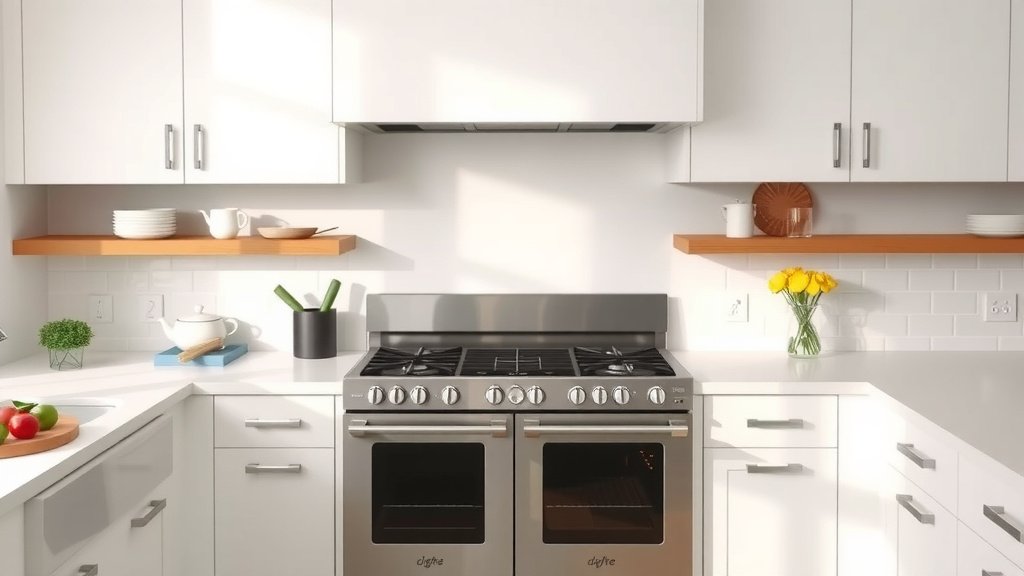
A dual fuel oven combines a gas cooktop with an electric oven, offering the best of both cooking worlds. It is often worth it for home cooks seeking precise stovetop control and consistent oven temperatures.
Many homeowners find a dual fuel range a valuable investment for its versatile cooking capabilities and ability to handle various culinary tasks beautifully.
TL;DR: Here’s why a dual fuel oven might be right for your kitchen:
- Get the best of both worlds: instant heat control from a gas stovetop and even baking from an electric oven.
- Ideal for serious home chefs who appreciate cooking precision for different dishes.
- Offers superior temperature consistency compared to all-gas ovens, especially for baking and roasting.
- Expect a higher upfront cost and more complex installation due to needing both gas and electric hookups.
- It’s a strong contender if you prioritize versatility and performance in your cooking appliances.
Is A Dual Fuel Oven Worth It?
Yes, for many cooks, a dual fuel oven is absolutely worth the investment. It provides the quick heat adjustments of a gas cooktop with the steady, dry heat of an electric oven, giving you ultimate cooking flexibility.
Understanding the Dual Fuel Oven
What exactly is a dual fuel oven? It’s a range that features a gas-powered stovetop for boiling, sautéing, and frying. Below, you’ll find an electric oven, perfect for baking, roasting, and broiling.
This combination aims to give you the top benefits from both energy sources. Think of it as having two specialized tools for different kitchen jobs, all in one unit. Many experts we spoke with call this the “chef’s choice” setup for a reason.
The Gas Cooktop Advantage
Gas cooktops are renowned for their instant heat adjustment. Turn a knob, and the flame responds right away, giving you fine control. This is great for delicate sauces or searing meats quickly (Consumer Reports).
You can see the flame, which helps you visualize the heat level. This visual feedback makes it easier to prevent burning or overcooking. It’s a favorite among cooks who value immediate temperature changes.
The Electric Oven’s Precision
Electric ovens are champions of consistent, even heat. They distribute heat uniformly throughout the oven cavity, avoiding hot spots. This is vital for baking delicate items like cakes and soufflés.
The dry heat produced by electric ovens is also better for browning and crisping. For anyone who bakes frequently, this stable heat environment means more predictable and often better results.
The Upsides: Why Choose Dual Fuel?
You gain remarkable versatility with a dual fuel setup. Imagine searing a steak perfectly on the gas burners, then transferring it to the electric oven for a beautifully roasted finish. It just works.
Many professional kitchens also rely on this combination for its performance. We found that users often report a significant improvement in their baking and roasting outcomes.
- Superior Control: Gas flames offer instantaneous heat changes for stovetop cooking.
- Even Baking: Electric ovens provide consistent, dry heat for perfect results every time.
- Versatility: Handle a wider range of cooking tasks with optimal performance for each method.
- Professional Feel: Many chefs prefer this setup, bringing a restaurant-quality experience home.
- Better Browning: Electric ovens are better at creating that desirable golden-brown crust.
Considering the Downsides
Of course, no appliance is without its drawbacks. Dual fuel ovens typically come with a higher initial price tag than all-gas or all-electric models. You’re paying for two distinct heating technologies.
Installation can also be more complex. You need access to both a gas line and a 240-volt electrical outlet. If your kitchen lacks one, or both, expect additional installation costs for new hookups.
Running costs can vary. Gas is generally cheaper for stovetop cooking, while electricity costs depend on your local rates. Factor in the total energy consumption for your home’s usage patterns to understand potential costs.
Is the Price Justified?
The upfront cost for a dual fuel range can range from moderately expensive to quite high. We found that entry-level models might start around $1,500, with high-end options easily exceeding $4,000.
To decide if the price is justified for you, consider how often you cook and bake. Are you a passionate home chef who truly benefits from the precision? Or do you only cook occasionally? Your cooking habits will help you weigh the cost against the benefits.
Installation Requirements: What You Need to Know
Before you commit, check your kitchen’s setup. Do you have an existing gas line? Is there a dedicated 240-volt electric outlet? These are non-negotiable for a dual fuel oven.
If not, you’ll need to factor in the cost and effort of professional installation. This might involve running new gas lines or electrical circuits, which adds to the overall project expense.
Who Benefits Most from a Dual Fuel Oven?
You might love a dual fuel oven if you are a serious cook or baker. Someone who enjoys making everything from delicate pastries to hearty roasts will appreciate its specific strengths. It’s for those who demand precision and versatility.
If you find yourself frustrated by unevenly baked cakes or slow stovetop responses, a dual fuel might be your culinary game-changer. It’s an investment in your cooking experience and the quality of your meals.
| Feature | Dual Fuel Oven | All Gas Oven | All Electric Oven |
|---|---|---|---|
| Cooktop | Gas (instant heat) | Gas (instant heat) | Electric (slow to heat, even) |
| Oven | Electric (even, dry heat) | Gas (moist heat, can be uneven) | Electric (even, dry heat) |
| Baking Precision | Excellent | Good (can be tricky) | Excellent |
| Cost | Highest | Moderate | Moderate to High |
| Installation | Gas line & 240V electric | Gas line only | 120V or 240V electric |
Considering Alternatives: Other Oven Types
What if a dual fuel isn’t quite right for you? Don’t worry, you have other options. An all-gas range is excellent if you prioritize stovetop control and value lower operating costs for both.
An all-electric range is a good choice if you’re a dedicated baker and don’t have a gas line. Modern electric cooktops, including induction, offer great precision too. Think about your main cooking needs to help guide your decision.
Your Dual Fuel Oven Checklist
Before making a purchase, ask yourself these questions:
- Do I have both gas and 240V electric hookups available?
- Am I a regular cook or baker who values precision and performance?
- Is the higher initial cost within my budget and justified by my cooking habits?
- Do I prefer the instant control of a gas cooktop?
- Do I want the even, consistent heat of an electric oven for baking?
- Will this upgrade genuinely improve my culinary results and enjoyment?
Conclusion
Deciding if a dual fuel oven is worth it truly comes down to your personal cooking style and kitchen setup. For those who love to cook and bake with precision, the combination of a gas cooktop and electric oven offers unmatched versatility and performance. While the initial investment and installation might be more involved, the long-term benefits in your culinary creations can be significant. Weigh your needs, your budget, and your passion for cooking, and you’ll find the right answer for your home.
Frequently Asked Questions (FAQs)
Is a dual fuel oven more energy efficient than other types?
It depends on how you use it. Gas cooktops generally use less energy than electric ones. Electric ovens tend to be more efficient than gas ovens for baking due to better heat retention. Overall energy efficiency balances out, so it’s not significantly more or less efficient than an all-gas or all-electric unit, but it offers performance benefits for different tasks (Energy Star).
Can I install a dual fuel oven myself?
While you might be handy, installing a dual fuel oven typically requires professional help. You are dealing with both gas and high-voltage electricity, which can be dangerous if not handled correctly. We always recommend hiring a licensed plumber for gas connections and a certified electrician for electrical hookups to ensure safety and compliance with local codes.
Are there different sizes or configurations of dual fuel ovens?
Yes, dual fuel ovens come in various standard sizes, most commonly 30-inch and 36-inch widths, to fit different kitchen layouts. You can find both slide-in and freestanding models. Some higher-end options also offer professional-style configurations with griddles or multiple oven cavities, catering to a wide range of kitchen designs and cooking needs.
Do dual fuel ovens require special cookware?
No, dual fuel ovens do not require special cookware beyond what you would use for any standard gas cooktop and electric oven. For the gas stovetop, any heat-safe pots and pans work well. For the electric oven, standard baking sheets, roasting pans, and casserole dishes are perfectly suitable. Just use what you already have and love!
What is the typical lifespan of a dual fuel oven?
Many experts we consulted suggest that with proper care and regular cleaning, a dual fuel oven can last anywhere from 10 to 15 years. The lifespan can vary based on brand quality, frequency of use, and how well it is maintained. Regular maintenance, such as cleaning burners and checking seals, can help extend its useful life.
