
You absolutely can plug a roaster oven into an extension cord, but it’s not always the safest choice. Roaster ovens draw a lot of power, and using the wrong type of extension cord can lead to overheating and potential fire hazards. Always check your roaster oven’s wattage.
The key is to match the extension cord’s capabilities to your appliance’s needs. A cord that’s too thin can’t handle the electrical load. This can cause your appliance to underperform or, worse, damage the cord and create a dangerous situation. We found that many people overlook this detail.
- Roaster ovens need heavy-duty extension cords.
- Look for cords rated for high wattage.
- Ensure the cord is short and in good condition.
- Plug directly into a wall outlet when possible.
So, before you plug in your next big meal, let’s walk through exactly how to do it safely. We’ll cover what to look for and when it’s better to skip the extension cord altogether.
Can You Safely Use an Extension Cord with Your Roaster Oven?
You’ve got a big holiday roast planned, or maybe just a comforting weeknight meal. Your trusty roaster oven is ready to go. But then you realize your kitchen outlet is just a little too far away. Can you just grab any old extension cord? Let’s break down what you need to know before you plug in. We found that many people aren’t sure about this, and it’s a question worth asking!
The short answer is: yes, you can, but it’s not as simple as just picking up any extension cord from the hardware store. Using the wrong cord can be a genuine safety risk. It’s all about matching the power needs of your roaster oven to the capabilities of the cord. We’ll help you figure out exactly what to look for so your cooking experience stays safe and worry-free.
Understanding Your Roaster Oven’s Power Needs
Roaster ovens are powerhouses. They need a lot of electricity to heat up and maintain those consistent temperatures that make your food taste so delicious. Think of them like mini ovens, and they draw a comparable amount of power.
The key to safe extension cord use lies in understanding your roaster oven’s wattage. This number tells you how much power the appliance consumes. You’ll typically find this information on a label on the back or bottom of your roaster oven. It might also be in your owner’s manual. You need to match or exceed this wattage with your extension cord’s rating.
Why Wattage Matters So Much
When an appliance draws more power than an extension cord is designed to handle, bad things can happen. The cord can overheat, melt its insulation, and potentially start a fire. We found that this is one of the most common causes of electrical fires related to appliances.
It’s like trying to push too much water through a tiny garden hose. Eventually, the hose can burst or get damaged. Your electrical cord works similarly. A cord with a low wattage rating will struggle to carry the electricity your roaster needs, leading to strain and danger.
Decoding the Ampere Rating
While wattage is primary, you’ll also see amperage (amps) listed on cords. These two are related. To find out the amps your roaster needs, you can divide the wattage by the voltage (typically 120V in the US). So, if your roaster is 1400 watts, it needs about 11.67 amps (1400 / 120).
Your extension cord will have an amperage rating. This rating must be equal to or higher than the amperage your roaster oven requires. If the cord’s amp rating is lower, it’s a mismatch and a potential hazard. Many experts recommend having a little buffer, too, to ensure the cord isn’t working at its absolute maximum all the time.
Choosing the Right Extension Cord: The “Heavy-Duty” Difference
Not all extension cords are created equal. For a power-hungry appliance like a roaster oven, you absolutely need what’s commonly called a “heavy-duty” extension cord. These are built differently and can handle more electrical load.
What makes a cord “heavy-duty”? It’s primarily the thickness of the wire inside, known as the gauge. Thicker wires have less resistance, meaning electricity flows more easily and generates less heat. This is critical for appliances that draw significant power.
Understanding Wire Gauge (AWG)
Extension cords use the American Wire Gauge (AWG) system. The lower the AWG number, the thicker the wire. So, a 10-gauge cord is thicker and can handle more power than a 14-gauge cord.
For roaster ovens and other high-wattage appliances, you’ll generally want to look for cords that are 14-gauge or thicker (meaning lower AWG numbers like 12 or 10). Cords rated for outdoor use or for tools are often good candidates because they are built to be more robust.
The Length Factor: Shorter is Usually Better
Did you know that the longer an extension cord is, the more resistance it adds to the electrical current? This means that a 50-foot cord, even if it’s the right gauge, might not perform as well as a 10-foot cord of the same gauge when powering a high-wattage appliance. The increased resistance can also lead to overheating.
To minimize risk and ensure your roaster oven gets adequate power, always choose the shortest cord that will safely reach from your outlet to where you need to place the roaster. We found that keeping cords under 25 feet is a good general guideline for high-power devices.
Inspect for Damage: A Crucial Step
Before you even think about plugging anything in, give your extension cord a thorough inspection. Look for any signs of wear and tear. This includes:
- Cuts or nicks in the cord’s insulation
- Frayed wires
- Cracked or broken plugs (both ends)
- Loose connections
- Signs of melting or scorching
If you find any of these issues, that cord is not safe to use. Period. It’s tempting to use that old cord tucked away in your garage, but it’s really not worth the risk. A damaged cord is a major fire hazard. Many safety organizations strongly advise against using any cord that shows signs of damage (Consumer Product Safety Commission).
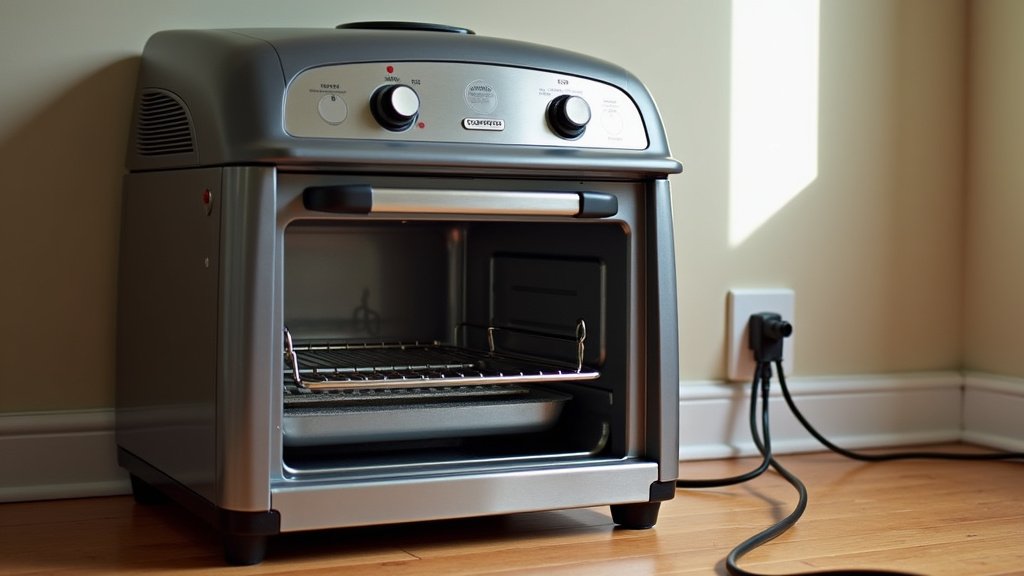
When to Absolutely Avoid an Extension Cord
While a heavy-duty, short, and damage-free extension cord can work, there are times when you should avoid using one altogether. Your kitchen likely has outlets for a reason!
The Ideal Scenario: Direct Plug-In
The safest and most reliable way to power your roaster oven is to plug it directly into a grounded wall outlet. This bypasses any potential issues with extension cords, like incorrect sizing or damage.
If your roaster oven just barely reaches the outlet, it’s a sign that an extension cord might be more trouble than it’s worth for this particular setup. Consider rearranging your kitchen slightly, or perhaps using a different appliance if an extension cord seems like your only option. We found that direct connections are always preferred for high-draw appliances.
Outdoor or Damp Locations
Never use a standard indoor extension cord outdoors, even if it’s just for a moment. Roaster ovens are designed for indoor use. If you are considering cooking outdoors, you would need a specific outdoor-rated extension cord that is also heavy-duty and properly sized. However, for a roaster oven, it’s generally best to keep it inside where the environment is controlled and safe. Water and electricity are a dangerous combination.
Circuits That Are Already Strained
Think about what else is plugged into the same electrical circuit as the outlet you’re considering using. If that circuit already powers other high-demand appliances (like microwaves, toasters, or hair dryers), adding a roaster oven through an extension cord might overload the circuit breaker. This will cause the breaker to trip, cutting off power.
If your circuit breaker trips frequently, it’s a sign that the circuit is being pushed too hard. Adding a roaster oven, even with a proper extension cord, might exacerbate the problem. In such cases, it’s best to find an outlet on a different circuit that has more capacity. Always check your home’s electrical panel if you’re unsure about circuit load (Electrical Safety Foundation International).
A Quick Checklist for Safe Extension Cord Use
Before you plug in your roaster oven using an extension cord, quickly run through this checklist. It’s a great way to ensure you haven’t missed any safety steps.
- Check Wattage: Is your roaster oven’s wattage known?
- Cord Rating: Does the extension cord’s wattage or amperage rating meet or exceed the roaster’s needs?
- Gauge Matters: Is it a heavy-duty cord, preferably 14-gauge or thicker (lower AWG)?
- Cord Condition: Is the cord free of any cuts, fraying, or damage?
- Length Appropriateness: Is the cord as short as possible while still reaching comfortably?
- Outlet Availability: Could you plug directly into a wall outlet instead? (Always the best option!)
| Wire Gauge (AWG) | Max Wattage (120V) | Typical Use |
|---|---|---|
| 16-gauge | Up to 1200 watts | Light-duty electronics, lamps |
| 14-gauge | Up to 1800 watts | Medium-duty appliances, power tools |
| 12-gauge | Up to 2500 watts | Heavy-duty appliances, major power tools |
| 10-gauge | Up to 3000 watts | Very heavy-duty, long runs, large equipment |
As you can see from the table, a 16-gauge cord is generally not suitable for a roaster oven, which can easily draw 1000-1500 watts or more. You’ll want to aim for 14-gauge or 12-gauge cords for safety and performance. Remember, these are general guidelines, and always refer to your appliance’s manual for specific requirements.
Conclusion
So, can you plug your roaster oven into an extension cord? Yes, but only if you do it right. Your roaster oven needs a lot of power, so a thin, old, or too-long cord is a recipe for disaster. Always pick a heavy-duty extension cord with a thick gauge (lower AWG) that matches your roaster’s wattage. Keep it as short as possible and make sure it’s in perfect condition.
When in doubt, or if you have to use a long cord, it’s always best to plug directly into a wall outlet. Safety first means a well-cooked meal without any electrical scares. Always double-check your cord before you plug in!
Frequently Asked Questions
What is the minimum gauge extension cord I should use for a roaster oven?
For most roaster ovens, you’ll want to use a 14-gauge extension cord or thicker (lower AWG number). Thicker wires can handle more electricity without overheating. We found that 16-gauge cords are generally not sufficient for these high-wattage appliances.
Can I use an outdoor extension cord inside for my roaster oven?
While an outdoor-rated cord is built to be more durable, it’s best to use an extension cord specifically designed for indoor appliance use. Make sure any cord you choose is heavy-duty and properly rated for your roaster oven’s wattage, regardless of whether it’s indoor or outdoor rated. Never use an indoor cord outside.
Is it okay to use a short extension cord that looks a little worn?
No, absolutely not. Even a short cord can be dangerous if it shows signs of wear. Always inspect your extension cord for cuts, fraying, or damaged plugs before use. A damaged cord is a serious fire hazard, no matter its length or gauge.
What happens if I plug my roaster oven into an extension cord that’s too thin?
If your extension cord is too thin, it can’t handle the electrical load your roaster oven requires. This can cause the cord to overheat, melt, or even catch fire. Your roaster oven might also underperform or not heat up properly.
Should I still use an extension cord if my roaster oven’s cord just barely reaches the outlet?
Ideally, you should avoid using an extension cord if your appliance’s cord can reach the outlet. Plugging directly into a wall outlet is always the safest option. If you must use an extension cord for a very short distance, ensure it’s a heavy-duty, short cord in excellent condition, but consider rearranging your kitchen setup if possible.
