How to Use a KitchenAid Stand Mixer
To use a KitchenAid stand mixer, fit the bowl, lock in the attachment, add ingredients, lower the head, and start on stir or 1 before moving up in speed. Use the flat beater for batters, the dough hook for yeast dough, and the wire whip for cream and egg whites.
On this page (10 sections)
- What is a KitchenAid stand mixer?
- How do you set up the bowl and attachment?
- Which attachment do you use for each recipe?
- How do you choose the right speed?
- How do you add ingredients without a mess?
- When should you stop and scrape the bowl?
- How do you clean the bowl and attachments?
- What mistakes should you avoid with a stand mixer?
- How do you decide between tilt-head and bowl-lift models?
- Which mixer suits your kitchen?
To use a KitchenAid stand mixer, fit the bowl, lock in the attachment, add ingredients, lower the head, and start on stir or 1 before moving up in speed. Use the flat beater for batters, the dough hook for yeast dough, and the wire whip for cream and egg whites.
Use the same order every time. Place the mixer on a flat counter, fit the bowl, choose the attachment, and keep your hand away from moving parts.
A stand mixer earns its space by creaming butter, kneading dough, and whipping egg whites while you prep the next step. If you are still choosing a model, our best stand mixer for baking guide helps.
What is a KitchenAid stand mixer?
A KitchenAid stand mixer is a countertop motor unit with a bowl and a hub for attachments. The motor drives a beater, hook, or whip inside the bowl, while the hub can power extra attachments sold separately.
The tilt-head design lifts the top so you can reach the bowl. You lower and lock the head before mixing, which keeps the attachment in the right spot.
This helps with scraping and adding ingredients between speed changes.
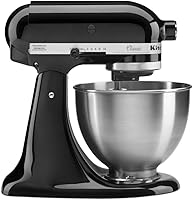
Two models show the scale difference. The KitchenAid Classic Series 4.5 Quart Tilt-Head Stand Mixer has a 4.5-quart stainless steel bowl.
The KitchenAid Artisan has a 5-quart stainless steel bowl for larger batches.
How do you set up the bowl and attachment?
You set up the mixer by seating the bowl fully, sliding the attachment up into the shaft, and turning it to lock. Check that the bowl is secure before you add anything.
A loose bowl can shift once the motor starts.
Start with the mixer off and the speed lever at stir or off. Raise the head with the release lever, fit the bowl on the base, and press or turn it until it sits flat.
Then slide the attachment onto the shaft and turn it clockwise until it locks.
Lower the head slowly and make sure the lock engages before you turn the motor on. If the attachment does not click or the head feels loose, stop and refit both parts.
Never reach into the bowl while the motor is running.
How do you fit a KitchenAid stand mixer attachment?
You fit the attachment by pushing it straight up onto the shaft and turning it to the locked position. The coated flat beater, dough hook, and wire whip all use the same shaft on the tilt-head models here.
Hold the head steady with one hand while you fit the attachment with the other. Push up until it seats, then turn it until it clicks.
Pull down lightly to confirm it will not drop out.
Remove it by pushing up, turning it to the release position, and sliding it down. Dry it fully before storage.
The Hamilton Beach hand mixer below is not a stand mixer, but it shows how built-in storage keeps small attachments organized. For a broader comparison, see stand mixer vs hand mixer.
Which attachment do you use for each recipe?
Use the flat beater for batters, the dough hook for bread dough, and the wire whip for airy mixtures.
The flat beater suits cake batter, muffins, and cookie dough. Start on stir or 1, then move to 2 or 3 once the mix comes together.
The dough hook suits yeast dough at speeds 1 or 2. Heavy dough on high speed can strain the motor and make the mixer walk.
The 6-wire whip suits whipped cream, egg whites, and meringue. Start low, increase in steps, and use speed 8 for whipping cream.
Extra hub attachments go beyond the bowl, as our kitchenaid stand mixer how to use attachments guide and best kitchenaid stand mixer attachments list explain.
How do you choose the right speed?
Choose speed by the task, starting low and raising it in small steps.
Stir or 1 combines ingredients, while 2 to 4 mixes batters. Higher speeds whip air into cream and egg whites.
Add dry ingredients at low speeds. The Artisan includes a pouring shield for adding ingredients with the head down.
Speeds 3 to 6 suit most cake batter, cookie dough, and frosting. If the mix climbs the beater, stop and scrape the bowl.
Speeds 7 to 10 are mainly for the wire whip. Flat beaters and dough hooks rarely need the top speeds.
The Hamilton Beach hand mixer has 6 speeds plus a QuickBurst button for a short extra boost with chips or nuts in cookie dough.
How do you add ingredients without a mess?
You add ingredients on low speed, in small amounts, with the head locked down.
Stop the mixer to add a large amount or scrape the bowl. This rule prevents most splashes.
Pour liquids slowly while the flat beater turns on stir or 1. Add sugar gradually for frosting and creamed mixtures.
Dry ingredients should go in a little at a time so the beater can pull them into the wet mix.
Use the pouring shield on models that include one. It guides ingredients into the bowl while the mixer runs.
Keep a rubber spatula nearby for scraping, and stop the motor before you scrape.
The Bowl Rest feature on the Hamilton Beach hand mixer stabilizes it on the edge of a bowl between additions. That helps with drips when you set a hand mixer down.
When should you stop and scrape the bowl?
Stop and scrape when ingredients stick to the sides or sit under the beater.
Most batters need one scrape halfway through mixing. It blends better and prevents pockets of flour or cocoa.
Turn the speed to off or stir, tilt the head back, and scrape with a spatula. Push ingredients from the sides toward the center and under the beater.
Then lower the head, lock it, and resume mixing.
Scrape before you judge texture or color. A batter can look streaky only because unmixed ingredients cling to the bowl.
If the mixer sounds strained, stop and check the batch. Dough wrapped tightly around the hook or batter too thick for the bowl can overload the motor.
Smaller batches mix more evenly and run more smoothly.
How do you clean the bowl and attachments?
You clean the bowl and attachments with warm soapy water, then dry them fully.
The stainless steel bowls on both KitchenAid models are dishwasher safe. Wash coated attachments as directed for your exact set.
Remove the attachment and bowl first. Scrape off excess batter, wash promptly so food does not harden, and dry each part well.
Check the hub and shaft for splashes after heavy mixing. Wipe the outside with a damp cloth and keep liquid away from the motor housing and vents.
If you notice grinding, slipping, or a loose head, check the manual for wear. Our guide on how to grease kitchenaid stand mixer explains the care step that keeps moving parts running smoothly.
Store the mixer with the head locked and keep attachments together.
What mistakes should you avoid with a stand mixer?
Avoid high speeds with heavy dough, overfilling the bowl, and reaching into the bowl while it runs.
These mistakes cause splashes, uneven mixing, and strain on the motor. Do not start on high speed to save time, as flour and cocoa will dust across the counter.
Start on stir or 1, cover the bowl if you can, and raise speed only after dry ingredients are dampened. Do not use the dough hook for batters or the flat beater for heavy bread dough, as each attachment is shaped for a different job.
Do not ignore a walking mixer. If the unit moves, stop it, check the counter surface, and reduce speed or batch size.
Plan placement before you start baking. A stand mixer needs clearance above the tilt head and room behind it for the cord, so choose the spot first.
How do you decide between tilt-head and bowl-lift models?
Decide based on bowl size, counter clearance, and how often you lift the head.
Tilt-head models raise the top for easy access. Bowl-lift models raise the bowl from below and often suit larger batches.
Both KitchenAid models here are tilt-head designs with 10 speeds and 59 touchpoints around the bowl. The 4.5-quart Classic fits up to 8 dozen cookies with the flat beater at 28-gram portions, while the 5-quart Artisan fits up to 9 dozen.
Tilt the head for scraping and adding ingredients. For large batches, a bowl-lift guide to the best stand mixer bowl lift options may fit better.
Check clearance before you buy. The Classic measures 14.1 x 8.7 x 13.9 inches and the Artisan measures 9.3 x 14.3 x 14 inches, so measure under cabinets with the head up.
If comparing costs, our best stand mixer on sale page tracks deals, and a Do You Need a Special Stand for a Pizza Oven? guide explains countertop placement.
Which mixer suits your kitchen?
Pick the 4.5-quart Classic for standard batches, the 5-quart Artisan for larger batches, and a hand mixer for light tasks and small spaces.
The Classic Series 4.5 Quart Tilt-Head Stand Mixer suits standard cakes, cookies, bread, and whipped cream. It includes a 4.5-quart stainless steel bowl, a coated flat beater, a coated dough hook, and a 6-wire whip, with 10 speeds.
The Artisan 5-Qt Tilt Head Stand Mixer gives more room. Its 5-quart stainless steel bowl has a handle and 10 speeds, which helps when you double a recipe.
The Hamilton Beach 6-Speed Electric Hand Mixer suits whipping cream, small batters, and drawer storage. It has a 250-watt peak-power motor, 2 beaters, a whisk, and a snap-on storage case, weighs 1.3 kg, but will not knead heavy dough hands-free.
Frequently asked questions
How do you start a KitchenAid stand mixer for the first time?
Set the bowl and attachment in place, add ingredients, then start on stir or speed 1. Raise speed slowly so flour and other dry ingredients do not splash.
Stop to scrape the bowl when needed, and avoid running the highest speeds with heavy dough.
Which attachment should you use for cookies and cake?
Use the coated flat beater for cookie dough, cake batter, and most creamed butter mixtures. It moves ingredients around the bowl and helps combine dry and wet parts evenly.
Add dry ingredients on low speed so they mix in without dusting the counter.
Which speed do you use for whipping cream?
Use the wire whip and move from speed 1 or 2 up to about speed 8 for whipping cream, as KitchenAid describes for these models. Fast speeds build air, so watch closely and stop at soft or stiff peaks.
Overwhipping can change the texture and make cream grainy.
Can you add ingredients while the mixer is running?
You can add small amounts on low speeds with the head locked, especially with a pouring shield in place. Stop the mixer if you need to add a large amount or scrape the sides.
This keeps splashes down and lets you control the mix.