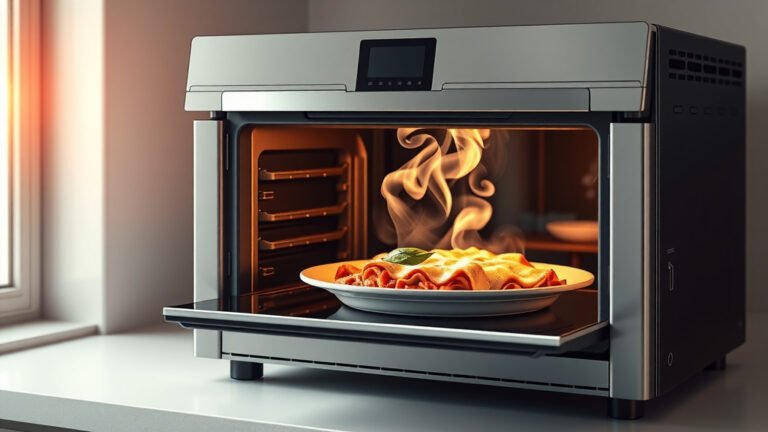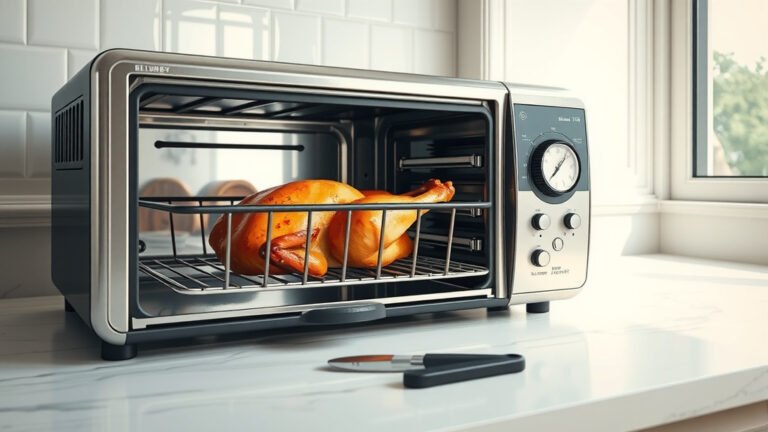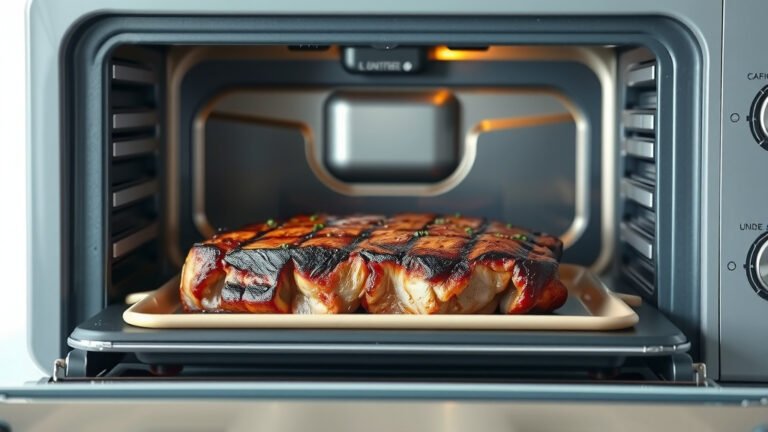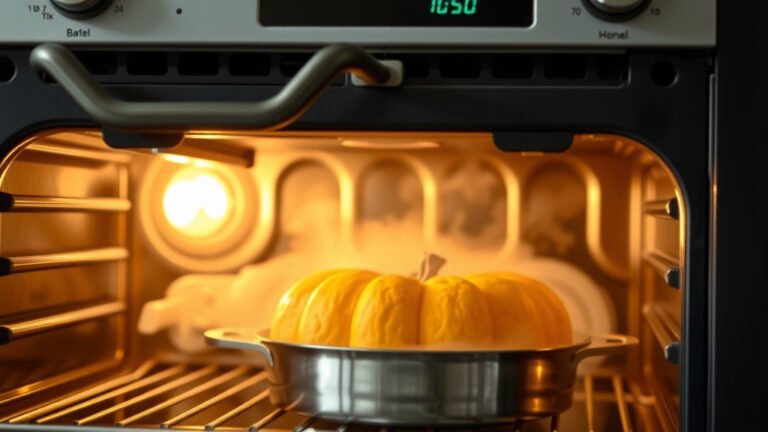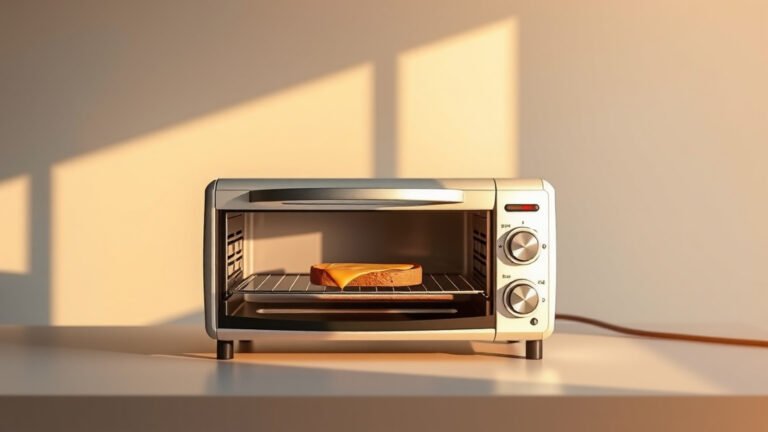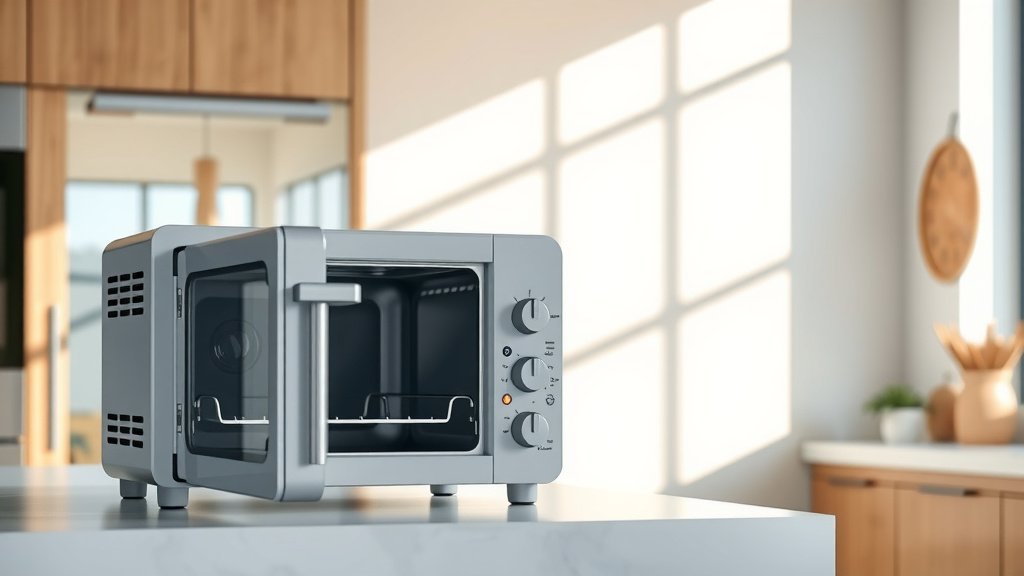
The convection setting on a toaster oven utilizes a fan to actively circulate hot air around your food, promoting faster and more even cooking than standard bake functions. This circulation helps create a crisper exterior and more uniformly cooked interior for many dishes.
Essentially, it transforms your compact oven into a mini forced-air cooking powerhouse, which can significantly improve your culinary results, especially when you seek browned, crispy textures.
Here’s a quick overview of what you’ll learn about the convection setting:
- It uses a fan to move hot air, cooking food faster.
- You’ll get more even browning and crispier textures.
- Many foods benefit, from roasted veggies to baked goods.
- You might need to adjust your cooking times and temperatures.
- It’s a fantastic feature for anyone serious about compact cooking.
What Is Convection Setting On Toaster Oven?
The convection setting on your toaster oven brings a powerful cooking dynamic to your kitchen. It activates a fan inside the oven that continuously moves hot air, reaching every surface of your food.
Think of it as creating a miniature, controlled windstorm of heat, ensuring no spot is left uncooked or under-browned. This active air movement is what makes convection different and often preferred.
How Does Convection Heating Actually Work?
Imagine your regular oven as a calm, warm room. Heat rises, and some spots are warmer than others. Now, picture that room with a gentle fan blowing, distributing the warmth everywhere.
That’s convection. The fan pushes hot air around the cooking chamber, stripping away the cooler air layers that naturally form around food. This allows heat to transfer more efficiently and consistently.
The Power of the Fan
The small fan is the star of the convection show. It’s usually located at the back of the toaster oven and works tirelessly to keep the hot air in constant motion. This constant movement is key.
It means your food cooks not just from radiant heat, but also from the direct, forced contact of hot air on all sides. This helps to prevent hot spots and ensures a more uniform temperature throughout.
Why Choose Convection Over Regular Baking?
You might wonder, “Why bother with this fan when my regular bake setting works fine?” The answer comes down to speed and quality of cooking. Convection offers some clear advantages.
Many experts we consulted suggest that convection can truly elevate your toaster oven’s performance, especially for certain dishes. It’s like upgrading from a leisurely stroll to a brisk power walk in terms of cooking efficiency.
Faster Cooking Times
Because the hot air is always moving, it transfers heat to your food more quickly. This often means you can reduce your cooking time by 20-30% compared to a conventional setting.
This efficiency is a huge plus when you’re short on time but still want perfectly cooked meals. We found that this speed can be a real game-changer for busy weeknights.
Even Browning and Crispier Results
Ever had one side of your cookie brown more than the other? Convection helps eliminate this problem. The circulating air ensures heat reaches all surfaces, leading to consistent browning.
This also helps to create those desirable crispy textures on things like roasted vegetables, chicken skin, or even your morning toast. It’s what many home cooks seek for that professional touch.
What Foods Benefit Most from Convection?
Not all foods are created equal when it comes to convection. Some dishes truly shine under its fan-assisted heat, while others might prefer a gentler approach.
Understanding which foods to convection bake will make you a more efficient and successful toaster oven user. You’ll be surprised at the versatility it offers.
- Roasted Vegetables: Get beautifully caramelized edges and tender interiors.
- Baked Potatoes: Achieve crispy skins and fluffy insides faster.
- Frozen Foods: French fries, pizza, and chicken nuggets cook more quickly and become crispier.
- Cookies and Pastries: Even baking across the tray, though delicate items need care.
- Chicken and Meats: Crispy skin and even cooking, especially for smaller cuts.
Foods That Might Not Like Convection
While convection is fantastic, it’s not a one-size-fits-all solution. Some delicate items can be negatively affected by the strong airflow.
For example, things like custards, soufflés, or light cakes might dry out or get uneven tops. These dishes often thrive in the calmer environment of a regular bake setting.
Adjusting Recipes for Convection
When you switch to convection, you usually need to make a couple of tweaks to your recipes. This is because of the increased efficiency of the circulating hot air.
Don’t worry, it’s not complicated, and once you get the hang of it, you’ll be adjusting like a pro. Think of it as tuning your instrument for a specific song.
Lowering the Temperature
Many experts suggest reducing the recipe’s recommended temperature by about 25 degrees Fahrenheit (around 15 degrees Celsius) when using convection. The fan makes the oven feel hotter than the set temperature.
For instance, if a recipe calls for 375°F (190°C), try setting your convection toaster oven to 350°F (175°C) instead. This simple adjustment prevents your food from overcooking or burning.
Reducing Cooking Time
As we mentioned, convection cooks faster. So, you’ll also want to shorten the cooking time. A good rule of thumb is to reduce the time by 20-30%.
Start checking your food earlier than the recipe suggests, perhaps 10-15 minutes before the original cooking time. This proactive checking helps you avoid burning your masterpiece!
Convection vs. Traditional Toaster Oven Settings
It’s helpful to understand the core differences between a convection setting and your toaster oven’s traditional bake function. They serve different purposes and excel in different areas.
Here’s a simple comparison to help you decide which setting is best for your current cooking task:
| Feature | Convection Setting | Traditional Bake Setting |
|---|---|---|
| Heat Distribution | Fan-circulated, even | Radiant heat, less even |
| Cooking Speed | Faster (20-30% reduction) | Standard recipe time |
| Browning/Crisping | Excellent, all-around | Good, but less uniform |
| Moisture Retention | Can be slightly drying | Better for delicate items |
| Best For | Roasting, crisping, frozen foods | Cakes, custards, delicate baking |
When to Use Each Setting
You have a choice! For most everyday tasks like reheating leftovers, making toast, or crisping up snacks, convection is often your best friend. It gets the job done quickly and effectively.
However, for delicate baked goods or recipes where precise moisture retention is key, the traditional bake setting is probably a safer bet. Knowing when to switch is a sign of a truly savvy cook.
Practical Tips for Using Convection
Now that you know the ‘what’ and ‘why’ of convection, let’s look at some practical tips to make your experience smooth and successful. A few simple habits can make a big difference.
You’ll quickly find that incorporating convection into your routine becomes second nature. It’s about smart cooking, not just quick cooking.
Don’t Overcrowd Your Oven
Convection relies on air circulation. If you pack too much food or use pans that block the airflow, the fan can’t do its job effectively. Always leave some space around your food.
We found that using smaller pans and avoiding stacking items allows the hot air to truly circulate freely. This helps maintain the evenness that convection promises.
Use the Right Bakeware
For convection, lighter colored and shallower pans work best. Dark pans absorb more heat and can lead to over-browning with the intense convection heat. Airflow is also key for efficient cooking (NIH).
If you have glass or ceramic bakeware, keep an eye on it, as these materials also retain heat well. Generally, metal baking sheets are excellent for convection cooking.
Check Your Food Often
Even with temperature and time adjustments, every oven is a little different. Get into the habit of checking your food a few minutes before the estimated finish time.
A quick peek can prevent overcooked meals. You’ll quickly learn your specific toaster oven’s quirks and become a master of its convection capabilities.
Convection Toaster Oven Checklist
Before you start your next convection cooking adventure, keep this quick checklist in mind:
- Reduce temperature by 25°F.
- Shorten cooking time by 20-30%.
- Use lighter, shallower pans.
- Don’t overcrowd the oven cavity.
- Check food earlier than expected.
- Rotate pans if your oven has known hot spots.
Cleaning and Maintenance of Convection Toaster Ovens
Like any kitchen appliance, your convection toaster oven benefits from regular cleaning. The fan can sometimes blow crumbs or grease around, leading to more widespread mess.
A quick wipe-down after use keeps it sparkling and prevents baked-on grime. Many manufacturers suggest specific cleaning methods, so always refer to your manual (Mayo Clinic).
Addressing Grease and Crumbs
After roasting, grease splatters can accumulate, especially near the fan. Make sure to let your oven cool completely, then wipe down the interior with a damp cloth and mild soap. A crumb tray is your friend!
Removing the crumb tray and emptying it regularly prevents smoking and keeps your kitchen fresh. Cleanliness ensures your toaster oven performs its best for years to come.
Conclusion
The convection setting on your toaster oven is far more than just a fancy button; it’s a powerful tool for enhancing your cooking. By circulating hot air, it delivers faster, more even, and consistently crisp results.
Whether you’re roasting vegetables, baking cookies, or simply crisping up frozen snacks, convection offers a significant upgrade to your culinary experience. Embrace its benefits, make those small recipe adjustments, and you’ll unlock a new level of efficiency and deliciousness in your compact kitchen appliance. Happy cooking!
Can I use aluminum foil with the convection setting?
Yes, you can generally use aluminum foil in a convection toaster oven. However, be mindful not to cover entire racks or block the fan vents, as this can hinder the airflow that makes convection effective. Also, avoid foil touching the heating elements.
Does convection dry out food more quickly?
Because the fan actively circulates air, it can sometimes dry out the surface of food more quickly than a traditional oven. This is great for crisping, but for foods that need to stay moist, like certain cakes, you might want to use the regular bake setting or adjust your cooking technique.
Is a convection toaster oven more energy efficient?
Many experts agree that convection toaster ovens can be more energy efficient than larger conventional ovens. They heat up faster and cook food in less time, using less energy overall. This makes them a smart choice for everyday cooking, saving both time and electricity.
What’s the difference between “Convection Bake” and “Convection Roast”?
“Convection Bake” is ideal for general baking and cooking, using moderate temperatures with the fan. “Convection Roast” typically uses higher temperatures and often targets specific heating elements alongside the fan, designed to sear and brown meats more aggressively for roasting.
Should I preheat my convection toaster oven?
Yes, preheating is still important, even with convection. While it heats up faster, allowing it to reach the set temperature before adding food ensures consistent results and proper cooking from the start. Just be aware that preheating might take less time than a conventional oven.