
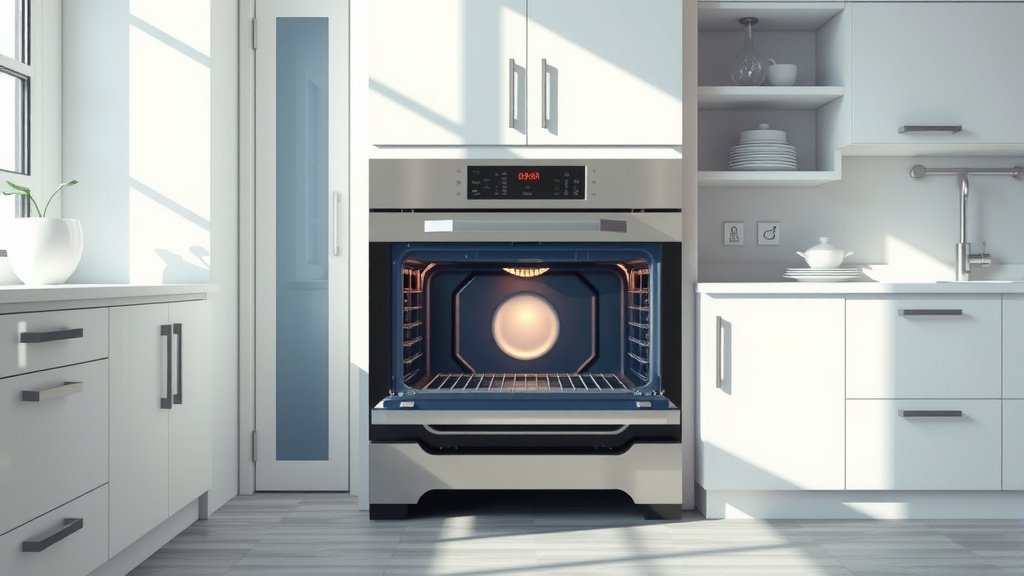
When you are asking what oven type is easiest to clean, self-cleaning ovens, particularly those with pyrolytic cleaning cycles, are generally the simplest.
Catalytic liners also offer a good low-maintenance option for easier oven cleaning, requiring less scrubbing than traditional models.
- Pyrolytic self-cleaning ovens burn away grime at high temperatures, leaving ash to wipe away.
- Catalytic ovens feature special liners that absorb grease, breaking it down while you cook.
- Steam clean ovens loosen light spills with water and heat, making them easy to wipe.
- Manual clean ovens require hands-on scrubbing with cleaners and elbow grease.
- The best choice depends on how often you cook and your cleaning preferences.
What Oven Type Is Easiest To Clean?
The oven type universally recognized as the easiest to clean is the pyrolytic self-cleaning oven. These appliances use extreme heat to turn food residue into ash, which you simply wipe away.
Understanding Oven Cleaning Technologies
Modern ovens come with various cleaning features. Each type aims to reduce your cleaning effort in its own way. We’ll explore the main options available to help you decide.
Pyrolytic Self-Cleaning Ovens
Imagine your oven cleaning itself. Pyrolytic technology does just that. It heats the oven interior to around 900°F (482°C), incinerating all food splatters and grease. What’s left is a small amount of fine ash.
Catalytic Liners
Some ovens have special catalytic liners. These liners are typically rough, porous panels on the oven’s sides, back, or top. They absorb grease and grime, then break it down at normal cooking temperatures.
Steam Cleaning Ovens
Steam cleaning is a gentler approach. It involves pouring water into a special reservoir or on the oven floor. The oven heats up, creating steam that loosens light food spills. This method is quick but best for minor messes.
Manual Clean Ovens
These are the traditional ovens. They require you to manually apply oven cleaner and scrub the interior. While more effort, many people appreciate the control and thoroughness of a hands-on cleaning method.
Deep Dive into Pyrolytic Self-Cleaning Ovens
When you activate a pyrolytic cycle, the oven door locks for safety. The intense heat effectively removes even baked-on grease and carbon deposits. We found that this cycle usually lasts between 1.5 to 5 hours, depending on the oven and soil level.
Are Self-Cleaning Ovens Truly Hands-Free?
Not entirely, but almost. Before starting, you must remove all oven racks, baking sheets, and any foil. During the cycle, the room may become quite warm, and there might be some odor from the burning food. After it cools, you simply wipe away the remaining ash with a damp cloth.
Exploring Catalytic Oven Cleaning
Catalytic liners work differently from pyrolytic cleaning. They are not designed to handle heavy, burned-on spills. Instead, they gradually break down grease and food residue as you cook. Think of it as a continuous, low-level cleaning process.
Limitations of Catalytic Liners
These liners are often found only on certain surfaces, like the side walls, not necessarily the entire oven cavity. They do not handle sugary spills well and may lose effectiveness over time, requiring replacement (Good Housekeeping Institute).
Steam Cleaning Ovens: A Gentle Approach
For those who prefer not to use harsh chemicals, steam cleaning is a fantastic option. You add water, run a short cycle (often 20-30 minutes), and the steam helps soften messes. This makes them much easier to wipe clean afterward. Many experts say this method is ideal for frequent, light cleaning.
Manual Clean Ovens: The Classic Choice
Manual ovens are the most common and often the most affordable. While they demand more elbow grease, you have full control over the cleaning products. You can choose from traditional chemical cleaners, natural solutions like baking soda and vinegar, or even specialized pastes (Environmental Protection Agency).
Factors Making Ovens Easier to Clean Overall
Beyond the primary cleaning technology, other features can make an oven simpler to maintain.
- Removable Oven Door: Many models now allow you to lift off the oven door. This makes reaching the back of the oven much easier.
- Smooth Interior Finishes: Some oven interiors have smoother enamel. These are less porous and tend to resist sticking.
- Dishwasher-Safe Racks: Having racks you can toss in the dishwasher is a true time-saver. Check your owner’s manual for this feature.
- Hidden Bake Element: An exposed bake element can collect spills. A hidden element under the oven floor creates a smooth, flat surface that’s easy to wipe clean.
Comparing Oven Cleaning Methods
Here’s a quick overview of how different oven types stack up when it comes to cleaning effort:
| Oven Type | Cleaning Method | Effort Level | Best For |
|---|---|---|---|
| Pyrolytic Self-Clean | High heat burn-off | Very Low (wipe ash) | Heavy, baked-on grime |
| Catalytic | Grease absorption while cooking | Low (light wiping) | Regular cooking, light grease |
| Steam Clean | Steam loosens spills | Medium (gentle wiping) | Light, fresh spills |
| Manual Clean | Scrubbing with cleaners | High (requires effort) | Complete control, specific needs |
Essential Tips for Keeping Any Oven Cleaner
No matter your oven type, a few habits can make a big difference in maintaining cleanliness. Think of these as your oven upkeep checklist:
- Always use a cookie sheet or foil below dishes that might bubble over.
- Wipe up fresh spills as soon as the oven cools down.
- Avoid using abrasive scrubbers on oven surfaces, especially on catalytic liners.
- Run a quick steam clean cycle after cooking particularly messy dishes if your oven has the feature.
- Don’t let spills sit and bake on for multiple cooking sessions.
Your Cleaning Schedule Matters
Creating a regular cleaning schedule can prevent massive build-ups. For instance, a quick wipe-down every week or a full cleaning every few months works well. Consistency is key to an always-ready oven.
Dealing with Spills Immediately
The golden rule for oven cleaning is to address spills right away. Once food bakes onto the surface repeatedly, it becomes much harder to remove. Think of it like taking care of a small stain before it sets in on your favorite shirt.
Conclusion
When you are seeking the easiest oven to clean, pyrolytic self-cleaning ovens clearly take the lead. They handle the toughest grime with minimal effort from you. Catalytic and steam-clean ovens offer valuable assistance for lighter maintenance. Manual ovens, while requiring more hands-on work, provide flexibility in cleaning choices.
Ultimately, the best oven for you balances cleaning ease with your cooking style and budget. Consider how much you cook, the types of food you prepare, and your willingness to perform upkeep. Your choice impacts not only your cooking enjoyment but also your kitchen cleaning routine.
What are the downsides of a self-cleaning oven?
Self-cleaning ovens can produce strong odors and a lot of heat during the cycle, sometimes requiring you to open windows. They also use a significant amount of energy for each cleaning cycle. Some users report that the intense heat can shorten the lifespan of certain oven components over many years of use.
Can I use oven cleaner in a self-cleaning oven?
No, you generally should not use chemical oven cleaners inside a self-cleaning oven. The harsh chemicals can damage the oven’s special enamel finish, which is designed to withstand high heat. Always check your oven’s manual for specific cleaning instructions.
How often should I clean my oven?
The frequency depends on how often you cook and what you cook. If you use your oven daily, a quick wipe-down weekly and a deeper clean every 1-3 months is often suggested. For light use, a deep clean every 6-12 months might suffice. Pay attention to visible spills and odors as indicators.
Do catalytic liners need to be replaced?
Yes, catalytic liners do wear out over time. Their grease-absorbing properties can diminish, especially if they are heavily soiled or not cared for properly. Many manufacturers suggest replacing them every 3-5 years, depending on usage. You can often purchase replacement panels directly from the oven manufacturer.
Is steam cleaning effective for heavy oven grease?
Steam cleaning is highly effective for loosening light, fresh spills and grime. However, it is generally not powerful enough to remove heavy, baked-on grease and carbon deposits that have accumulated over time. For those tough jobs, a pyrolytic self-clean cycle or manual scrubbing is more effective.
