
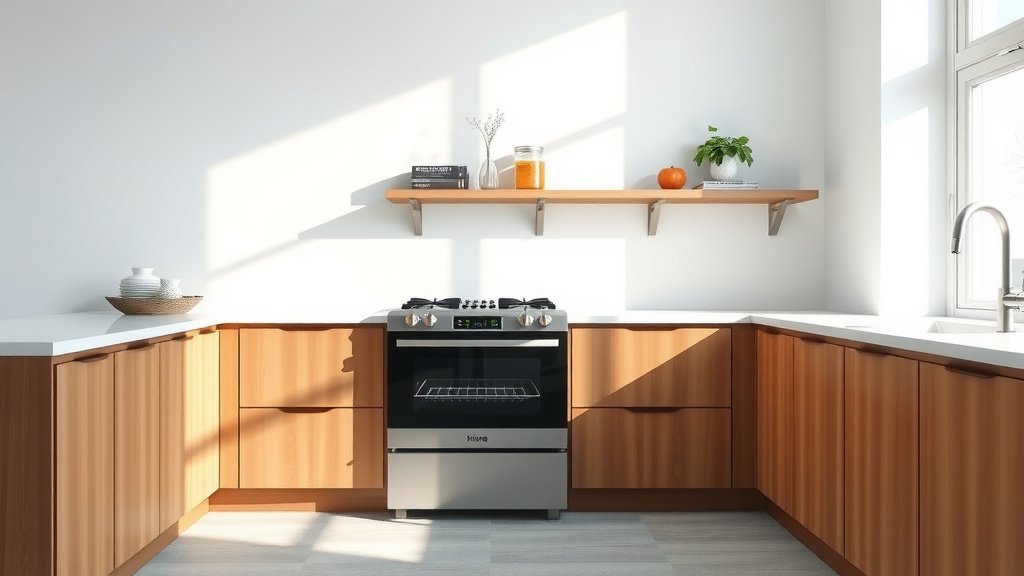
The right gas oven size largely depends on your household size, cooking frequency, and available kitchen space. Most homeowners find a 30-inch standard capacity oven suitable for general family needs.
To determine what size gas oven you need, measure your existing cutout or available space carefully, and then consider your cooking habits and desired features.
- For singles or couples, a 24-inch gas oven is often enough, fitting smaller kitchens perfectly.
- Families of 3-5 people usually benefit most from a standard 30-inch model, offering versatile cooking space.
- If you frequently entertain or cook large meals, consider a larger 36-inch oven or a double oven setup.
- Always measure your kitchen’s existing space precisely before looking at new oven models.
- Think about features like convection or warming drawers, which might influence your overall size decision.
What Size Gas Oven Do I Need?
Finding the correct gas oven size prevents future headaches and ensures your kitchen functions beautifully. It balances your cooking aspirations with practical space limits.
Why Oven Size Matters: More Than Just Food
Choosing the right oven size affects more than just fitting your casserole dish. It impacts your kitchen’s workflow, energy consumption, and overall cooking enjoyment. An oversized oven heats slowly and wastes energy for small meals.
Conversely, a too-small oven makes cooking large family dinners a frustrating juggling act. We found that matching the oven to your lifestyle leads to a much happier kitchen experience.
Understanding Oven Capacity: Liters vs. Cubic Feet
Oven capacity is typically measured in cubic feet (cu ft) in North America or liters elsewhere. A larger cubic foot number means more internal cooking space. For instance, a 5.0 cu ft oven holds significantly more than a 2.5 cu ft model.
Focus on this number when comparing different oven models. This internal volume tells you how much actual food you can cook at one time.
Consider Your Cooking Habits and Family Size
Your daily cooking routine and the number of mouths you feed are huge factors. Do you bake extensively or just heat frozen pizzas? Do you host many dinner parties? These questions guide your decision.
For the Single Cook or Couple
If you live alone or with one other person, you likely do not need a massive oven. A compact 24-inch or even a smaller 20-inch gas oven might be ideal. These ovens are perfect for single meals, small roasts, and standard baking.
They also save precious kitchen space, which is especially good in apartments or smaller homes. Many experts agree that choosing a smaller appliance for smaller households reduces energy waste (U.S. Department of Energy).
Family-Friendly Oven Sizes
For a family of 3 to 5 people, the standard 30-inch gas oven is usually the sweet spot. This size offers enough room for a Thanksgiving turkey or multiple trays of cookies. You can comfortably cook several dishes simultaneously.
Research often connects this size with the typical needs of a growing family. It provides flexibility without taking up excessive kitchen real estate.
Hosting and Holiday Feasts
Do you frequently entertain large groups or prepare big holiday meals? Then you might need a larger oven, perhaps a 36-inch model or even a double oven. A bigger oven means less waiting and more delicious food on the table.
Some people opt for two smaller ovens instead of one large one. This provides fantastic versatility for complex meals or when cooking for a crowd.
Measuring Your Kitchen Space: The Crucial First Step
Before you even look at models, grab your tape measure. You need to know the exact dimensions of where your new oven will go. Measure the width, depth, and height of your existing cutout or empty space.
Remember to account for any necessary clearances around the oven for proper ventilation. Many guidelines point to accurate measurements as a good first step (National Kitchen & Bath Association).
Built-In vs. Freestanding: What Fits Where?
Gas ovens come in two main types: freestanding and built-in. A freestanding range combines the oven and cooktop into one unit. These are often easier to install and can be placed almost anywhere with the right hookups.
Built-in ovens, on the other hand, slide into cabinets or walls. They offer a sleek, integrated look. Always double-check specific installation requirements for each type, as dimensions can vary.
Gas Oven Dimensions: A General Guide
Here’s a quick overview of common gas oven sizes. Remember that these are approximate, and specific models will differ slightly.
| Oven Type / Width | Typical Capacity Range | Common Uses |
|---|---|---|
| 20-24 Inches | 2.0-3.0 cu ft | Single person, small apartments, secondary oven |
| 30 Inches | 4.0-5.5 cu ft | Standard family, everyday cooking, occasional entertaining |
| 36 Inches + | 5.5-7.0 cu ft + | Large families, frequent entertaining, professional cooks |
Features That Influence Size Needs
Beyond basic capacity, certain features can change your size requirements or how you use the space. Thinking about these early helps you make the best choice.
Double Ovens: Two Are Better Than One?
A double oven offers two separate baking cavities, often with independent temperature controls. This is ideal for cooking multiple dishes at different temperatures simultaneously. It’s like having two chefs in your kitchen!
While a double oven takes up more space vertically, it provides unmatched flexibility. We found this setup especially popular among those who bake a lot or host often.
Convection Ovens: Quicker Cooking in Less Space?
Convection ovens use a fan to circulate hot air evenly. This often results in faster cooking times and more consistent results. Some people feel a convection oven can cook more efficiently, even in a slightly smaller space.
However, the overall internal volume still dictates how much food can fit inside. Convection mainly improves cooking performance, not necessarily internal capacity.
Installation and Ventilation Requirements
Proper installation of a gas oven is critical for safety. Gas lines and electrical hookups must meet local codes. Adequate ventilation is also a must to remove heat and cooking fumes.
Always consult the manufacturer’s installation manual and, if unsure, hire a certified professional. Safety should always be your top priority with any gas appliance.
Budgeting for Your New Gas Oven
Oven size definitely impacts the price tag. Larger ovens with more advanced features typically cost more. Set a realistic budget before you start shopping to narrow down your options.
Consider not just the purchase price, but also potential installation costs. Sometimes, spending a little more upfront can save you headaches later.
Checklist for Choosing Your Gas Oven Size
- Measure your kitchen space precisely.
- Assess your household size and cooking frequency.
- Consider if you entertain often or cook large meals.
- Decide if you prefer a freestanding or built-in model.
- Think about desired features like convection or a double oven.
- Review ventilation and installation needs.
- Set a clear budget before you shop.
Conclusion
Choosing the right size gas oven doesn’t have to be a daunting task. By carefully considering your kitchen’s dimensions, your family’s needs, and your cooking style, you can find the perfect fit. A well-chosen oven becomes a true workhorse in your home, bringing countless delicious meals to your table. Take your time, measure twice, and you will surely make a wise choice that serves you well for years to come.
FAQs
Is a 30-inch gas oven big enough for a family of four?
Yes, a 30-inch gas oven is generally considered ideal for a family of four. It offers ample space for standard roasts, multiple baking sheets, and everyday meals without feeling cramped.
Can I put a 24-inch gas oven in a 30-inch cutout?
You can fit a 24-inch oven into a 30-inch cutout, but it will leave a significant gap on either side. You would need custom filler panels or cabinetry work to make it look integrated and prevent food traps.
What is the difference between oven capacity and exterior dimensions?
Oven capacity refers to the internal cooking volume, typically measured in cubic feet or liters. Exterior dimensions are the physical measurements of the oven itself (width, height, depth), which determine if it fits into your kitchen space.
Do convection ovens require more space than conventional gas ovens?
No, convection ovens do not inherently require more space. The convection fan and elements are built into the oven’s design, and its overall exterior dimensions and internal capacity are similar to non-convection models of the same class.
How much space should I leave around a gas oven for ventilation?
Specific ventilation requirements vary by model and local codes, but generally, manufacturers recommend leaving a small clearance around the sides and back for proper airflow. Always consult the installation manual for precise guidelines for your chosen oven.
