
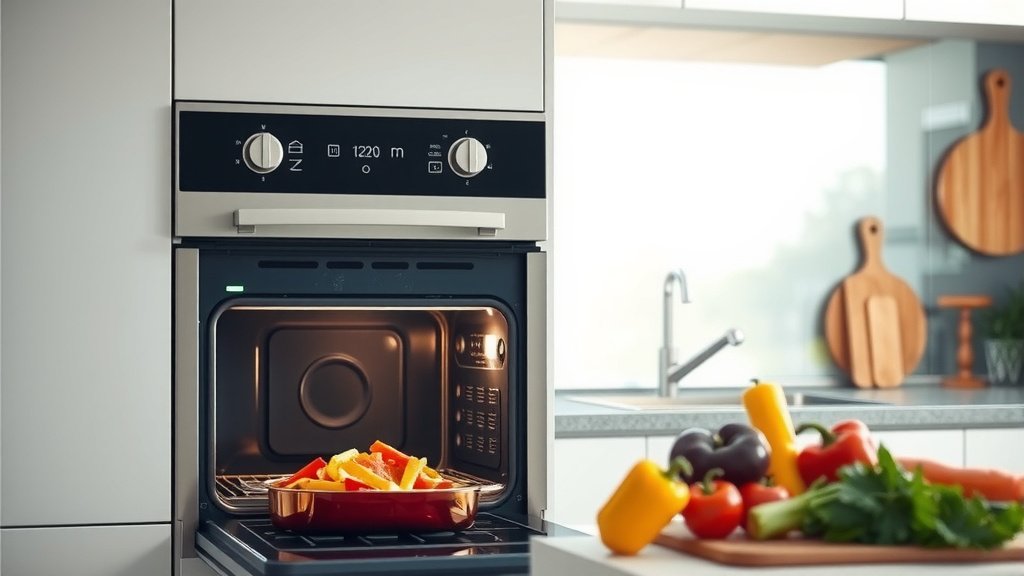
For the healthiest cooking, convection ovens and air fryers (a type of convection oven) often top the list due to their ability to cook food efficiently with less added fat.
These ovens use circulating hot air, promoting even cooking and crispy textures without excess oil, making them a healthier choice for many dishes.
- Convection ovens and air fryers generally help you cook with less oil.
- Steam ovens are excellent for preserving nutrients and moisture in your food.
- Your overall cooking method and food choices are often more important than the oven type itself.
- Focus on lean proteins, plenty of vegetables, and minimal added fats for the best health benefits.
- Every oven can be healthy; it’s all about how you use it.
Which Oven Is Healthiest For Cooking Food?
The healthiest oven for cooking food is often the one that helps you prepare meals with minimal added fats and preserves nutrients effectively. Convection ovens and steam ovens generally stand out in this regard.
The Power of Hot Air: Convection Ovens and Air Fryers
Have you ever wondered how to get that perfect crisp without deep-frying? Convection ovens and air fryers are your secret weapon. They use fans to circulate hot air evenly around your food.
This constant airflow means food cooks faster and more uniformly. You can achieve those lovely crispy textures with just a tiny bit of oil, or sometimes none at all.
Why Convection Stands Out for Health
Research often connects cooking methods that reduce fat with better health outcomes (Cleveland Clinic). Convection ovens allow you to roast vegetables and cook proteins like chicken or fish with less oil than traditional methods.
Think about it: less oil means fewer calories and often less saturated fat in your meal. Plus, the even heat helps food brown nicely, which can make healthy dishes even more appealing.
Air fryers, essentially compact convection ovens, are fantastic for quickly “frying” items like sweet potato fries or chicken tenders. They give you the satisfying crunch without the heavy oil use of a deep fryer.
Embracing Moisture: Steam Ovens
Imagine cooking food that keeps all its natural goodness and stays wonderfully moist. That’s where steam ovens shine. They cook food using steam, which is a very gentle and effective method.
Steam cooking is highly valued for its ability to retain nutrients. When you boil vegetables, some water-soluble vitamins can leach out. Steaming keeps them locked in.
Benefits of Steam Cooking for Your Body
Many experts say that steaming is one of the best ways to cook vegetables to preserve their vitamins and minerals (Mayo Clinic). This oven type helps you prepare vibrant, nutrient-rich meals.
You can steam fish, chicken, vegetables, and even some grains. The food tastes incredibly fresh and requires no added fats. It’s a fantastic option if you’re looking to maximize the nutritional value of your meals.
Traditional Ovens: Still a Solid Option?
What about the oven you probably grew up with? Your standard radiant heat oven is still a perfectly good tool for healthy cooking. It works by radiating heat from the top and bottom elements.
While it doesn’t circulate air like a convection oven, you can absolutely cook healthy meals in it. Think roasted chicken, baked fish, or trays of colorful roasted vegetables.
Understanding Radiant Heat for Everyday Meals
The key with traditional ovens is your cooking approach. You can easily bake or roast foods with minimal oil. Using parchment paper or silicone mats can further reduce the need for added fats.
Many home cooks use these ovens every day to create nutritious dishes. The oven type is less about inherent “unhealthiness” and more about how you utilize it for your diet.
Comparing Oven Types for Healthy Cooking
Let’s look at a quick comparison to help you decide which oven might fit your lifestyle best for healthy eating.
| Oven Type | Key Health Benefit | Best For | Consideration |
|---|---|---|---|
| Convection Oven/Air Fryer | Reduces need for added fats, faster cooking. | Roasting vegetables, crispy proteins, “fried” foods. | Can dry out some foods if not managed. |
| Steam Oven | Preserves nutrients, adds no fat, keeps food moist. | Vegetables, fish, chicken, gentle cooking. | May not brown foods effectively. |
| Traditional Oven | Versatile for baking/roasting with care. | Casseroles, baked goods, slow roasts. | Requires more attention to oil use. |
It’s Not Just the Oven: Your Cooking Methods Matter
Choosing an oven is one thing, but how you cook is often far more impactful. Even the “healthiest” oven can produce an unhealthy meal if you use too much oil or unhealthy ingredients.
Conversely, a traditional oven can create incredibly nutritious dishes with the right techniques. It’s about being mindful in your kitchen.
How Cooking Technique Impacts Your Health
For example, choosing to bake or roast vegetables with a light drizzle of olive oil in any oven is healthier than deep-frying them. Opting for marinades made with herbs and spices instead of heavy cream sauces makes a difference.
Many guidelines point to choosing healthier fats like olive oil or avocado oil in moderation when you do need them (NIH). Always consider the ingredients alongside your cooking method.
Smart Food Choices: What You Put In Matters
No matter how advanced your oven is, the food you choose to cook in it is paramount. An oven can’t magically make processed foods healthy. It’s about starting with good, whole ingredients.
Focus on lean proteins, a rainbow of vegetables, whole grains, and healthy fats. These form the foundation of a nutritious diet.
Tips for Healthier Oven Cooking
Ready to make the most of your oven for healthier meals? Here are a few simple tips:
- Use less oil: A light spray or brush often works wonders.
- Load up on veggies: Roast various vegetables for a flavorful and nutrient-dense side.
- Season wisely: Rely on herbs, spices, lemon juice, and vinegars for flavor, not just salt.
- Lean protein power: Bake or roast fish, chicken breast, or lean cuts of meat.
- Embrace parchment paper: It prevents sticking and reduces the need for oil cleanup.
Your Checklist for Healthier Meals
Here’s a quick checklist to help you make healthy choices when cooking in any oven:
- Are you using minimal added fats?
- Is your plate filled with a variety of vegetables?
- Are you choosing lean protein sources?
- Are you seasoning with herbs and spices?
- Are you avoiding excessive sugar or processed ingredients?
- Are you portioning your meals appropriately?
Conclusion
When asking “Which oven is healthiest for cooking food?”, the answer often points to convection ovens, air fryers, and steam ovens due to their ability to cook with less fat and preserve nutrients. However, remember that your cooking choices are key.
Any oven can be a healthy cooking tool if you prioritize whole ingredients, minimal added fats, and smart preparation methods. Focus on the food, the technique, and your overall dietary habits for the best results.
Can I use aluminum foil in a healthy oven?
Yes, you can generally use aluminum foil in most ovens. It helps with cleanup and can prevent certain foods from over-browning. Many experts say that foil is safe for cooking when used properly, though some people prefer to avoid it for highly acidic foods.
Are microwave ovens healthy for cooking?
Microwave ovens are generally considered healthy for cooking. They cook food quickly using electromagnetic waves, often preserving nutrients because of the shorter cooking times and minimal water usage compared to boiling. The key is to cook foods thoroughly.
What about combination ovens for health?
Combination ovens, which often blend convection and steam functions, can be an excellent healthy choice. They offer the best of both worlds: the browning and reduced fat benefits of convection with the nutrient preservation and moisture of steam. This versatility allows for very healthy and flexible cooking.
How can I prevent nutrient loss when oven cooking?
To prevent nutrient loss, aim for shorter cooking times and avoid excessive temperatures. Using methods like steaming (in a steam oven) or roasting with minimal water can help. Cutting vegetables into larger pieces can also reduce surface area exposure to heat, retaining more nutrients.
Is baking healthier than roasting?
Baking and roasting are very similar cooking methods in an oven and generally equally healthy. Both involve dry heat. “Baking” often refers to foods that have a structure (like bread or cakes) or foods cooked at lower temperatures, while “roasting” often refers to vegetables and meats cooked at higher temperatures to achieve browning. The healthfulness comes down to the ingredients and added fats.
