
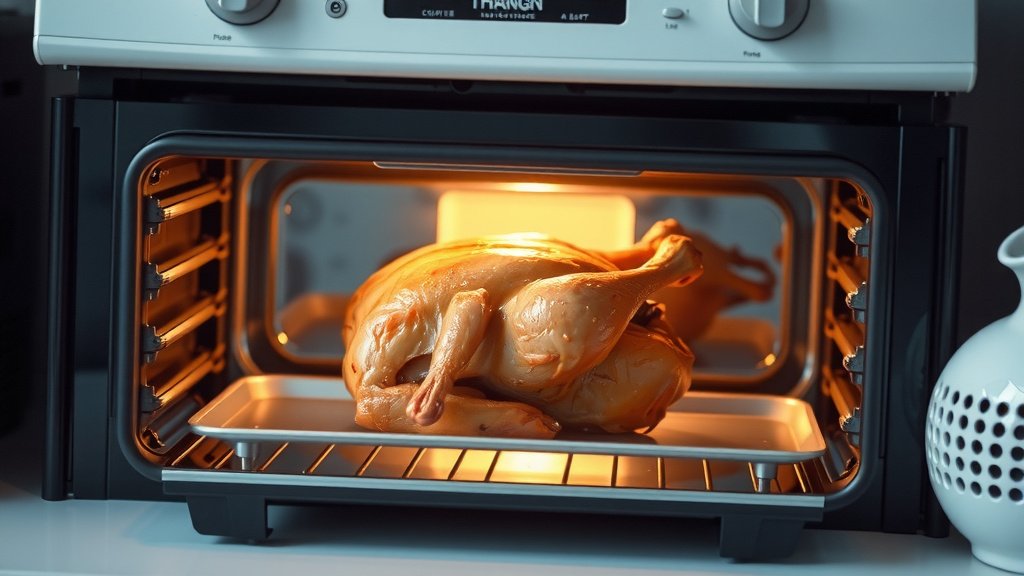
Cooking a turkey in an infrared oven often results in a crispy, golden-brown skin and incredibly juicy meat due to its direct, radiant heat that locks in moisture efficiently.
To cook turkey in an infrared oven, preheat it to around 325-350°F, place the prepared bird in a drip pan, and monitor internal temperature closely, aiming for 165°F in the thickest part of the thigh.
- Infrared ovens cook turkey faster and create a delicious crispy skin.
- Preparation involves thawing, seasoning, and possibly brining for a juicy bird.
- Always use a meat thermometer to ensure the turkey reaches a safe internal temperature of 165°F.
- Resting the turkey after cooking is vital for even moisture distribution and tenderness.
- Regularly check the oven’s temperature and the turkey’s progress to avoid overcooking.
How To Cook Turkey In An Infrared Oven?
Cooking a turkey in an infrared oven transforms your holiday meal into an extraordinary experience. This method uses radiant heat, which cooks food from the outside in, sealing in juices and giving you that perfectly crisp skin everyone loves.
Understanding Your Infrared Oven
Infrared ovens are different from traditional convection models. They emit radiant heat directly to the food, similar to how the sun warms you. This means faster cooking times and often a more efficient heat transfer. You’ll find that infrared excels at browning and crisping.
Why Choose Infrared for Turkey?
Many home cooks find that infrared offers unique advantages for poultry. It often produces a crispier skin without drying out the meat. We found this method can also shorten your overall cooking time, which is a real bonus on busy holidays.
Turkey Preparation is Key
Proper preparation sets the stage for a delicious turkey. This starts long before the bird hits the heat. Taking these steps ensures a flavorful and moist result, no matter your oven type.
Thawing Your Turkey Safely
A completely thawed turkey is important for even cooking. For every 4-5 pounds, allow 24 hours of thawing time in the refrigerator. A 15-pound turkey might need at least three days. Many experts, including the USDA, recommend this slow, safe method.
Brining or Seasoning Your Bird
A brine solution can keep your turkey incredibly moist and flavorful. If brining isn’t your style, generously season the turkey inside and out. Use herbs, spices, salt, and pepper to create deep flavors. You can rub butter or oil under the skin for extra moisture and browning.
- Thaw turkey completely in the refrigerator.
- Remove giblets and neck from cavities.
- Pat the turkey completely dry with paper towels.
- Season generously inside and out.
- Consider rubbing butter or oil under the skin.
Setting Up Your Infrared Oven
Getting your infrared oven ready is a simple process. It needs proper preheating and positioning to ensure your turkey cooks perfectly. A little setup foresight goes a long way towards success.
Preheating for Success
Always preheat your infrared oven to the recommended temperature. This ensures the oven’s heat is stable from the moment you place the turkey inside. A steady temperature is important for even cooking throughout the process.
Using a Drip Pan
Place your turkey in a sturdy roasting pan with a rack. This allows air to circulate around the bird and collects drippings for gravy. The drip pan also protects your oven from any messy spills, keeping things cleaner. Using a rack is important for consistent heat exposure.
The Cooking Process
Now, for the main event – cooking the turkey. Infrared heat works differently, so understanding the nuances will give you the best results. Keep a close eye on your bird and trust your thermometer.
Temperature and Initial Cook Time
Start your infrared oven at about 325-350°F. Infrared ovens cook faster, so keep this in mind. For a typical 10-12 pound turkey, you might cook for around 2.5 to 3.5 hours. Always rely on a meat thermometer for accuracy, not just timing.
| Turkey Weight | Approximate Cook Time (Infrared) | Internal Temperature |
|---|---|---|
| 8-12 lbs | 2.5 – 3.5 hours | 165°F |
| 12-16 lbs | 3.5 – 4.5 hours | 165°F |
| 16-20 lbs | 4.5 – 5.5 hours | 165°F |
| 20-24 lbs | 5.5 – 6.5 hours | 165°F |
Monitoring Internal Temperature
This is arguably the most crucial step. Insert a reliable meat thermometer into the thickest part of the thigh, making sure it doesn’t touch bone. The turkey is done when it reaches 165°F (74°C). You should also check the breast, aiming for the same temperature.
Turning and Basting
Some infrared ovens might cook more intensely on one side. If your model doesn’t have a rotisserie, you might want to rotate the pan halfway through. Basting can help keep the turkey moist, but remember to be quick to avoid losing too much heat from the oven. Many cooks find basting less critical with infrared because it seals in juices so well.
After Cooking: The Rest Period
Once your turkey reaches the correct internal temperature, your work isn’t quite done. The rest period is just as important as the cooking itself. Skipping this step can lead to a dry bird.
Why Resting Matters
Cover the turkey loosely with foil and let it rest for at least 20-30 minutes, or even up to an hour for larger birds. This allows the juices to redistribute throughout the meat, making it tender and succulent. Cutting too early means all those wonderful juices will run out onto your cutting board.
Troubleshooting Common Infrared Turkey Issues
Even with the best intentions, things can sometimes go a little sideways. Knowing how to adjust can save your meal. Infrared cooking has its own quirks, so let’s address a few.
Turkey Browning Too Fast
If your turkey is browning too quickly, especially on top, you can cover it loosely with aluminum foil. This acts as a shield, preventing further browning while the inside finishes cooking. You want that golden skin, not a burnt one. Adjusting your oven temperature downwards slightly can also help manage the browning. Remember, infrared heat is quite direct.
Ensuring Even Doneness
Sometimes, one part of the turkey might cook faster than another. A good quality meat thermometer helps you check multiple spots. If your turkey breast is done but the thighs need more time, you can carefully remove the breast or cover it to prevent overcooking while the rest finishes. Using a brining method can also help promote more uniform cooking.
Safety Reminders for Your Kitchen
Cooking large poultry always requires attention to food safety. Following simple guidelines protects everyone at your table. Always prioritize safety in the kitchen.
Preventing Cross-Contamination
Always use separate cutting boards and utensils for raw turkey and cooked foods. Wash your hands thoroughly with soap and water before and after handling raw meat. This prevents the spread of bacteria, keeping your meal safe. We found that cleanliness is paramount in turkey preparation (CDC).
Using a Reliable Thermometer
As mentioned, a meat thermometer is your best friend. Don’t guess if your turkey is done. Investing in a good digital thermometer provides accurate readings quickly. This ensures your turkey reaches a safe 165°F, preventing foodborne illness.
Conclusion
Cooking a turkey in an infrared oven can be a truly rewarding experience, giving you a bird with perfect crispy skin and wonderfully juicy meat. By focusing on careful preparation, monitoring temperatures closely, and allowing for that crucial resting period, you’ll master this technique. Embrace the unique advantages of infrared heat, and get ready to enjoy a turkey that will be the centerpiece of any meal. Happy cooking!
Can I use a rotisserie in my infrared oven for turkey?
Yes, many infrared ovens come with a rotisserie function, which is ideal for cooking turkey. Rotisserie cooking ensures even exposure to the radiant heat, often resulting in an incredibly uniform crisp skin and moist meat. It eliminates the need for manual turning.
How does infrared cooking affect the texture of turkey meat?
Infrared cooking tends to produce a very moist interior with a notably crispy exterior. The direct radiant heat seals the surface quickly, locking in juices. This often results in a tender, succulent meat texture that many people prefer.
Do I need to baste a turkey when cooking it in an infrared oven?
While basting is a common practice with traditional ovens, it’s often less necessary with infrared ovens. The nature of infrared heat helps to keep moisture inside the bird. If you wish to baste for added flavor or a specific glaze, do it sparingly to avoid cooling the oven too much.
What if my infrared oven only has one temperature setting?
Some simpler infrared models might have limited temperature controls. In such cases, your main tools for control become cooking distance from the heat source and careful monitoring. You might need to adjust the turkey’s position or use foil to prevent over-browning if the heat is very intense.
How do I clean my infrared oven after cooking a turkey?
Allow the oven to cool completely. For general spills, wipe surfaces with a damp cloth and mild soap. For baked-on grease, specialized oven cleaners or a paste of baking soda and water can be effective. Always refer to your specific oven’s manual for cleaning instructions, as methods can vary.
