
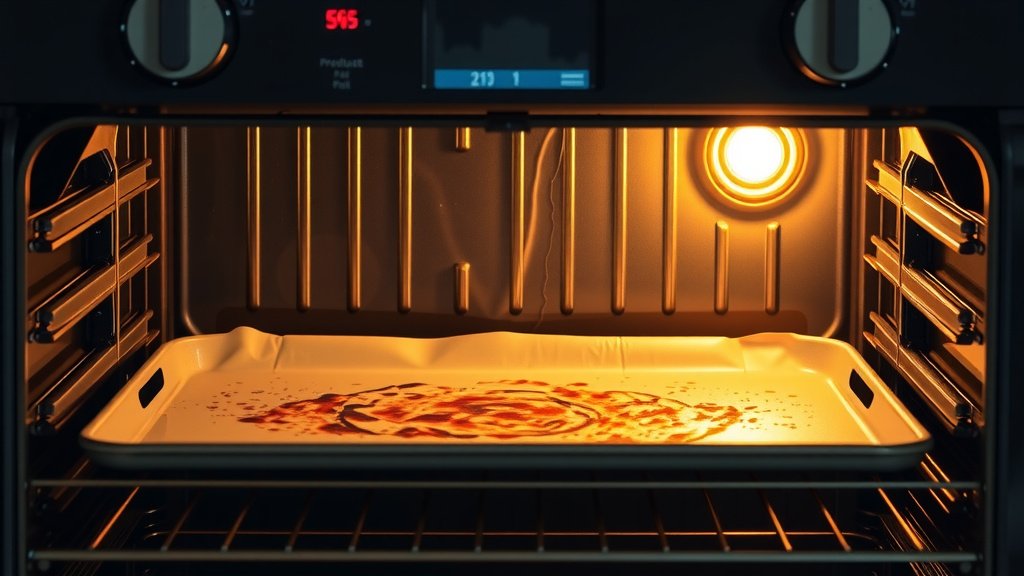
Your gas oven might burn the bottom of food because its heat source is usually at the bottom, creating intense direct heat that targets the underside of your dishes.
This concentrated heat, often combined with factors like oven calibration or baking pan choices, can cause the bottom of your dishes to overcook and even char.
Here’s a quick overview of why your gas oven might be burning the bottom of your food and how to fix it:
- Gas ovens usually have a burner at the bottom, making that area very hot.
- Your oven’s temperature might be inaccurate, causing it to run hotter than you think.
- Using the wrong type of baking pan can make the burning worse.
- Placing your food on the lowest rack brings it too close to the heat.
- Simple adjustments like oven thermometers and different bakeware can prevent issues.
Why Does Gas Oven Burn Bottom Of Food?
Gas ovens often burn the bottom of food because their main heat source, the burner, is located directly underneath the oven cavity. This placement means intense, direct heat hits the bottom of your cookware first.
Many experts say this is a fundamental design difference from electric ovens, which often have hidden elements or top/bottom elements that cycle to maintain a more even temperature (KitchenAid).
Understanding Your Gas Oven’s Heat
Think of your gas oven like a campfire. The flames are at the bottom, and anything too close to them gets cooked very quickly. Your oven works similarly, with the gas burner providing strong, direct heat.
We found that this direct exposure can quickly scorch the underside of your pies, cookies, or casseroles before the top even browns.
The Direct Heat Source
When you turn on a gas oven, the burner ignites, sending a powerful surge of heat from below. This immediate blast is great for getting to temperature quickly, but it creates a hot zone.
Research shows this localized heat needs careful management when baking delicate items (Appliance Science).
Is Your Oven Calibrated Correctly?
Sometimes, your oven’s temperature display might not be telling the whole truth. It could say 350°F, but actually be running much hotter inside, especially at the bottom.
Many experts say this calibration drift is common over time. It can definitely lead to burnt bottoms.
Checking for Accuracy
Want to know your oven’s true temperature? Grab an inexpensive oven thermometer. Place it inside and compare its reading to your oven’s dial. You might be surprised by the difference.
We found that using a thermometer is one of the easiest ways to rule out or confirm a calibration issue (Good Housekeeping).
The Role of Baking Pans
What you bake in matters a lot. Dark, thin metal pans absorb heat quickly and can intensify the burning effect. Have you ever noticed how a dark cookie sheet can make the bottoms extra crispy?
This rapid heat transfer directly contributes to overcooked bottoms.
Material Matters
Different materials handle heat differently. Glass, ceramic, and lighter-colored metal pans tend to distribute heat more evenly. They don’t absorb and transfer heat as aggressively.
For items prone to burning, switching to a lighter-colored, heavier-gauge pan can make a big difference.
| Bakeware Material | Heat Absorption | Ideal Use |
|---|---|---|
| Dark Metal | High, direct | Crispy crusts, robust bread |
| Light Metal | Moderate, even | Cookies, cakes, general baking |
| Glass/Ceramic | Slow, even | Casseroles, slow roasts, custards |
Rack Position: A Simple Solution
Where you place your food inside the oven is crucial. Placing a baking dish on the lowest rack puts it right next to the heat source. It’s like standing too close to a bonfire.
Simply moving your rack up one notch can often solve the problem instantly, creating a buffer from the direct heat.
Preheating: Too Hot, Too Soon?
Many recipes say to preheat your oven, which is good advice. But sometimes, people put food in before the oven has fully stabilized its temperature. This can expose the bottom to intense, uneven heat.
Always let your oven preheat for at least 15-20 minutes after it signals it’s ready. This allows the heat to truly circulate.
Airflow and Ventilation Issues
Ovens need good airflow to distribute heat evenly. If your oven racks are overloaded or blocked, hot air can get trapped. This creates pockets of intense heat, especially near the bottom.
We found that leaving enough space around your dishes helps air move freely and prevents hot spots (Food Network).
Solutions to Prevent Burnt Bottoms
Don’t despair! There are many practical ways to protect the bottom of your food. These tips can make baking in a gas oven much more enjoyable.
Let’s look at some simple fixes you can try today.
Using an Oven Thermometer
An oven thermometer is your best friend. It shows you the real temperature inside your oven. If it reads higher than your setting, you know to adjust your oven’s dial down a bit.
This small investment provides peace of mind and more consistent results.
Shielding the Bottom
Want a quick fix? Place an empty baking sheet or a pizza stone on the rack below your food. This creates a buffer, absorbing some of the direct heat before it reaches your dish.
This method is especially useful for pies and delicate cakes (Bon Appétit).
Choosing the Right Bakeware
As we discussed, pan material matters. Opt for lighter-colored, heavier-gauge aluminum or even glass pans for most baking. These materials conduct heat more gently.
Consider using silicone baking mats or parchment paper as an extra layer of insulation at the bottom of your pans.
The Water Bath Trick (for delicate items)
For sensitive dishes like cheesecakes or custards, a water bath is a game-changer. Placing your baking dish inside a larger pan filled with water helps regulate the temperature.
The water creates a gentle, even heat environment, protecting the bottom from direct scorching (NIH).
Your Burnt Bottoms Checklist:
- Check oven temperature with a separate thermometer.
- Use lighter-colored, heavier baking pans.
- Adjust oven rack to a higher position.
- Place an empty baking sheet or pizza stone below your dish.
- Ensure full preheating time before adding food.
- Avoid overcrowding the oven for better airflow.
Conclusion
Dealing with a gas oven that burns the bottom of your food can be frustrating. However, with a little understanding of how gas ovens heat and some simple adjustments, you can achieve beautifully cooked dishes every time.
By monitoring your oven’s true temperature, choosing appropriate bakeware, and adjusting rack positions, you can master your gas oven and enjoy delicious, evenly baked results. Happy baking!
Can I put a pizza stone on the bottom of a gas oven?
Putting a pizza stone on the bottom rack of your gas oven can help. It acts as a heat shield, absorbing some of the intense direct heat from the burner before it reaches your food on the rack above. This helps prevent burning and promotes more even cooking.
What oven temperature is considered too hot for baking?
While specific recipes vary, if your oven consistently runs 25-50°F hotter than the set temperature, especially at the bottom, it’s considered too hot for many delicate baked goods. An oven thermometer will help you know your oven’s actual temperature for precise adjustments.
Does aluminum foil help prevent food from burning on the bottom?
Yes, loosely placing a sheet of aluminum foil underneath your baking dish on the rack can create a barrier against direct bottom heat. It reflects some of the radiant heat, reducing the intensity that reaches the underside of your food, which is a common trick for pies and casseroles.
Should I use convection bake for a gas oven that burns the bottom?
Convection bake might help some. It circulates hot air more evenly throughout the oven, which can distribute heat better and reduce hot spots, including at the bottom. However, remember to usually lower your temperature by about 25°F and reduce baking time when using convection.
Why does my gas oven sometimes cook unevenly side to side, not just top to bottom?
Uneven cooking from side to side can be due to poor airflow, uneven heat distribution from the burner, or even oven placement. Some experts say leaving enough space around your pans, rotating food halfway through baking, and checking for a level oven can help even out heat distribution across the oven cavity.
