
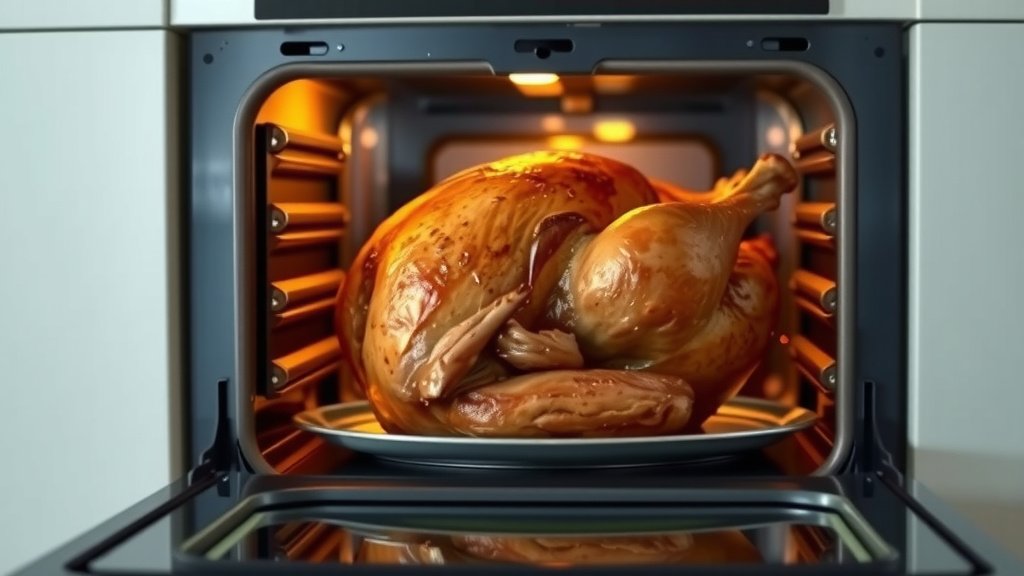
Cooking a turkey in a gas oven requires careful temperature management and patience to ensure even cooking and a juicy result.
To cook a turkey in a gas oven, preheat your oven to 325°F (160°C), place the turkey on a roasting rack, and cook until the internal temperature reaches 165°F (74°C) in the thickest part of the thigh.
Here’s a quick summary of what you’ll find:
- Always start with a fully thawed turkey for safety and even cooking.
- Season your turkey generously; consider a brine for extra moisture and flavor.
- Preheat your gas oven to a steady 325°F (160°C), which is often ideal.
- Use a reliable meat thermometer to verify the turkey reaches an internal temperature of 165°F (74°C).
- Allow the cooked turkey to rest for 20-30 minutes before carving to lock in juices.
How To Cook A Turkey In A Gas Oven?
Cooking a turkey in a gas oven is very achievable and can lead to a delicious, moist bird. The key lies in understanding your oven’s nuances and using the right techniques for even heat distribution.
Why Choose a Gas Oven for Turkey?
Gas ovens often provide a moist heat environment, which some cooks prefer for poultry. This natural moisture can help keep your turkey from drying out during the long cooking process. It’s all about working with what you have.
Understanding Your Gas Oven’s Heat
Gas ovens tend to have some temperature fluctuations during cooking. They cycle on and off to maintain the set temperature. This is normal and something to simply be aware of when planning your cooking.
Hot Spots and Cold Spots
You might notice specific areas in your gas oven that cook faster or slower. These are often called hot spots and cold spots. Rotating your turkey partway through cooking can help with this unevenness. We found that even small adjustments can make a big difference.
Prepping Your Turkey for Success
The journey to a perfect turkey begins long before it ever sees the inside of your oven. Proper preparation ensures both safety and fantastic flavor. Don’t skip these initial, crucial steps.
Thawing Your Turkey Safely
A frozen turkey is a no-go for even cooking. You must ensure your turkey is completely thawed. Many experts say the safest way is in the refrigerator, allowing 24 hours for every 4-5 pounds of turkey (USDA).
For example, a 16-pound turkey needs about 3 to 4 days in the fridge. Place it on a tray to catch any drips. This slow thawing helps keep the meat safe and maintains its quality.
Brining or Seasoning: What’s Your Flavor?
Now comes the fun part: adding flavor! Brining involves soaking the turkey in a salt-water solution. We found this method helps the turkey absorb moisture, leading to a much juicier result.
If you don’t brine, a generous dry rub is excellent. You can use herbs, spices, and salt both inside and outside the bird. Think of it like giving your turkey a nice, flavorful coat.
Simple Seasoning Ideas
For a basic yet delicious turkey, consider a blend of salt, black pepper, garlic powder, and dried sage. You can rub this mixture all over the turkey, even under the skin. Some cooks love to add fresh herbs like rosemary and thyme to the cavity too.
Essential Tools You’ll Need
Having the right equipment on hand makes the cooking process smoother and less stressful. Think of these as your kitchen’s trusty sidekicks for turkey day. They aren’t fancy, but they are effective.
- A sturdy roasting pan with a rack
- A reliable meat thermometer (digital is often best)
- Basting brush (if you plan to baste)
- Aluminum foil for tenting
- Kitchen twine (for trussing, if desired)
- Sharp carving knife and fork
The Roasting Process: Step-by-Step
Once your turkey is prepped and your tools are ready, it’s time for the oven. This is where your gas oven really gets to shine. Let’s walk through the steps to get that bird cooking just right.
Setting the Right Temperature
We found that 325°F (160°C) is a widely recommended temperature for roasting turkey in a gas oven. This lower, slower approach helps ensure the turkey cooks through without drying out. Make sure your oven is fully preheated before putting the turkey in.
Monitoring Internal Temperature
Forget guessing games; your meat thermometer is your best friend. Insert it into the thickest part of the thigh, avoiding the bone. The turkey is done when it reaches 165°F (74°C) (USDA). Check in a few spots to be sure.
When to Start Basting or Tenting
Basting involves spooning pan juices over the turkey to keep it moist. If you choose to baste, do so every 30-45 minutes. However, each time you open the oven, heat escapes, extending cooking time.
For a crispy skin, some people skip basting entirely. If the skin starts to brown too quickly, you can loosely tent the turkey with aluminum foil. This acts like a little umbrella, protecting the skin.
Achieving Perfect Doneness
Knowing when your turkey is truly done is about safety and taste. The thermometer is your guide here. It takes the guesswork out and ensures you serve a safe and delicious meal.
Here’s a general guideline for cooking times in a 325°F (160°C) oven, but remember, always rely on internal temperature, not just time (USDA).
| Turkey Weight (Unstuffed) | Approx. Cooking Time (325°F/160°C) |
|---|---|
| 8-12 lbs (3.6-5.4 kg) | 2.75 – 3 hours |
| 12-14 lbs (5.4-6.3 kg) | 3 – 3.75 hours |
| 14-18 lbs (6.3-8.1 kg) | 3.75 – 4.25 hours |
| 18-20 lbs (8.1-9 kg) | 4.25 – 4.5 hours |
| 20-24 lbs (9-10.9 kg) | 4.5 – 5 hours |
The Crucial Resting Period
Once your turkey reaches 165°F, take it out of the oven. Don’t carve it right away! Tent it loosely with foil and let it rest for at least 20-30 minutes. This resting period allows the juices to redistribute throughout the meat, making it incredibly tender and moist. It’s like magic!
Troubleshooting Common Gas Oven Issues
Even with the best intentions, cooking a large bird can present a few challenges. Don’t worry, we have some practical solutions for common gas oven turkey dilemmas. You’ve got this.
Dry Turkey Solutions
If you’re worried about your turkey drying out, especially in a gas oven, there are tricks. Brining, as mentioned, is a fantastic first step. You can also place an oven-safe pan of water on the bottom rack. This adds moisture to the oven air, helping to keep your turkey juicy.
Another tip is to rub butter or oil under and over the skin before roasting. This creates a barrier that locks in moisture. Don’t be afraid to get your hands a little messy during prep!
Crispy Skin Secrets
For that coveted crispy skin, many experts suggest a few things. First, make sure the skin is very dry before seasoning. Pat it thoroughly with paper towels. You might even air-dry it in the fridge overnight after seasoning.
Also, cooking at a slightly higher temperature for the last 30 minutes can help brown and crisp the skin. Just be careful not to burn it! Avoid basting during this final stage, as moisture can prevent crisping.
Safety First: Food Handling Tips
Food safety is paramount when cooking poultry. Always wash your hands thoroughly before and after handling raw turkey. Use separate cutting boards for raw meat and other ingredients (Mayo Clinic).
Never rinse a turkey in the sink, as this can spread bacteria around your kitchen. Focus on proper cooking temperatures and safe handling, and you’ll be golden. Your family and guests will thank you.
Conclusion
Cooking a turkey in a gas oven can be a very rewarding experience. With careful preparation, consistent monitoring, and a little patience, you can achieve a wonderfully moist and flavorful centerpiece for your meal. Remember, the journey to a delicious turkey is about understanding the process and trusting your tools, especially that trusty meat thermometer. Enjoy your cooking, and happy feasting!
Frequently Asked Questions About Cooking Turkey in a Gas Oven
How long does it take to cook a 15-pound turkey in a gas oven?
A 15-pound unstuffed turkey typically takes about 3.75 to 4 hours to cook in a gas oven set to 325°F (160°C). Always confirm doneness with a meat thermometer, ensuring it reads 165°F (74°C) in the thickest part of the thigh.
Should I start a turkey in a hot oven and then lower the temperature?
Some recipes suggest starting at a higher temperature (e.g., 400°F/200°C) for a short period (15-20 minutes) to crisp the skin, then lowering it to 325°F (160°C) for the remainder of the cooking. This can create a beautiful, golden crust while still cooking the inside slowly.
Is it better to cook a turkey covered or uncovered in a gas oven?
Many experts suggest starting the turkey uncovered to allow the skin to brown. If it starts to brown too quickly, loosely tenting it with aluminum foil can prevent over-browning while allowing the internal meat to cook. Remove the foil for the last 30-60 minutes if you want a crispy skin.
How do I prevent the turkey breast from drying out in a gas oven?
To keep the breast moist, you can try several methods. Brining is very effective. You can also place butter or herb butter under the breast skin. Another technique is to cover the breast with strips of bacon or even cheesecloth soaked in melted butter for part of the cooking time.
Can I use a convection setting on my gas oven for turkey?
Yes, many gas ovens have a convection setting that circulates hot air, potentially reducing cooking time and promoting more even browning. If using convection, we found it is often recommended to reduce the oven temperature by 25°F (about 15°C) and check the turkey for doneness earlier than standard roasting times.
