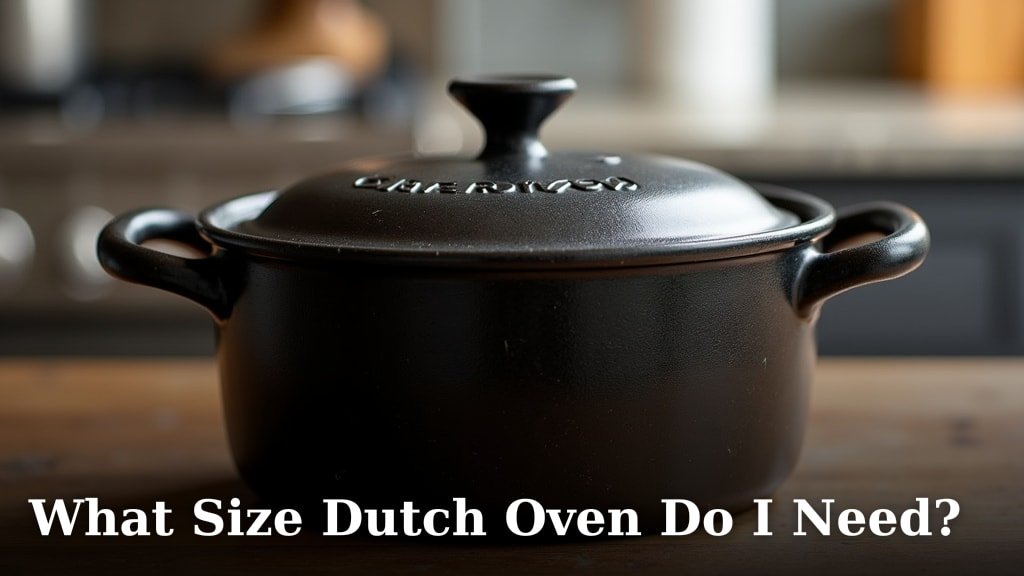
The best Dutch oven size for you generally depends on your household size and cooking habits. For 1-2 people, a 3-quart to 4-quart Dutch oven is usually perfect. For 3-5 people, a 5-quart to 6-quart model offers plenty of space. For larger families or big batch cooking, 7 quarts or more will serve you well.
Choosing the right size means you won’t overcrowd your food, which helps it cook evenly and taste better. We found that matching the Dutch oven’s capacity to your typical meal size prevents both overflowing stews and tiny portions. Think about what you cook most often – soups, roasts, or bread – as this also guides your ideal size.
- For 1-2 people, choose 3-4 quarts.
- For 3-5 people, go with 5-6 quarts.
- For 6+ people, consider 7 quarts or larger.
- Cooking whole chickens or roasts needs more space.
- Bread baking often works well in 5-7 quart ovens.
Let’s walk through how to figure out exactly what size Dutch oven you need, so you can make a confident choice for your kitchen.
Finding the Perfect Dutch Oven Size for Your Kitchen
Choosing the right Dutch oven size is simpler than you might think. It really comes down to how many people you typically cook for and what types of meals you love to make.
Understanding Dutch Oven Capacity and Your Needs
When you look at Dutch ovens, you’ll see sizes listed in quarts. This measurement tells you how much liquid or food the pot can hold. We found that matching this capacity to your daily cooking helps a lot.
What Does Quart Size Mean for Your Meals?
Think of quarts as servings. A good rule of thumb is about 1 to 1.5 quarts per person for most stews, soups, or braises. For larger items like whole chickens, you need to consider the physical space inside the pot.
- A 3-quart Dutch oven is ideal for 1-2 small servings.
- A 5-quart model easily feeds a family of 3-4.
- A 7-quart or larger size is perfect for big families or meal prepping.
Don’t just think about volume, though. The shape of the Dutch oven also matters. A wider, shallower pot is great for searing meats before braising, while a taller, narrower one is better for deep soups.
Consider Your Household Size
Your family size is probably the biggest factor in deciding. Are you cooking for one, or are you feeding a crowd? This will quickly narrow down your options.
Cooking for 1-2 People
If it’s just you, or you and a partner, a smaller Dutch oven is often best. We’ve seen that a 3-quart or 4-quart pot works wonderfully. It’s great for side dishes, small batches of soup, or a cozy dinner for two. It’s also easier to store.
Cooking for 3-5 People
This is a common household size, and for good reason, the 5-quart to 6-quart range is very popular. This size is versatile enough for family dinners like pot roasts, chili, or a good-sized stew. Many experts agree this is the “sweet spot” for most families (Food Network).
Cooking for 6+ People or Large Batches
Do you love hosting dinner parties? Or maybe you enjoy meal prepping for the week? For larger groups or big cooking projects, you’ll want a 7-quart or even 9-quart Dutch oven. This size lets you cook whole chickens, large cuts of meat, or enough soup to freeze for later. You won’t feel cramped trying to stir.
| Household Size | Recommended Dutch Oven Size | Typical Uses |
|---|---|---|
| 1-2 People | 3-4 Quarts | Small soups, side dishes, braised chicken thighs, rice |
| 3-5 People | 5-6 Quarts | Roasts, stews, chili, casseroles, bread baking |
| 6+ People / Batch Cooking | 7-9+ Quarts | Whole chickens, large roasts, big batch soups, pasta sauces |
What Do You Plan to Cook?
The type of food you’ll be making significantly affects the best size. A Dutch oven is incredibly versatile, but some dishes truly benefit from specific dimensions.
Soups, Stews, and Chili
For these liquid-based meals, almost any size works, but larger is often better if you like leftovers. A 5-7 quart pot gives you plenty of room to stir without splashing. It also allows for good evaporation, concentrating flavors.
Roasting Meats (Whole Chicken, Pot Roast)
If you’re roasting a whole chicken or a substantial pot roast, you need space. A 6-quart or 7-quart Dutch oven is often the minimum. This ensures the meat isn’t jammed in, allowing for even cooking and browning. You want air circulation around your roast.
Baking Bread
Dutch ovens are famous for making incredible no-knead bread. For most standard loaf sizes, a 5-quart to 7-quart round Dutch oven is perfect. The enclosed environment creates steam, giving your bread a beautiful, crisp crust. If you bake oval loaves, an oval Dutch oven might be a better fit.
Deep Frying
Yes, you can deep fry in a Dutch oven! For safety and to prevent oil spills, choose a pot that allows plenty of headspace for the oil and food. A 7-quart or 9-quart model often works best here, especially if you’re frying larger items like fried chicken pieces.
Consider Your Storage Space
This is a practical point that many people overlook. Dutch ovens are heavy and can be bulky. Before you buy a giant 9-quart pot, measure your cabinet or pantry space. A larger Dutch oven might not fit easily, making it less convenient to use.
You don’t want your beautiful new pot collecting dust because it’s too much trouble to pull out. Sometimes, two smaller Dutch ovens are more practical than one enormous one. We’ve seen this approach work well for many home cooks.
Your Cooking Habits Matter
Are you a frequent cook, or do you only pull out special equipment for holidays? Your usage frequency can also guide your choice. If you cook daily, you might want a versatile medium size. If it’s a specialty item, a larger size for those big events could be fine.
Checklist for Choosing Your Dutch Oven Size
Use this quick checklist to help you make your final decision:
- How many people do I usually cook for (e.g., 2, 4, 8+)?
- What are the top 3-5 dishes I’ll make in it (e.g., bread, stew, whole chicken)?
- Do I have enough storage space in my kitchen?
- Do I need a round or oval shape more often?
- Will I ever use it for large batch cooking or entertaining?
Thinking through these questions will lead you to the ideal Dutch oven size. Remember, there’s no single “best” size for everyone, but there’s definitely a best size for you.
Conclusion
Choosing the right Dutch oven size truly makes a difference in your cooking experience. We’ve seen that matching capacity to your household size and cooking goals prevents frustration and ensures delicious results. Whether you’re making a cozy meal for two or hosting a big family dinner, there’s a perfect pot waiting for you.
Use the insights and checklists shared here to confidently pick your ideal Dutch oven. You’ll love having this versatile kitchen essential.
Frequently Asked Questions
Should I buy one large Dutch oven or two smaller ones?
For most home cooks, two smaller Dutch ovens (like a 3-4 quart and a 5-6 quart) often offer more versatility than one very large one. This setup allows you to cook different dishes simultaneously or adapt to varying meal sizes, and they are generally easier to store and handle.
Can a Dutch oven be too big for my stovetop?
Yes, a Dutch oven can be too big. If your Dutch oven extends significantly beyond your largest burner, it might heat unevenly on the stovetop. This can lead to hot spots or cold spots, affecting your cooking results, especially for recipes requiring precise temperature control.
Is an oval Dutch oven better than a round one?
The best shape depends on what you cook most. Oval Dutch ovens are excellent for roasting longer cuts of meat, like a whole fish or an oval-shaped loaf of bread. However, round Dutch ovens generally fit better on standard stovetop burners and are more versatile for everyday soups, stews, and casseroles.
How much does the weight of a Dutch oven matter when choosing a size?
The weight matters significantly, especially for larger sizes. A 7-quart or 9-quart Dutch oven, when full, can be very heavy and challenging to lift, especially if you have mobility issues or limited strength. Consider how easily you can lift and maneuver the pot from the stove to the oven or sink.
Do I need a lid with a self-basting feature?
While not strictly necessary, a self-basting lid (one with small bumps or rings on the underside) can be a nice bonus. These features help condensation drip back into your food, keeping it moist and flavorful, particularly for long braises and roasts. It’s a design choice that enhances moisture retention.