
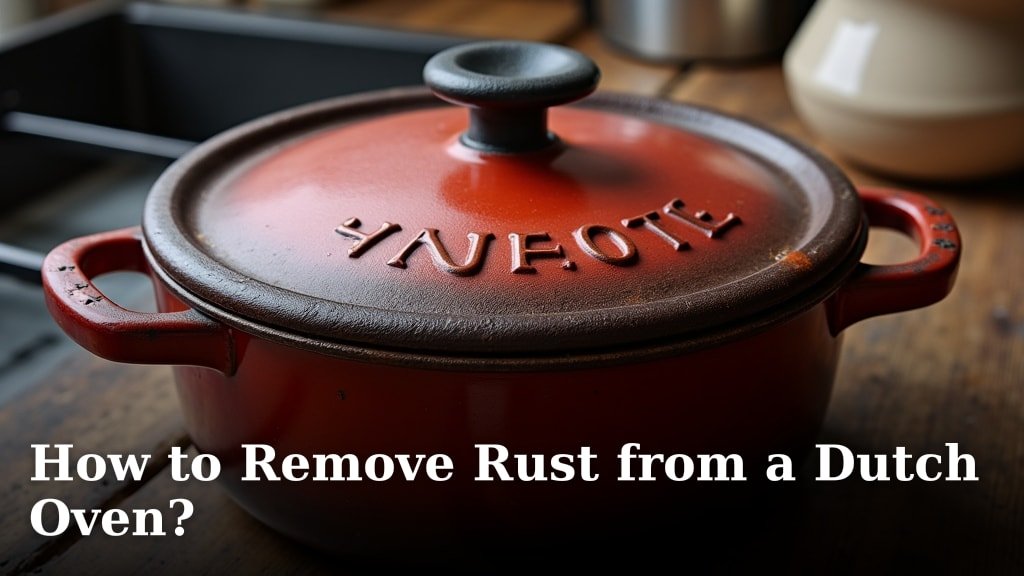
To remove rust from a Dutch oven, you’ll need to scrub away the rust with a mild abrasive like baking soda or fine steel wool, then wash and dry it thoroughly. After that, you must re-season your Dutch oven to protect it from more rust. This method applies for both cast iron and enameled Dutch ovens.
Finding rust on your favorite Dutch oven can be a real bummer. But don’t toss it out just yet! Many experts say that rust is often repairable, and you can bring your trusty pot back to life. You just need the right tools and a little elbow grease to restore your cookware.
TL;DR:
- Rust happens, but it’s usually fixable.
- You’ll need a mild abrasive for the rust.
- Always re-season exposed cast iron after cleaning.
- Enameled pots need re-seasoning too if the enamel is chipped.
- Prevention is key for future rust-free cooking.
Let’s walk through exactly how to remove rust from your Dutch oven, step by step.
What to do When Your Dutch Oven Has Rust
Finding rust on your Dutch oven can be alarming, but don’t worry. It’s usually a straightforward fix. You’ll need to remove the rust and then re-protect the surface.
Understanding Why Rust Appears
Rust is iron oxide, which forms when iron is exposed to moisture and oxygen. Your Dutch oven, whether it’s plain cast iron or enameled, is made primarily of iron. This makes it susceptible to rust.
Plain Cast Iron and Rust
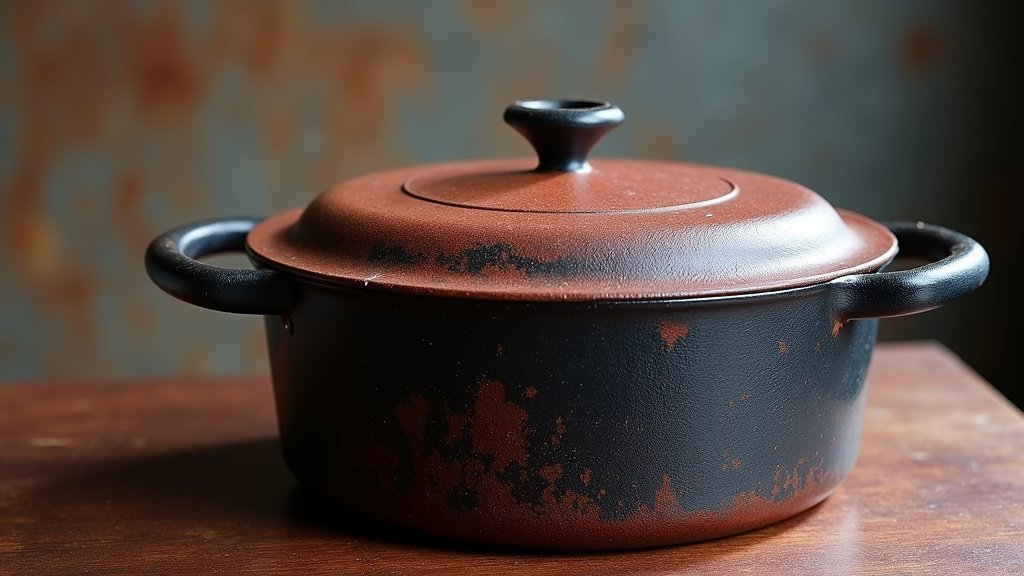
For plain cast iron Dutch ovens, the “seasoning” acts as a protective barrier. This seasoning is a layer of polymerized oil baked onto the surface. If this layer gets damaged, chipped, or stripped away, the bare iron becomes vulnerable to moisture. That’s when you start seeing those reddish-brown spots.
Enameled Dutch Ovens and Rust
Enameled Dutch ovens have a glass-like coating over the cast iron. This coating is generally very durable. However, if the enamel chips or cracks, the underlying cast iron can be exposed. Once that happens, moisture can reach the iron, and rust can start to form in those exposed areas.
Gather Your Rust Removal Tools
Before you begin, make sure you have everything ready. Having the right tools makes the job much easier and more effective.
- Baking soda or salt: These are mild abrasives helpful for light rust.
- White vinegar: A good rust dissolver for more stubborn spots.
- Lemon juice: Can also be used with salt as a mild abrasive.
- Fine steel wool (0000 grade is ideal) or a stiff nylon brush: For scrubbing the rust away.
- Dish soap: For cleaning, but use sparingly on bare cast iron.
- Clean cloths or paper towels: For drying and applying oil.
- Vegetable oil, flaxseed oil, or grapeseed oil: For re-seasoning.
- Oven mitts: For handling a hot Dutch oven during seasoning.
Step-by-Step Rust Removal Process
Here’s how you can banish that rust and bring your Dutch oven back to life. You’ll work through general cleaning, rust removal, and then re-seasoning.
Initial Cleaning and Inspection
First, give your Dutch oven a good cleaning so you can see the extent of the rust. This helps you figure out how much effort you’ll need to put in.
- Wash with hot, soapy water: Use a sponge or brush to remove any food debris. For plain cast iron, try to keep soap to a minimum, or just use hot water and a brush.
- Rinse thoroughly: Make sure there’s no soap residue left.
- Dry immediately: Use a clean towel. Do not air dry, as this can encourage more rust.
- Inspect for rust: Look closely at all surfaces, inside and out. Note where the rust spots are and how severe they appear.
For enameled Dutch ovens, check for any chips in the enamel. Rust will only form where the enamel is gone, exposing the cast iron underneath.
Removing Rust from Plain Cast Iron Dutch Ovens
This is where the elbow grease comes in. You’ll apply some abrasive power to scrub away the rust.
For Light Rust Spots: Baking Soda Paste
If you only have a few small spots, a baking soda paste is a great first step. It’s gentle but effective.
- Mix baking soda and water: Create a thick paste.
- Apply the paste: Cover the rusty areas completely.
- Let it sit: Allow the paste to work for 15-30 minutes.
- Scrub: Use a stiff nylon brush or a non-abrasive scrubber. The rust should start to come off.
- Rinse and dry: Wash away the paste and rust, then dry immediately and thoroughly.
For Moderate to Heavy Rust: Vinegar Soak
For more widespread or stubborn rust, a vinegar soak can be very effective. The acidity helps to dissolve the rust.
- Mix equal parts white vinegar and water: You’ll need enough to submerge the rusty parts.
- Submerge the Dutch oven: Place the rusty Dutch oven into the vinegar solution.
- Soak time: Soak for no more than 1-3 hours. Over-soaking can damage the cast iron itself (NIH). Always check frequently.
- Scrub: After soaking, use fine steel wool (0000 grade) or a stiff brush to scrub away the loosened rust. You might be surprised how easily it comes off.
- Rinse thoroughly: Wash away all vinegar and rust particles.
- Dry immediately and completely: This is a crucial step! Place it on your stovetop over low heat for 5-10 minutes to ensure it’s bone dry.
After a vinegar soak, your cast iron will look dull and grey. Don’t worry, this means you’ve stripped away the old seasoning along with the rust. It’s now ready for a fresh new layer of protection.
Addressing Rust on Enameled Dutch Ovens
Enameled pots require a slightly different approach since you only want to focus on the exposed areas.
- Identify chipped areas: Locate where the enamel has come off and rust has formed.
- Baking soda paste: Apply a baking soda paste only to the rusty spots.
- Gently scrub: Use a soft brush or sponge. Do not use steel wool or harsh abrasives directly on the enamel, as this can scratch it. You can use fine steel wool only on the exposed cast iron parts.
- Lemon juice and salt: For slightly tougher spots, a paste of lemon juice and salt can also work. Apply, let sit for a few minutes, then gently scrub.
- Rinse and dry: Clean the area thoroughly and dry immediately.
If the rust on your enameled pot is extensive or the enamel damage is severe, you might need to consult the manufacturer. However, minor spots are often fixable.
Re-Seasoning Your Dutch Oven
This is the most critical step after rust removal for both plain cast iron and any exposed cast iron on enameled pots. Re-seasoning creates that protective, non-stick surface again.
Why Re-Seasoning is So Important
Think of seasoning as armor for your Dutch oven. It prevents rust, creates a naturally non-stick surface, and enhances flavor over time. Without it, your newly rust-free pot will just rust again quickly.
Steps for Re-Seasoning
This process bakes oil onto the surface, creating a durable layer.
- Preheat oven to 450-500°F (232-260°C): Get your oven nice and hot.
- Apply a thin layer of oil: Use a paper towel to rub a very thin, even layer of high smoke point oil (like grapeseed, flaxseed, or vegetable oil) over all surfaces of your Dutch oven, inside and out. Make sure to wipe off any excess oil. Too much oil will result in a sticky surface.
- Place upside down in the oven: Put your Dutch oven upside down on the middle rack. This helps drain any excess oil.
- Bake for one hour: Let it bake for a full hour.
- Turn off oven and cool: Turn off the oven and allow the Dutch oven to cool completely inside the oven. This helps the seasoning set.
- Repeat for best results: For optimal protection, repeat the oiling and baking process 3-4 more times. This builds up a strong, lasting layer of seasoning.
Your Dutch oven should now have a glossy, black finish. It’s ready for cooking!
Preventing Future Rust
Now that you’ve put in the effort to restore your Dutch oven, you’ll want to keep it rust-free. Prevention is much easier than cure!
| Key Prevention Tip | Explanation |
|---|---|
| Dry Immediately After Washing | Moisture is rust’s best friend. Don’t let your Dutch oven air dry. Towel dry it thoroughly, then place it on a low burner for a few minutes until all moisture evaporates. |
| Apply a Thin Oil Coat | After drying, especially for plain cast iron, wipe a very thin layer of cooking oil over the entire surface. This adds an extra protective barrier. |
| Avoid Harsh Scrubber/Soap | For plain cast iron, minimize soap usage. For enameled, avoid abrasive scrubbers that could chip the enamel. |
| Store Properly | Store in a dry place. You can place a paper towel inside plain cast iron Dutch ovens to absorb any residual moisture and promote airflow. |
| Regular Use | Cooking with your cast iron Dutch oven helps build and maintain its seasoning. The more you use it, the better the seasoning becomes. The experts at Ohio State University Extension highlight the importance of heat and oil for maintaining seasoning. |
Consider these points for maintaining your Dutch oven:
- Clean gently after each use.
- Always dry thoroughly.
- Apply a light layer of oil if it’s plain cast iron.
- Store in a dry location.
- Cook with it often to build seasoning.
By following these steps, you can keep your Dutch oven in excellent condition for many years of delicious meals.
Conclusion
Don’t let rust discourage you from using your beloved Dutch oven. As you’ve seen, those red spots are usually a straightforward fix, whether you have plain cast iron or enameled cookware. By understanding why rust forms and following a few simple steps—cleaning, removing rust gently, and most importantly, re-seasoning—you can restore your pot. Take the time to properly care for your Dutch oven, and it will continue to be a star in your kitchen for generations to come.
Frequently Asked Questions
Can I still cook in a Dutch oven that has rust?
It’s generally not recommended to cook in a rusty Dutch oven. While a little rust likely won’t harm you, it can affect the taste of your food and make the surface uneven. It’s best to remove the rust and re-season your Dutch oven before using it again.
How do I know if my enameled Dutch oven is beyond repair due to rust?
If the rust on your enameled Dutch oven is extensive and has caused large areas of the enamel to chip or flake off, it might be challenging to fully restore. Repeated deep rust could indicate the base metal is compromised. If you’re concerned about food safety or the integrity of the pot, consider replacing it.
Is it bad to use soap on cast iron when cleaning rust?
When you are specifically removing rust from bare cast iron, a small amount of soap can be used during the initial cleaning phase to remove debris. However, always rinse thoroughly afterward. For routine cleaning of seasoned cast iron, it’s best to avoid harsh soaps that can strip the protective seasoning layer.
What is the best type of oil for re-seasoning a Dutch oven?
For re-seasoning, oils with a high smoke point are ideal for creating a durable finish. Common choices include grapeseed oil, flaxseed oil, and vegetable oil. These oils polymerize well when heated, creating that tough, non-stick layer.
How often should I re-season my cast iron Dutch oven?
You typically only need to fully re-season your cast iron Dutch oven after aggressive cleaning, like rust removal, or if the seasoning has been damaged. For regular maintenance, simply applying a thin layer of oil after each wash and drying thoroughly helps maintain the seasoning. Regular use also builds up the seasoning over time.
