
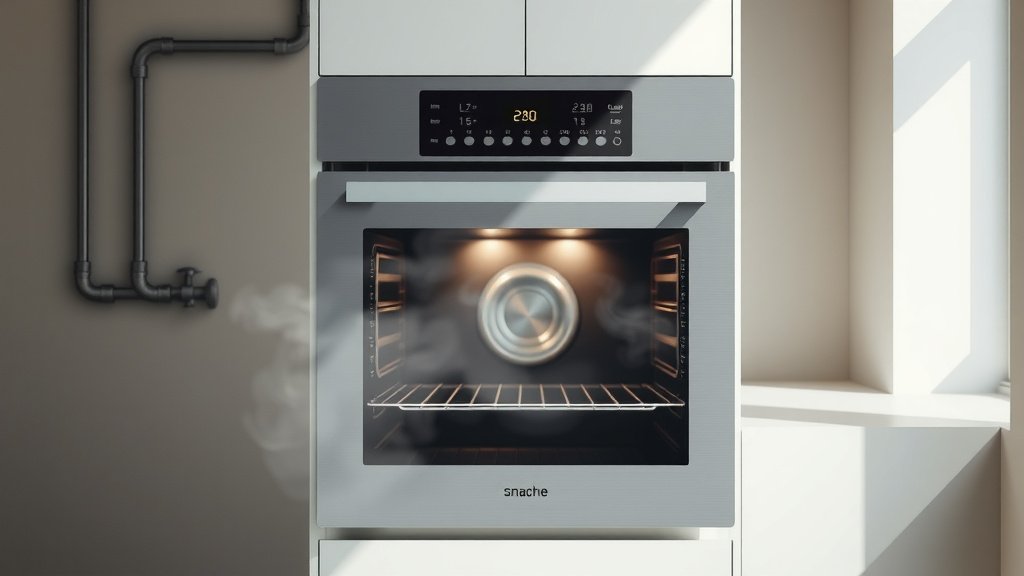
No, a steam oven does not always need plumbing. Many modern steam ovens offer two main types: plumbed-in models that connect directly to a water line, and tank-style models that use a refillable water reservoir.
The choice between a plumbed or tank-style steam oven depends on your kitchen setup, cooking habits, and how much convenience you prefer in your daily cooking routine.
Here’s a quick overview of what you’ll find in this article:
- Discover the key differences between plumbed and tank-style steam ovens.
- Understand the convenience and installation needs for each type.
- Learn about the maintenance steps required for a tank-style oven.
- Find a handy comparison table to help you make an informed decision.
- Get answers to common questions about steam oven functionality.
Does Steam Oven Need Plumbing?
Generally, no, not every steam oven requires a direct water line connection. You have the flexibility to choose between models that connect to your plumbing and those with a water tank you fill manually.
Understanding Steam Ovens: Two Main Types
Steam ovens are fantastic for healthy, flavorful cooking. But before you get one, you might wonder about the water connection. Let’s look at the two main types you’ll encounter.
Plumbed-In Steam Ovens: The Direct Connection
These ovens are just like your dishwasher or washing machine. They connect directly to your home’s water supply and a drain. This means they automatically draw in fresh water and dispose of used water.
The convenience is clear: you never have to worry about refilling a tank. Many experts say this design offers a truly hands-off cooking experience (Consumer Reports).
Tank-Style Steam Ovens: No Plumbing Required
This type of steam oven comes with a water reservoir or tank. You simply fill this tank with water before you cook. When the oven runs out, you refill it.
Many homeowners prefer these because they offer easier installation options. You can place them almost anywhere with an electrical outlet, without needing special plumbing work.
Why Plumbing Might Be a Good Idea
Opting for a plumbed steam oven brings a lot of ease to your kitchen. Imagine never pausing your cooking to refill water. It’s a significant time-saver, especially if you steam cook often.
We found that plumbed models are great for larger families or those who frequently use steam. You get a continuous supply of steam without interruption. This ensures your food cooks consistently from start to finish.
Thinking About a Tank-Style Oven? Here’s What to Know
A tank-style steam oven offers great flexibility. You don’t need to alter your kitchen’s plumbing. This can be a big plus for renters or those with limited renovation budgets.
Manual Water Refill and Emptying
With a tank-style oven, you’ll need to fill the water reservoir yourself. This is typically done before each use or during longer cooking cycles. It’s a simple task, like filling a coffee maker.
You might also need to empty any leftover water after cooking. This helps keep the oven clean and prevents stale water from sitting in the tank. It’s a small extra step for plumbing-free freedom.
Descaling is Key for Tank Models
Regardless of the type, all steam ovens eventually need descaling. This removes mineral buildup from the water. For tank models, regular descaling is very important to maintain performance and hygiene.
Many manufacturers provide descaling instructions and solutions. Following these steps helps ensure your oven produces clean, efficient steam for years to come (Appliance Manufacturer Guidelines).
Making the Right Choice for Your Kitchen
Deciding between plumbed and tank-style comes down to a few practical points. Think about your kitchen’s layout and how you cook. What suits your lifestyle best?
Kitchen Layout and Installation
If you’re building a new kitchen or doing a major remodel, a plumbed-in oven is easier to incorporate. You can plan for the water line during construction. This provides a sleek, integrated look.
For existing kitchens, a tank-style oven avoids the hassle and cost of plumbing installation. It offers more flexibility in where you can place the appliance. You just need an outlet nearby.
Your Cooking Habits and Frequency
Do you steam vegetables daily? Are you experimenting with baking bread using steam? If you’re a heavy steam user, the constant water supply of a plumbed oven might be a game-changer. It means less maintenance during cooking.
If you use steam occasionally, or for shorter tasks, a tank-style oven is perfectly adequate. The small effort of refilling the tank won’t feel like a burden. It’s about matching the oven to your kitchen routine.
Budgeting for Installation Costs
Remember that plumbed-in appliances generally have higher initial installation costs. You’ll need a plumber to connect the water line and drainage. This is an important factor to include in your overall budget planning.
Tank-style ovens typically only require an electrical connection, making their installation much simpler and often less expensive. It’s a more budget-friendly setup from the start.
Plumbed vs. Tank Steam Oven: A Quick Comparison
Let’s look at the key differences side-by-side to help you visualize them.
| Feature | Plumbed-In Steam Oven | Tank-Style Steam Oven |
|---|---|---|
| Water Supply | Direct water line | Manual refillable tank |
| Drainage | Direct drain connection | Collects in reservoir (manual emptying) |
| Installation | Requires plumbing & electrical | Requires electrical only |
| Convenience | Highly convenient, continuous steam | Good convenience, occasional refilling |
| Cost (Initial) | Higher installation cost | Lower installation cost |
Checklist: Is a Plumbed Steam Oven for You?
Still on the fence? Ask yourself these questions to see if a plumbed model fits your needs:
- Do you plan to steam cook almost every day?
- Is your kitchen currently undergoing renovation or new construction?
- Do you dislike the idea of refilling a water tank frequently?
- Is continuous, uninterrupted steaming a top priority for you?
- Are you comfortable with the added cost of professional plumbing installation?
Dispelling Common Myths About Steam Ovens
There are a few misconceptions floating around about steam ovens. Let’s clear them up. They are often more accessible than people think.
Myth 1: All Steam Ovens Are Complicated
Many people assume steam ovens are difficult to operate. This simply isn’t true. Modern steam ovens are designed with user-friendly controls and preset functions. They are as easy to use as a conventional oven once you understand the basics.
Myth 2: They’re Only for Professional Chefs
While chefs love steam ovens for their precision, they are perfect for home cooks too. They help you prepare healthier meals with vibrant flavors. Think perfect vegetables, tender fish, and moist baked goods right in your own kitchen.
Conclusion
The question of “Does steam oven need plumbing?” ultimately comes down to your personal preferences and kitchen specifics. Both plumbed-in and tank-style steam ovens offer incredible cooking benefits. Plumbed ovens provide unmatched convenience and continuous steam, ideal for frequent users or new kitchen builds. Tank-style models offer flexibility and easier installation, perfect for existing spaces or occasional steam cooks. Consider your cooking habits, budget, and kitchen layout to choose the best fit. Either way, you’ll be enjoying healthier, tastier meals.
Frequently Asked Questions About Steam Ovens
How often do I need to refill a tank-style steam oven?
The refill frequency depends on your usage and the tank size. For a 30-minute steaming cycle, you might use about one liter of water. If you cook longer or use more steam, you’ll refill more often. Most tanks hold enough for several cooking sessions.
Do steam ovens use a lot of electricity?
Steam ovens are generally energy-efficient. They heat water to produce steam, which can be faster and use less energy than heating a whole conventional oven. Their specific energy consumption will vary by model and usage, similar to other kitchen appliances.
Can I use tap water in my steam oven?
Yes, you can typically use regular tap water in most steam ovens. However, if your tap water is very hard, you might notice more mineral buildup, requiring more frequent descaling. Some manufacturers recommend distilled water to minimize scaling, but it’s not always necessary.
Are steam ovens hard to clean?
Steam ovens are often easier to clean than conventional ovens. The moisture helps prevent food from sticking and baking onto surfaces. Regular wiping after use and periodic descaling are usually all that’s needed to keep them sparkling.
What kind of food is best cooked in a steam oven?
Steam ovens excel at cooking a wide variety of foods. They’re perfect for vegetables, fish, poultry, rice, and even reheating leftovers without drying them out. Many people also love them for baking bread, proving dough, and creating custards or cheesecakes with perfect textures.
