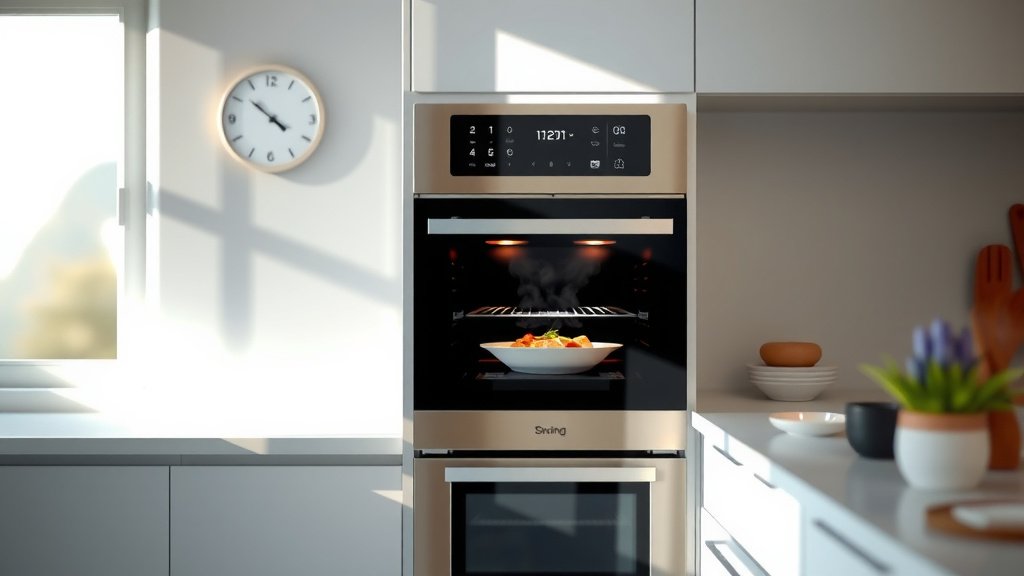
Reheating food in a smart oven without drying it out means leveraging its precise temperature control and moisture-adding features like steam or convection. To prevent dryness, always cover your food and use lower temperatures for longer durations.
You can effectively use your smart oven to bring leftovers back to life by adding a little moisture, choosing the right temperature, and monitoring closely. This approach keeps your meals delicious, juicy, and ready to enjoy again.
TL;DR:
- Always cover your food tightly to trap moisture.
- Use a lower temperature (around 250-300°F) for gentle reheating.
- Add a splash of broth or water to dishes before heating.
- Utilize your smart oven’s specific reheat or steam functions.
- Monitor food closely and avoid overcooking to maintain juiciness.
How To Use Smart Oven For Reheating Without Drying?
Using a smart oven for reheating food without drying it out is about understanding its advanced features and applying simple cooking principles. You can bring your leftovers back to their delicious glory.
The Reheating Challenge: Why Food Dries Out
Have you ever microwaved a slice of pizza only to find the crust like cardboard? Or warmed up chicken that turned out tough and stringy? It’s a common kitchen woe. Many experts point to moisture loss as the main culprit (USDA).
When you reheat food too quickly or at high temperatures, the water inside evaporates. This leaves you with dry, unappetizing results. We want to avoid this at all costs, right?
Your Smart Oven: A Leftover Revival Machine
Traditional ovens can be a bit of a brute when reheating. Smart ovens, however, are like a skilled sculptor. They offer precision you just don’t get with older models. Think of them as your secret weapon against dry leftovers.
These appliances often include advanced sensors and specific reheat settings. They can make a big difference in maintaining food quality. This means you can truly enjoy your meals again and again.
Leveraging Low and Slow for Juiciness
Think of reheating like a gentle morning wake-up call, not a shock to the system. The key here is a low and slow approach. High heat blasts away moisture.
We’ve found that lower temperatures, usually between 250°F and 300°F (120-150°C), work best. This gives the food time to warm through evenly. It also prevents the surface from overcooking.
The Magic of Covering Your Food
This is perhaps the simplest yet most effective tip. Always, always cover your food. Using aluminum foil or an oven-safe lid creates a small steam chamber around your meal. This traps moisture right where you want it.
It’s like giving your food a tiny, personal sauna. This prevents the outer layers from drying out. Many culinary experts say this is a non-negotiable step.
Adding Back a Little Moisture
Sometimes food needs a little help. If you’re reheating pasta, a splash of water or broth works wonders. For meats, a teaspoon of broth or even a pat of butter can revive them.
It’s about replacing what was lost during the initial cooling. Just a tiny bit can make a big impact. Remember, we’re aiming for a gentle nudge, not a swim.
Choosing the Right Dish for Reheating
The container you use matters a lot. Glass or ceramic dishes with tight-fitting lids are ideal. These materials hold heat well and help maintain an even temperature.
Avoid thin metal trays that can heat up too fast. This might lead to uneven cooking and dry spots. Many kitchens keep a selection of these dishes for exactly this purpose.
Utilizing Your Smart Oven’s Specific Functions
Does your oven have a “reheat” setting? Use it! These programs are designed to apply optimal heat and time for common food types. Some even have steam assist options.
We’ve observed that some smart ovens have humidity control. This adds moisture during reheating. Explore your oven’s manual to find these gems. They are there to help you.
Smart Oven Settings for Different Food Types
Different foods need different care. A delicate pastry won’t need the same treatment as a hearty stew. Let’s look at some common foods:
| Food Type | Recommended Temp | Notes |
|---|---|---|
| Baked Goods (Pizza, Pastries) | 275-300°F (135-150°C) | Cover loosely with foil, or use a few drops of water if crust is very dry. |
| Meats (Chicken, Beef) | 250°F (120°C) | Add a splash of broth, cover tightly. |
| Casseroles, Lasagna | 300-325°F (150-160°C) | Cover tightly with foil. |
| Soups, Stews | Simmer gently on stovetop; if in oven, cover. | Can warm gently in oven if in an oven-safe pot. |
Monitoring Is Key: Don’t Walk Away!
Even with smart technology, a watchful eye is important. Check your food periodically. If it looks dry, add a little more moisture. This is especially true for delicate items.
You’re the chef, and the smart oven is your assistant. Always trust your judgment on when food is ready. It’s about feeling and seeing the texture of the food.
When to Use a Temperature Probe
For meats, an internal temperature probe is your best friend. Many smart ovens integrate these. Research often connects precise temperature control with better food safety and quality (FDA guidelines).
This ensures your food reaches a safe internal temperature without overcooking the outside. It’s a scientific approach to perfect reheating.
Common Mistakes to Avoid When Reheating
We all make mistakes, but we can learn from them! The biggest pitfalls are high heat, no covering, and rushing the process. Think of it as a gentle coaxing, not a brute force attack.
Another mistake is forgetting about carryover cooking. Food keeps cooking a little after you take it out. Plan for this by removing it slightly before it hits the perfect temperature.
Your Reheating Success Checklist
Keep these points in mind for consistently great results:
- Choose the right oven-safe dish.
- Cover your food tightly with foil or a lid.
- Add a little liquid if the food seems dry.
- Set your smart oven to a low temperature (250-300°F).
- Use specific reheat or steam functions if available.
- Monitor your food and use a probe for meats.
- Remove from oven just before it’s “perfectly” done.
Conclusion
Reheating food in your smart oven without drying it out is absolutely achievable. It’s about combining simple techniques like covering food and using low heat with your oven’s intelligent features. You can consistently enjoy moist, flavorful leftovers that taste almost as good as the first time. So, go ahead and savor every meal!
What is the ideal temperature for reheating most foods in a smart oven?
The ideal temperature for reheating most foods in a smart oven is typically between 250°F and 300°F (120-150°C). This lower range allows food to warm through gently and evenly, preventing moisture loss and drying.
Should I always cover food when reheating in a smart oven?
Yes, you should almost always cover food when reheating in a smart oven. Covering with aluminum foil or an oven-safe lid traps steam and moisture, which is crucial for preventing your food from drying out.
Can I use the steam function on my smart oven for reheating?
Absolutely! If your smart oven has a steam function or steam assist, it’s an excellent feature for reheating. The added moisture from the steam helps keep foods incredibly tender and prevents them from becoming dry or tough.
How long does it typically take to reheat food in a smart oven without drying it?
Reheating time in a smart oven can vary based on the food type and quantity, generally taking anywhere from 15 to 45 minutes at lower temperatures. It’s more about achieving the right internal temperature slowly than rushing the process.
Is it better to reheat food in a smart oven or a microwave to prevent dryness?
For most foods, reheating in a smart oven is generally better than a microwave for preventing dryness. A smart oven’s gentle, even heat distribution and ability to add moisture are superior to a microwave, which can often zap moisture and create rubbery textures.