
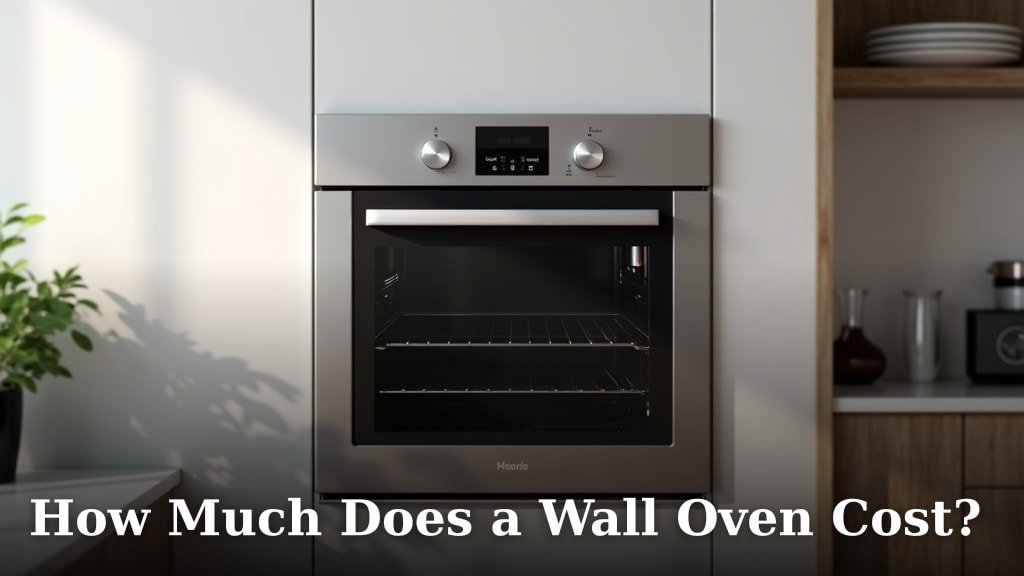
A new wall oven will cost you anywhere from $700 to over $3,500, on average. The price depends mostly on the type of oven and its features. Installation costs are usually extra, adding another $100 to $300.
You might be surprised by the wide range of prices for wall ovens. Factors like brand, size, and whether it’s a single or double oven play a big part. Fancy features, like convection or smart technology, also push the price higher.
- Wall ovens typically cost $700 to $3,500.
- Installation can add $100 to $300 to the total.
- Pricing varies based on type (single, double), size, and brand.
- Advanced features like convection increase the price.
Ready to figure out what kind of wall oven fits your kitchen and budget? Let’s break down all the details so you can make a smart choice.
Understanding Wall Oven Costs: What’s Your Budget?
You’re ready for a new wall oven, and your first thought is probably, “How much will this actually hit my wallet?” It’s a great question, and the answer, as typical with home appliances, isn’t always straightforward. We found that most homeowners spend between $1,500 and $2,500 for the oven itself, plus installation. Let’s dig a little deeper into what really drives these prices.
Primary Factors Influencing Wall Oven Prices
Think of buying a wall oven like buying a car. You can get a basic, reliable model, or you can go for luxury with all the bells and whistles. What determines the final price? Mostly, it comes down to three main things: the type of oven, its size, and the brand. These elements alone can swing the cost by hundreds, if not thousands, of dollars.
Single Wall Ovens vs. Double Wall Ovens
Are you a one-tray-at-a-time baker, or do you find yourself juggling multiple dishes for holidays and large family meals? This question shapes whether you need a single or double wall oven. As you might guess, double wall ovens cost more because they offer twice the cooking capacity in a single unit. Our research shows that a single wall oven generally ranges from $700 to $2,500, while a double wall oven often starts around $1,500 and can go well over $4,000.
- Single Wall Ovens: Perfect for smaller households or kitchens where space is a premium. They’re more budget-friendly and consume less energy.
- Double Wall Ovens: A lifesaver for entertainers or large families. You can bake your lasagna in one oven and roast veggies in the other, all at different temperatures. This convenience comes at a higher cost.
Wall Oven Size and Dimensions
Wall ovens come in standard widths, typically 24, 27, or 30 inches. While 30 inches is perhaps the most common and offers the widest selection and best pricing, going smaller or larger can sometimes affect the cost. A smaller 24-inch oven might be cheaper, but options are limited. On the flip side, larger or non-standard sizes might be custom orders, driving up the price (Good Housekeeping).
Always measure your existing cabinet cutout carefully before shopping. If your new oven doesn’t fit, you’ll face additional modification costs, which can be significant.
Brand Reputation and Wall Oven Costs
Just like cars, appliance brands have varying reputations and price points. You’ll find entry-level brands, mid-range options, and premium luxury brands. For instance, brands like GE, Whirlpool, and Frigidaire often sit in the mid-range price bracket, offering solid performance and features. Brands like Bosch, KitchenAid, and Electrolux might be considered premium, while brands like Miele or Wolf belong to the high-end luxury category, boasting advanced technology and designer aesthetics.
Breakdown of Wall Oven Features and Their Impact on Price
Once you’ve settled on the basics, the fun (and expense) begins with features. Modern wall ovens are packed with innovations designed to make your life easier in the kitchen. But each added feature usually means a little bump to the price tag. Think about what truly matters to your cooking style.
Convection Baking Technology
Many experts agree that convection is a game-changer for even baking and roasting. A convection oven uses a fan to circulate hot air, ensuring consistent temperatures throughout the oven cavity. This means faster cooking times and more uniform results. Most mid-range to high-end ovens now include convection. If you’re a serious baker, this feature is probably worth the extra cost, which can add $200 to $500 to the oven’s price.
Self-Cleaning Functionality
Who enjoys scrubbing a dirty oven? Not many people! Self-cleaning features come in various forms, usually either a high-heat pyrolysis method or a steam clean. The high-heat option bakes food residue into ash, which you simply wipe away. Steam cleaning uses water and lower heat for lighter messes. While standard on many models today, if you’re looking at a very basic oven, adding this feature typically increases the price by around $100 to $200.
Smart Oven Technology and Connectivity
Welcome to the 21st century kitchen! Smart ovens connect to your Wi-Fi, allowing you to preheat the oven from your phone, adjust temperatures, and even receive notifications when your meal is done. Some even integrate with voice assistants like Alexa or Google Assistant. This level of convenience comes at a cost, usually adding $300 to $800 to the total price, depending on the brand and specific smart features.
Additional Features Worth Considering
- Meat Probe: Ensures your roasts are cooked to perfection by monitoring internal temperature.
- Glide Racks: Smooth-gliding oven racks make it easy to load and unload heavy dishes.
- Automatic Shut-Off: A safety feature that turns off the oven after a set period.
- Delayed Start: Program your oven to begin cooking at a later time.
- Proofing Mode: Ideal for bread bakers, maintaining a low, consistent temperature for rising dough.
Each of these small conveniences can incrementally increase the cost, so prioritize what you’ll actually use.
Understanding Wall Oven Installation Costs
Don’t forget about installation! The price you pay for the oven isn’t the final number. Installation can add a significant amount to your total budget. We found that professional installation generally runs between $100 and $300, but this can vary widely.
Factors Affecting Installation Price
Why the range? Here’s what can influence how much you pay for installation:
- Existing Cabinetry: Is your new oven a perfect fit for the old one’s space? If not, cabinet modifications will add to the labor cost. This can involve cutting new openings or reinforcing existing ones.
- Electrical or Gas Hookups: Swapping an electric oven for another electric one is usually straightforward. However, moving from electric to gas, or vice-versa, requires specialized work. You might need a new gas line installed or a dedicated 240V circuit for electric ovens (DIY Network). This is where costs can really climb, potentially reaching hundreds of dollars for new utility lines.
- Removal of Old Appliance: Many installers offer to haul away your old oven for a fee, typically $25 to $50.
- Geographic Location: Labor costs vary by region. Expect to pay more in urban areas with a higher cost of living.
DIY vs. Professional Installation
While some homeowners with extensive experience might feel comfortable tackling a simple wall oven swap, we strongly recommend professional installation. Wall ovens are heavy, require precise electrical or gas connections, and need to be secured properly to prevent tipping. Improper installation can be a safety hazard (potentially leading to electrical fires or gas leaks) and could void your warranty. When in doubt, hire a professional. It’s often worth the peace of mind.
Sample Wall Oven Cost Comparison Table
To help you visualize the cost differences, here’s a general table based on common configurations. Remember, these are estimates and prices can fluctuate based on promotions, retailers, and specific models.
| Oven Type | Key Features | Estimated Price Range (Oven Only) | Installation Cost (Estimated) | Total Estimated Cost |
|---|---|---|---|---|
| Single Wall Oven | Basic functionality, standard baking, no convection | $700 – $1,200 | $100 – $200 | $800 – $1,400 |
| Single Wall Oven | Convection, self-cleaning, touch controls | $1,200 – $2,500 | $150 – $250 | $1,350 – $2,750 |
| Double Wall Oven | Basic functionality, standard baking | $1,500 – $2,800 | $150 – $250 | $1,650 – $3,050 |
| Double Wall Oven | Convection (both ovens), self-cleaning, smart features | $2,800 – $4,500+ | $200 – $300+ | $3,000 – $4,800+ |
Tips for Saving Money on Your Wall Oven Purchase
It’s natural to want a great appliance without breaking the bank. Here are a few smart strategies to consider when you’re shopping for your new wall oven. A little planning can go a long way in keeping costs down.
Shop During Appliance Sales Events
Timing is everything! Major holidays like Black Friday, Memorial Day, Labor Day, and Presidents’ Day are prime times for appliance deals. Retailers often offer significant discounts, bundle deals, or rebates during these periods. We’ve found that waiting for these sales can save you hundreds of dollars on a major appliance.
Consider Floor Models or Open-Box Ovens
Sometimes, stores sell floor models or open-box items at a reduced price. These ovens might have minor cosmetic imperfections or simply be display units. Always inspect them thoroughly for damage and confirm the warranty details before purchasing. You can often get a nearly new oven for a fraction of the cost this way.
Prioritize Features You Truly Need
It’s easy to get swept up in all the amazing features available. But do you really need a built-in air fryer mode if you rarely use one? Or a smart oven if you prefer to operate appliances manually? Make a list of your must-have features and stick to it. Every added bells and whistle increases the price, so be honest about what will genuinely improve your cooking experience and what’s just a nice-to-have.
Check for Rebates and Promotions
Beyond store sales, many appliance manufacturers offer their own rebates. Energy-efficient models might also qualify for local utility company rebates. Always ask your salesperson or check the manufacturer’s website for any ongoing promotions after your purchase. You might be surprised by how much you can save!
Your Wall Oven Shopping Checklist
Before you commit, take a moment to review this quick checklist:
- Measure your cabinet cutout: Double-check dimensions for a perfect fit.
- Decide on single vs. double: Essential for capacity and initial budget.
- Prioritize key features: Convection, cleaning type, smart tech.
- Set a total budget: Include installation and potential modifications.
- Research brands: Compare reliability and customer service reviews.
- Plan for installation: DIY vs. professional, and necessary utilities.
Conclusion
Choosing a new wall oven involves balancing your cooking needs with your budget. We’ve seen prices range widely, primarily driven by the oven type, size, brand, and those enticing extra features. Remember to factor in installation costs, which can significantly impact your total spend. By prioritizing your must-have features and strategically shopping during sales, you can find a quality wall oven that suits your kitchen and culinary ambitions without overspending. Take accurate measurements, plan for professional installation, and soon you’ll be enjoying your new appliance!
Frequently Asked Questions
What’s the typical lifespan of a wall oven?
Most wall ovens are built to last between 10 to 15 years with proper care and maintenance. The lifespan can vary based on brand quality, frequency of use, and whether it’s electric or gas. Investing in a reputable brand often leads to better durability.
Can I replace a single wall oven with a double wall oven?
Often, yes, but it requires careful planning and typically cabinet modifications. Double ovens need more vertical space, so you’ll likely need to adjust or replace your existing cabinetry. Always measure thoroughly and consult a contractor or appliance professional first.
Is it worth buying an extended warranty for a wall oven?
This is a personal decision, but many experts suggest considering an extended warranty for major appliances like wall ovens. They can be expensive to repair, and an extended warranty offers peace of mind against unexpected breakdowns after the manufacturer’s warranty expires.
What’s the difference between true convection and standard convection?
Standard convection uses a fan in the back of the oven to circulate hot air. True convection (sometimes called European convection) adds a third heating element around that fan. This provides more consistent and even heat distribution, which is ideal for baking multiple trays at once.
How much electricity does a wall oven typically use?
The energy consumption of an electric wall oven depends on its size, efficiency, and how often you use it. On average, an electric wall oven uses between 2,000 to 5,000 watts. Gas ovens generally consume less electricity but use natural gas.
