
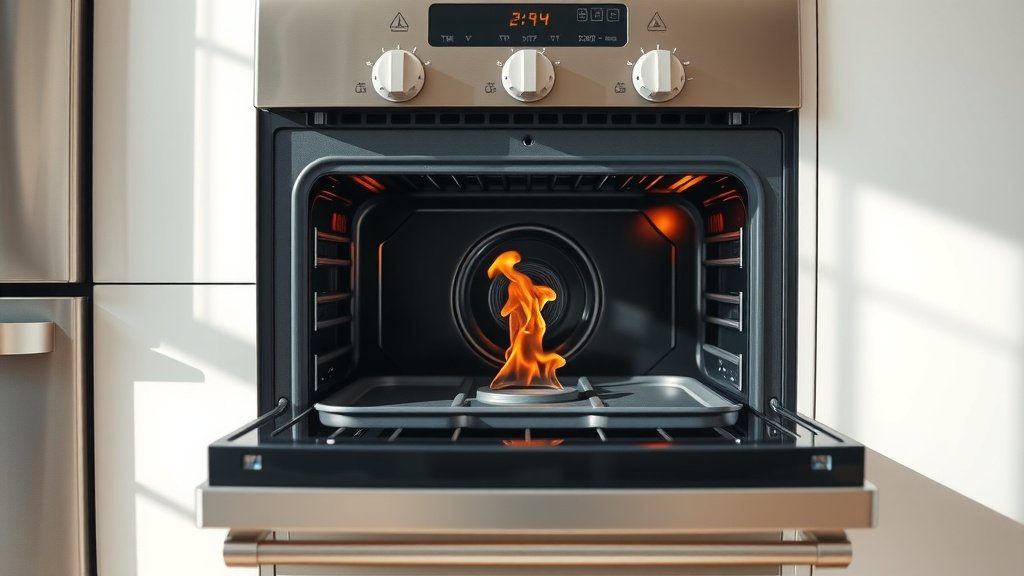
Reducing hot spots in a gas oven often involves ensuring proper rack placement and checking for a clean oven interior.
You can effectively reduce hot spots by preheating thoroughly and examining your oven’s temperature calibration for accuracy.
- Distribute heat evenly by using the correct rack position.
- Ensure a consistent temperature by always preheating your oven fully.
- Keep your oven’s interior spotlessly clean to avoid airflow blockages.
- Verify your oven’s thermostat is accurate with an independent oven thermometer.
- Consider if a professional inspection is needed for deeper mechanical issues.
How To Reduce Hot Spots In Gas Oven?
Dealing with hot spots in your gas oven can be frustrating, leading to burnt edges and undercooked centers. Fortunately, many practical steps can help you achieve more consistent baking and roasting results.
Understanding Hot Spots: What Are They?
Hot spots are areas within your oven that reach a significantly higher temperature than the rest of the cavity. Think of them as invisible heat zones that can disrupt your cooking. One side of your cookies might be perfectly golden, while the other remains pale.
We found that these temperature discrepancies are a common complaint, even with new ovens. They can make you feel like you are battling your appliance every time you cook.
Why Do Gas Ovens Get Hot Spots?
Gas ovens generate heat from a burner at the bottom, which then circulates. However, this circulation isn’t always perfect. Many factors can contribute to uneven heat distribution inside your oven.
Research indicates that issues range from simple user errors to minor mechanical problems. Understanding the cause is the first step to finding a lasting solution for you.
The Role of Rack Placement
Where you place your oven racks makes a big difference. Many experts say heat rises, so the top of your oven is often hotter than the bottom. If you always use the same rack, you might be exacerbating existing hot spots.
Try placing food on the middle rack for most baking. For two trays, rotate them halfway through the cooking process. This simple act can make your dishes more even.
Preheating: Your Best Friend Against Uneven Heat
Do you ever pop food in right after the preheat light comes on? We found that rushing this step is a common mistake. Your oven needs time to fully saturate with heat, not just reach the set temperature. Giving it an extra 10-15 minutes after the light signals readiness is often recommended by manufacturers.
Keeping Your Oven Clean
A dirty oven can impede airflow. Spills, grease, and baked-on food can act as insulators or block vents. We found that a clean oven interior allows heat to circulate freely, reducing temperature fluctuations. It’s a simple fix that often gets overlooked.
Calibrating Your Oven’s Temperature
Is your oven thermometer accurate? Many experts suggest using a separate, inexpensive oven thermometer. This helps you know if your oven is truly heating to the temperature you set. If it’s off by more than 25 degrees, you might need to calibrate your oven’s thermostat (Mayo Clinic).
Your oven’s manual will usually have instructions on how to adjust the temperature. A small adjustment can lead to a big improvement in consistency.
Checking for Blocked Vents
Ovens have vents that allow steam and hot air to escape, ensuring proper circulation. If these are blocked, heat can build up in certain areas. We found that objects near the vents or heavy oven liners can cause these blockages. Always ensure nothing is obstructing the vents in your oven cavity.
When the Igniter Might Be the Issue
If your gas oven isn’t igniting fully or consistently, it can cause hot spots. A weak igniter might take longer to heat the oven, leading to an uneven warm-up. This is often a job for a professional, but recognizing the symptom can help you diagnose the problem early.
Using an Oven Thermometer Effectively
An oven thermometer isn’t just for calibration. You can use it to map your oven’s hot spots. Place it in different areas—front, back, left, right—and note the temperature. This helps you identify exactly where your oven is running hotter or colder. Knowing this allows you to adjust your cooking strategy.
Rotating Your Food
Even after taking all precautions, a slight variation might remain. This is where rotating your food comes in handy. Turning your baking sheet or dish halfway through ensures all sides get equal exposure to heat. It’s a simple trick that chefs have used for ages.
What About Baking Stones or Steel?
Many home bakers swear by baking stones or steels. These items absorb and retain heat, releasing it steadily. This creates a more stable thermal environment. We found that they can help mitigate hot spots by equalizing the oven’s internal temperature.
Place a stone or steel on the bottom rack. Just be sure not to block any vents. This can turn your oven into a more consistent heat machine.
Routine Oven Maintenance
Regular maintenance goes a long way. Keeping your oven clean, checking seals for leaks, and ensuring the door closes properly are key. These small tasks prevent bigger problems down the line and help your oven maintain its optimal performance.
| Problem Symptom | Possible Cause | Practical Solution |
|---|---|---|
| Food burns on one side | Incorrect rack height | Adjust rack to middle position; rotate food |
| Baking takes longer/shorter | Inaccurate thermostat | Use oven thermometer; calibrate oven |
| Uneven browning | Poor heat circulation | Clean oven interior; check for blocked vents |
| Oven light flickers, slow heat | Weak igniter | Professional inspection recommended |
Don’t Overcrowd Your Oven
We’ve all been there—trying to fit too many dishes into the oven at once. This practice can block airflow and create its own hot and cold spots. Give your dishes space; air needs to move freely around them for even cooking. Often, cooking in batches is better than overcrowding.
Seeking Professional Help
Sometimes, despite your best efforts, the hot spots persist. This might indicate a deeper mechanical issue, such as a faulty igniter, a damaged heating element, or a compromised thermostat. If you’ve tried everything and still have problems, it’s wise to call a qualified appliance technician.
They have the tools and expertise to diagnose complex issues. A professional can quickly identify problems that are beyond a DIY fix.
Your Hot Spot Checklist:
-
Have you used an independent oven thermometer to check accuracy?
-
Is your oven completely clean, free of spills and debris?
-
Are your oven vents clear and unobstructed?
-
Did you preheat the oven for an extra 10-15 minutes after it indicated readiness?
-
Are you rotating your food halfway through cooking?
Conclusion
Taming hot spots in your gas oven is an achievable goal. By understanding the causes and applying these practical solutions, you can significantly improve your cooking and baking results. From simple adjustments like rack placement and thorough preheating to considering an oven calibration or professional help, you have many tools at your disposal. Enjoy more evenly cooked meals and perfect baked goods from now on!
How do I test for hot spots in my oven?
The easiest way to test for hot spots is to bake a batch of inexpensive sugar cookies or toast slices of bread spread evenly across a baking sheet. Observe which areas brown faster or burn, indicating a hot spot. You can also use an oven thermometer placed in various locations.
Can a dirty oven cause hot spots?
Yes, a dirty oven can absolutely contribute to hot spots. Baked-on food, grease, and debris can block vents and absorb or reflect heat unevenly, preventing proper air circulation and leading to inconsistent temperatures inside the oven cavity.
Does opening the oven door frequently create hot spots?
Opening the oven door frequently causes significant temperature drops. While it doesn’t create permanent “hot spots,” it introduces cold air that can cool certain areas more than others, especially near the door. This leads to uneven cooking as the oven struggles to recover its set temperature.
Should I use convection mode to reduce hot spots?
Convection mode, which uses a fan to circulate hot air, can help reduce hot spots by distributing heat more evenly throughout the oven. However, it’s essential to adjust recipes for convection, as food often cooks faster and at slightly lower temperatures.
How often should I calibrate my oven?
Most experts suggest checking your oven’s calibration with an independent thermometer every six months to a year, or whenever you notice inconsistent cooking results. If it’s consistently off by more than 25 degrees, a calibration adjustment or professional service might be needed.
