
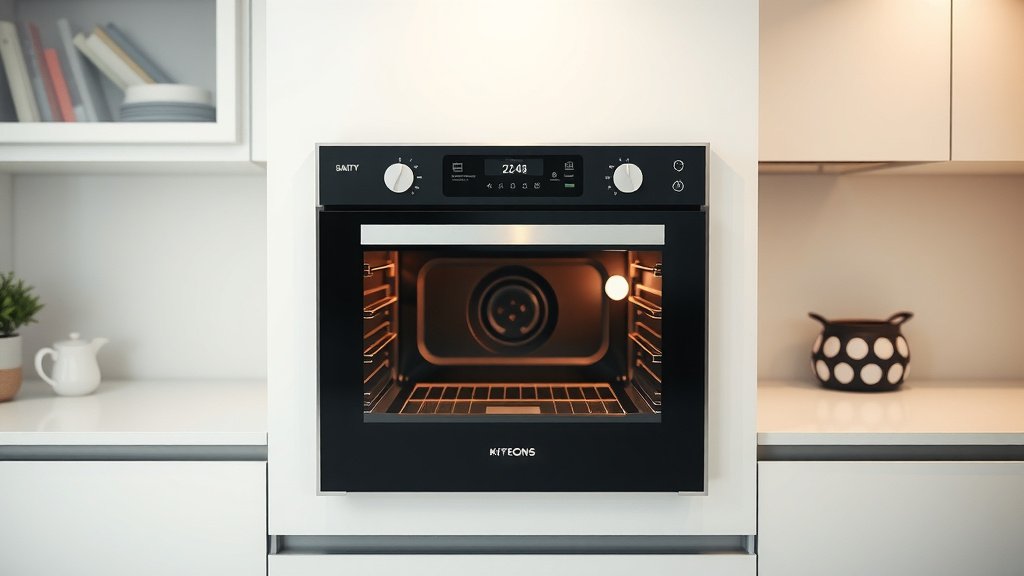
To use the self-clean function on your single wall oven, first remove all racks and large debris, then lock the oven door (either manually or automatically through the cycle), and select the self-clean option with the desired duration.
Always consult your specific oven’s user manual for precise instructions, as cycle times and pre-cleaning steps can vary greatly between models.
- Remove all oven racks, probes, and any foil or cookware from inside your oven before starting.
- Wipe out loose food bits and grease spills to reduce smoke during the self-clean cycle.
- Choose your self-clean cycle duration, typically 2-5 hours, based on how dirty your oven is.
- Ensure your kitchen is well-ventilated, maybe open a window or turn on an exhaust fan, due to potential fumes.
- Never interrupt the self-clean cycle once it has started; the door will automatically lock for safety.
How To Use Self-Clean On Single Wall Oven?
Using the self-clean on your single wall oven means turning tough grease and baked-on food into ash. This process saves you from endless scrubbing.
It’s like giving your oven a spa day, but with really high heat!
Understanding Your Oven’s Self-Clean Feature
Before you dive in, it’s good to know what self-clean actually does. We found that most self-cleaning ovens use extremely high temperatures, often around 900°F (482°C), to incinerate food residue (NIH).
This intense heat turns stubborn spills into a fine powder, making cleanup a breeze.
High Heat, Low Effort
Think of it as setting a tiny, controlled bonfire inside your oven. The process works incredibly well, but it does require some simple preparation on your part.
Many experts say understanding the science helps you use it safely and effectively.
Is Your Oven Ready for a Deep Clean?
Not all ovens are created equal, and not every situation calls for a self-clean cycle. Is your oven just a little messy, or has it seen better days?
Let’s find out if this heavy-duty cleaning method is right for your current situation.
Here’s a quick checklist before you start:
- Has it been more than a few months since the last deep clean?
- Do you see significant baked-on grease or carbonized food bits?
- Are you experiencing noticeable smoke when baking?
- Is your oven manual clear about the self-clean function?
- Do you have enough time for the full cycle and cool-down?
Prepping Your Oven: The First Crucial Steps
Preparation is key to a successful and safe self-clean cycle. Skipping these initial steps can lead to unnecessary smoke or damage.
Don’t worry, it’s straightforward, much like preparing for a big family meal.
Remove Everything from Inside
This is non-negotiable! You must remove all oven racks, broiler pans, and any other accessories from the oven cavity.
These items can warp or discolor under the intense self-clean heat (Consumer Reports).
Wipe Away Loose Debris
We found that wiping out any large crumbs, grease puddles, or food spills beforehand helps a lot. This prevents excessive smoke and potential flare-ups during the cycle.
A damp cloth or paper towel usually does the trick for this step.
Setting Up Your Self-Clean Cycle
Now that your oven is prepped, it’s time to actually start the cleaning. This part is surprisingly simple, often just a few button presses.
It’s like programming your coffee maker for the morning.
Choose Your Cycle Length
Most single wall ovens offer various self-clean durations, typically ranging from 2 to 5 hours. We recommend choosing a longer cycle for heavily soiled ovens.
A lighter mess might only need the shorter setting.
Here’s a general guide:
| Oven Condition | Recommended Cycle Length | Expected Residue |
|---|---|---|
| Lightly soiled | 2-3 hours | Fine, easy-to-wipe ash |
| Moderately dirty | 3-4 hours | More visible ash, some scrubbing needed |
| Heavily baked-on | 4-5 hours | Thick ash layer, possible lingering smell |
Initiating the Self-Clean
Once you’ve selected the duration, simply press the “Self Clean” button. The oven door will then lock automatically as a safety measure.
You can’t open it until the cycle is complete and the oven has cooled down significantly.
During the Self-Clean Cycle: What to Expect
The self-clean cycle is a set-it-and-forget-it operation, but knowing what might happen can ease any worries. It’s a quiet workhorse doing its job.
You might notice a few things while it’s running.
Smoke and Odors
It’s common to experience some smoke and a distinct odor, especially during the first hour. This is simply food residue burning away.
Ensure your kitchen is well-ventilated; opening a window or turning on your exhaust fan is a great idea.
Door Lock and Safety
The oven door will remain locked throughout the entire cycle and until the oven cools down to a safe temperature. This is a crucial safety feature.
Never try to force the door open during or immediately after the cycle (Consumer Product Safety Commission).
After the Cycle: The Grand Reveal
Once the self-clean cycle finishes, the oven will need to cool down. This can take several hours depending on your oven model.
Patience is a virtue here, much like waiting for a perfectly roasted chicken.
Wiping Away the Ash
After the oven is completely cool and the door unlocks, you’ll find a fine layer of white or grey ash inside. Simply wipe it away with a damp cloth or sponge.
For any stubborn spots, a non-abrasive scrubber can help.
Reinstalling Racks
Now you can put your clean oven racks back into their rightful spots. Many experts recommend cleaning your oven racks separately in a sink with warm, soapy water.
This avoids exposing them to the harsh self-clean heat.
Conclusion
Using the self-clean feature on your single wall oven truly is a powerful way to maintain a clean kitchen without the back-breaking work. By following these straightforward steps, you’re not just cleaning your oven; you’re preserving its longevity and ensuring your food always tastes its best.
Remember, a little preparation goes a long way in making this high-tech cleaning process effortless. Enjoy your sparkling clean oven!
Can I use self-clean if my oven is slightly dirty?
Yes, you can use the self-clean function even if your oven has only light soil. A shorter cycle, typically 2-3 hours, will usually be sufficient to clean away minor splatters and crumbs.
Is it safe to be home during the self-clean cycle?
While generally safe, it’s a good idea to ensure your kitchen is well-ventilated by opening windows or using an exhaust fan. Some people prefer to be out of the house due to the potential for odors or smoke, especially with a very dirty oven.
How often should I use the self-clean feature?
Most manufacturers and oven experts suggest using the self-clean feature every 3-6 months, depending on how frequently you use your oven and how messy your cooking gets. Over-cleaning can stress oven components.
What if the self-clean cycle won’t start or finish?
If your self-clean cycle won’t start, first check that the oven door is fully closed and locked. If it stops mid-cycle or has other issues, consult your oven’s manual or contact a qualified appliance technician. This can sometimes indicate an issue with the door latch or thermostat.
Can I manually clean my oven after a self-clean cycle?
Absolutely! After the self-clean cycle has finished and the oven has cooled, you will need to manually wipe out the ash residue. For any very stubborn spots that didn’t fully incinerate, a damp cloth with a mild cleaner (avoiding harsh chemicals) can be used to finish the job.
