Bread Oven vs Dutch Oven: Which Should You Choose? (November 2026)
Pick a dedicated bread oven if you bake sourdough often, and a Dutch oven if you want one pot for bread, stews and roasts. In this bread oven vs dutch oven comparison, the dome and the all-round lid are the main difference.
On this page (12 sections)
- Quick verdict: bread oven vs dutch oven
- The two sides: dedicated bread oven and multipurpose Dutch oven
- How the dome lid changes a loaf
- Capacity and loaf size: 5QT, 6 qt and 6 quart
- Heat retention and even cooking
- Everyday cooking beyond bread
- What flour and dough do in each pot
- Handles, weight and safe moving
- Stovetop, oven range and safe use
- Care, cleaning and enamel life
- Who should buy which pot
- Bread oven vs dutch oven: the final rule
Pick a dedicated bread oven if you bake sourdough often, and a Dutch oven if you want one pot for bread, stews and roasts. In this bread oven vs dutch oven comparison, the dome and the all-round lid are the main difference.
The Umite Chef 6 qt bread oven leads this list because its dome lid is shaped for steam and rise. The Lodge 6 quart Dutch ovens follow close behind because they bake well and cook far more meals.
Our score weighs specs, features and buyer feedback against what you're shopping for. We compared the four pots here on capacity, lid shape, heat use, handles and care.
 Best for dedicated bread baking
Umite Chef Enameled Round Cast Iron Bread Oven
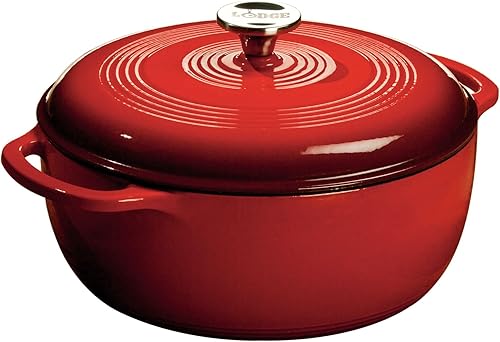 Best for multipurpose cooking
Lodge Essential Enamel Cast Iron Dutch Oven
Quick verdict: bread oven vs dutch oven
A bread oven wins for bread alone; a Dutch oven wins for a mixed kitchen. The Umite Chef bread oven has a 6 qt capacity, a dome lid and cotton potholders.
The Lodge pots have 6 quart capacity, dual handles and a moisture-sealing lid.
If you bake two or three loaves a week, the dome shape is worth it. If you bake once in a while and make soup, beans and braises each week, a Dutch oven saves space.
The Umite Chef 5QT Dutch oven sits in the middle. It is smaller at 5 quarts, includes cotton oven mitts, and still bakes bread, stews and roasts.
The two sides: dedicated bread oven and multipurpose Dutch oven
A bread oven is shaped around one loaf and trapped steam; a Dutch oven is shaped for many dishes. The bread oven in this group is round, enameled cast iron, 6 quarts, in Cream White.
It has a dome lid and cotton potholders.
The Dutch ovens here are also round enameled cast iron. Two Lodge models are 6 quarts, in Island Spice Red and Oyster White.
The Umite Chef Dutch oven is 5 quarts in Cream White.
| Feature | Umite Chef Bread Oven | Lodge Dutch Ovens | Umite Chef Dutch Oven |
|---|---|---|---|
| Capacity | 6 qt | 6 quart | 5QT |
| Lid | Dome lid | Moisture-sealing lid | Cast iron lid |
| Heat limit | 500°F | 500°F | 500°F |
| Handles | Pot handles with potholders | Dual handles | Wide handles with mitts |
| Best use | Bread, plus roast and braise | Bread, braise, simmer, marinate | Bread, stews, braising, roasting |
A dedicated bread oven still does other work. Umite Chef says this pot is also for roasting, stewing and braising.
A Dutch oven still bakes bread. The choice is about shape, not a hard limit.
How the dome lid changes a loaf
The dome lid gives a tall loaf more room to rise while steam builds. Umite Chef says the domed cloche lid traps moisture for a crispy crust and oven spring.
That shape matters most for sourdough and other artisan loaves.
A flat Dutch oven lid also traps steam, but with less headroom. A large round loaf may touch the lid if the pot is just big enough.
The 6 qt options here give more room than the 5QT model.
Our guide on How to Bake Bread in a Dutch Oven? walks through preheating, steam and timing. Read it before you bake your first loaf in any of these pots.
Bread oven vs dutch oven for oven spring
Oven spring needs steam early and steady heat through the bake. Cast iron holds heat well, and both sides here use enameled cast iron.
The dome helps by holding steam around the loaf without pressing on it.
Parchment, a sling or a dusting of flour can help you lower dough in and lift it out. The potholders in the Umite Chef bread oven kit help when you move a hot pot in and out of the oven.
When a standard lid is enough
A standard lid is enough for most home loaves that fit with room to spare. If your dough proofed in a banneton fits your Dutch oven with space above it, you may not need a dome.
The Lodge models are 10.75 inches and 10.9 inches in diameter. Measure your proofing basket or bowl and leave room for rise.
A tight fit can flatten the top crust.
Capacity and loaf size: 5QT, 6 qt and 6 quart
Choose 6 quarts for large artisan loaves; choose 5QT if you cook smaller batches. The Umite Chef bread oven and both Lodge Dutch ovens are 6 quarts or 6 quart.
The Umite Chef Dutch oven is 5 quarts.
One quart sounds small, but it changes how a big loaf fits. A 6 qt pot gives more room for a round boule to spread and rise.
A 5QT pot still holds soups and stews for 4 to 6 people, Umite Chef says.
Measure your oven rack space as well. All three 6 quart pots need width for handles.
The Lodge red model measures 13.25 x 13.25 x 6 inches. The Lodge white model measures 13.5 x 13.5 x 10.9 inches in its listed dimensions.
Bread oven vs dutch oven in a standard oven
Check rack height and handle width before you buy a 6 quart pot. A dome lid adds height, and a full cast iron pot is heavy when hot.
You need room to lift the lid without hitting the top element.
Put the pot on the middle rack for most bakes. Leave space around it for air to move.
If your oven is small, the 5QT model may fit more easily.
Heat retention and even cooking
Both sides use cast iron for heat retention, but the Lodge pots stress even heat for braising and simmering. Lodge says its enameled Dutch oven supports even heat distribution across the bottom and sidewalls.
Umite Chef says its bread oven gives superior heat retention for crust and spring.
Preheat matters with cast iron. Umite Chef advises 5 to 7 minutes for even distribution on its 5QT Dutch oven, and preheating 2 to 3 minutes on medium-low.
A cold pot can scorch food on the bottom while the top stays cool.
All four pots here are oven safe to 500°F. That covers most bread bakes, roasts and braises.
Check your recipe first, since some bread methods call for a hotter oven than you want for enamel care.
Everyday cooking beyond bread
A Dutch oven wins if you cook soup, beans, braises and sauces each week. Lodge lists its 6 quart Dutch oven for braising, roasting, baking and simmering.
It also lists marinating and refrigerating, since the enamel surface stands up to acidic ingredients.
Umite Chef lists its 5QT Dutch oven for stews, sauces, casseroles and rice. If you are choosing cookware for those dishes, compare a casserole dish and Dutch oven.
It also lists searing, slow cooking, boiling, deep frying, roasting, broiling and baking.
That range is why a Dutch oven earns its counter space.
The bread oven can roast and braise too, Umite Chef says. Its dome is less handy for stirring a stew or searing meat on the stove.
If braising is a weekly habit, the Lodge dual handles and straight sides help.
Our Best Dutch Oven For Bread Baking pick list shows how these pots match specific bread tasks. It helps if bread is your top priority but you still want a general pot.
What flour and dough do in each pot
Flour choice affects rise and crust, but the pot affects steam and heat. A strong bread flour holds gas for a tall loaf.
A softer flour gives a tender crumb but may spread more in the pot.
Our guide on What Is the Best Flour for Dutch Oven Bread? explains flour types in plain terms. Match the flour to the loaf you want, then pick a pot with room for that dough.
Sourdough starters need steady warmth and steam. The Best Dutch Oven For Sourdough Bread guide focuses on pots that bakers use for that style.
A dome lid can help a sourdough boule keep its shape as it rises.
Bread oven vs dutch oven for sourdough
Sourdough likes a lid that seals and a pot that holds heat without drying the crust. Both the dome lid and the Lodge moisture-sealing lid aim to hold steam in.
The rise you get depends on your starter, flour and bake plan as much as the lid.
If your sourdough is tall, the 6 qt bread oven gives the best headroom. If your loaf is smaller and you cook stews too, a 6 quart Dutch oven may be the better buy.
Handles, weight and safe moving
Dual handles matter when a 6 quart cast iron pot is full and hot. The Lodge red model weighs 13.5 pounds empty.
The Lodge white model weighs 14.9 pounds empty.
Add bread, dough, stew or braising liquid and the weight climbs fast.
Lodge says its dual handles make moving from stovetop to oven or table easier. Compare Dutch oven stovetop vs oven use for more guidance.
That helps when you sear meat, then finish it in the oven.
It also helps when you carry a pot of soup to the stove.
The Umite Chef bread oven includes cotton potholders. The Umite Chef 5QT Dutch oven includes thick cotton oven mitts.
The Lodge pots include no potholders, so plan to use your own.
Stovetop, oven range and safe use
All four pots here work on gas, electric and induction, and all are oven safe to 500°F. Lodge lists gas, electric, ceramic and induction for its Dutch oven.
Umite Chef lists gas, electric, induction and halogen for its bread oven.
That range covers most home kitchens. It does not make these pots safe for every small appliance.
Our guide on Can You Use A Dutch Oven In Toaster Oven? explains the fit and heat issues with a full size cast iron pot.
It also does not make them microwave safe. Our guide on Can You Use a Dutch Oven in a Microwave? explains why cast iron and metal should stay out of a microwave.
Use a microwave safe bowl for reheating instead.
Bread oven vs dutch oven on the stovetop
A Dutch oven is easier to brown, simmer and stir on the stove. Its straight sides and lid help you sear meat, add liquid and simmer without losing much steam.
The bread oven dome is made for the oven, not for daily stove work.
On the stove, use medium or medium-low heat with cast iron. Umite Chef warns that thermal shock from hot to cold contact can crack enamel.
Let the pot cool naturally for 45 minutes or more before cleaning, Umite Chef says for its 5QT model.
Care, cleaning and enamel life
Hand wash with warm soapy water and a soft brush keeps enamel in good shape. Lodge says its Dutch oven is dishwasher safe, but hand washing with warm soapy water and a nylon scrub brush is recommended.
Umite Chef says its enamel surface resists staining, chipping and odors, and that warm soapy water is enough.
Avoid sudden temperature shocks. Do not run cold water into a hot pot.
Do not set a hot pot on a cold wet surface. Let it cool first, then wash.
The Lodge enamel is porcelain enamel, Lodge says, and it will not react with food. That helps with acidic tomato sauces and marinades.
It also means you can marinate, cook, refrigerate and serve in the same pot, Lodge says.
Which finish suits your kitchen
Cream White and Oyster White look light at the table; Island Spice Red adds color. The Umite Chef pots here are Cream White.
The Lodge pots are Island Spice Red and Oyster White.
Color is about style and stain visibility, not heat.
A light enamel shows tomato colors and browning more. A red enamel hides some stains but can fade in look if chipped.
Pick the color you will enjoy seeing each week.
Who should buy which pot
Buy the Umite Chef bread oven if bread is the main event; buy a Lodge Dutch oven if bread is one of many jobs. The 6 qt bread oven suits home bakers who make sourdough or artisan loaves at least weekly.
Its dome lid, potholders and 500°F oven limit fit that routine.
Buy the Lodge red 6 quart Dutch oven if you want color, dual handles and all-round use. It suits braising, simmering and bread in one pot.
Buy the Lodge white 6 quart Dutch oven if you prefer a light finish for serving.
Buy the Umite Chef 5QT Dutch oven if you cook for 4 to 6 and want mitts included. It suits family stews and bread in a slightly smaller pot.
It is the best fit here if a 6 quart pot feels too heavy or too wide for your oven.
Bread oven vs dutch oven: the final rule
Choose the bread oven for weekly loaves and the Dutch oven for bread plus daily cooking. That is the whole bread oven vs dutch oven trade-off in one line.
The dome gives more rise; the standard lid gives more uses.
Pick the Umite Chef 6 qt bread oven if your kitchen already has a stew pot and you bake often. Pick a Lodge 6 quart Dutch oven if this will be your main heavy pot for bread, braises and soups.
Pick the Umite Chef 5QT Dutch oven if space, weight or family size points to a smaller pot.
Measure your oven, your proofing bowl and your storage shelf first. Then match the pot to the meals you make most weeks, not the meals you plan to make one day.
Frequently asked questions
Can a Dutch oven bake bread as well as a bread oven?
A Dutch oven can bake crusty bread well because its lid traps steam and its cast iron holds heat. A dedicated bread oven with a dome lid gives more headroom for spring.
Your loaf size, oven space and how often you bake will decide which works better for you.
Which is better for sourdough, a bread oven or a Dutch oven?
Both work for sourdough when they trap steam and hold steady heat. A dome lid helps a tall loaf rise, while a standard Dutch oven lid also seals in moisture.
Pick the shape that fits your loaf and oven, then follow a proven bread method for that pot.
Can you use a Dutch oven in a toaster oven or microwave?
Check size and heat limits first, since a 6 quart cast iron pot is large for many toaster ovens. Metal and cast iron should not go in a microwave.
Our guides on toaster oven and microwave use explain why a full size Dutch oven is usually not a fit for either.


