How to Make Soup in a Dutch Oven
Dutch oven soup recipes start with browning ingredients, adding liquid, and simmering gently until the vegetables, meat, or beans are tender. A heavy pot helps keep the heat steady from stovetop to table.
On this page (11 sections)
- What is the best way to make soup in a Dutch oven?
- How do you build flavor before adding broth?
- Which ingredients go into Dutch oven soup first?
- Which Dutch oven should you use for soup?
- Can you make acidic soup in a Dutch oven?
- How do you simmer soup without burning it?
- When should you add meat, beans, pasta, and greens?
- Can you use a Dutch oven in a toaster oven?
- How do you store and reheat Dutch oven soup?
- What is the simplest Dutch oven soup recipe?
- How do you choose among these Dutch ovens?
Dutch oven soup recipes are simple: brown the main ingredients, soften the vegetables, add liquid, and simmer gently until the soup is ready. The heavy pot helps maintain steady heat, while a lid reduces moisture loss during cooking.
A Dutch oven also lets you build the soup in one vessel. You can sear meat, cook onions, simmer broth, and serve from the same pot, which means fewer dishes and more developed flavor.
What is the best way to make soup in a Dutch oven?
The best method is to build the soup in layers instead of adding everything at once. Start with oil and aromatics, brown meat if the recipe uses it, add vegetables and seasonings, then pour in broth or another cooking liquid.
A basic order looks like this:
- Warm the Dutch oven over medium heat.
- Add oil, then cook onions, carrots, celery, garlic, or other aromatics.
- Brown meat in batches if needed, leaving space between pieces.
- Stir in spices, tomato paste, or flour when the recipe calls for them.
- Add broth, water, tomatoes, beans, or other liquid.
- Scrape the bottom gently to loosen browned bits.
- Add ingredients that need longer cooking first.
- Cover and simmer until the vegetables, meat, or beans are tender.
- Add delicate ingredients near the end.
- Taste and adjust seasoning before serving.
Keep the heat low enough for a gentle simmer. A hard boil can break apart vegetables, toughen some meats, and cause liquid to evaporate faster than expected.
For a broader overview of uses, see What Is a Dutch Oven Used For?.
How do you build flavor before adding broth?
Cook the aromatics until they soften, then brown the meat or vegetables when the recipe allows it. This creates a stronger base than adding raw ingredients directly to the liquid.
Onions, carrots, and celery can form the base of chicken, beef, bean, and vegetable soups. Garlic usually needs less time, so add it after the firmer vegetables have started to soften.
If you brown meat, work in batches. Crowding traps steam and makes browning harder.
After adding broth, scrape the bottom with a wooden or silicone utensil to loosen the cooked bits.
Tomato paste, dried herbs, and ground spices can be stirred into the cooked aromatics for a short time before the liquid goes in. Watch the heat so they do not scorch.
Which ingredients go into Dutch oven soup first?
Add ingredients according to how long they need to cook. Dense vegetables, dried beans, and raw meat usually need more time than leafy greens, cooked grains, pasta, or fresh herbs.
Potatoes, carrots, and winter squash can go in early. Add tender greens, cooked chicken, canned beans, and small pasta later so they keep a better texture.
If you use dried beans, follow the recipe's soaking and cooking instructions. Do not assume every bean cooks at the same speed, especially if it is old or stored for a long time.
Pasta and rice absorb liquid as they cook. Add extra broth only when the recipe allows for it, because too much liquid can weaken the soup's flavor.
Does a lid change the cooking time?
A lid usually reduces evaporation and helps the pot hold heat. That can shorten the time needed to bring the soup back to a simmer after you add cool liquid.
Keep the lid slightly open if you need the soup to reduce. Keep it closed when the recipe depends on retained moisture, such as a bean soup or a long simmer with meat.
Lift the lid only when needed. Each opening releases heat and steam, so the soup may take longer to return to a simmer.
Which Dutch oven should you use for soup?
The best choice depends on batch size, cooking surface, and whether you want an uncoated or enamel cooking surface. A 6-quart pot gives the most room here, while the 5-quart model suits smaller batches and cooks who want a lid that also works as a skillet.
The Lodge Cast Iron Double Dutch Oven is a 5-quart 2-in-1 pot and skillet combo made from cast iron. Its 4.75-liter capacity, cast iron lid, and oven-safe design suit cooks who want one vessel for soup, searing, baking, stovetop cooking, grilling, or campfire use.
The cast iron construction is designed to retain heat and reduce hot spots. It uses an iron-and-oil finish and needs hand washing, so dry it fully and follow the care instructions for seasoned cast iron.
Choose this style if you want indoor and outdoor flexibility or like the option of using the lid as a separate skillet. Consider an enameled pot instead if you prefer a smooth enamel surface for recipes with acidic ingredients.
The Lodge Essential Enamel Cast Iron Braiser is a 3.6-quart Caribbean Blue braiser with dual assist handles and a moisture-locking lid. Its smaller capacity suits compact batches, and its enamel surface requires no seasoning.
This braiser has a cast iron body and lid, with an enamel finish described as PFAS-free. It is compatible with gas, electric, ceramic, and induction cooktops and is oven safe up to 500°F.
Choose it when you want a wide, lower vessel for browning ingredients and serving. Its 3.6-quart capacity may be limiting for a large family soup or a recipe that needs extra room for stirring.
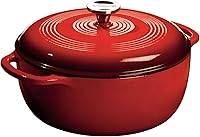
The Lodge Essential Enamel Cast Iron Dutch Oven is a 6-quart Island Spice Red Dutch oven with dual handles and a cast iron lid. It is the roomiest option in this group for larger batches, leftovers, and soups with bulky vegetables.
The cast iron body supports heat retention, while the enamel coating is stain-resistant and non-toxic. It works on gas, electric, ceramic, and induction cooktops and is oven safe up to 500°F.
Choose this model when you often cook soup for several people or want enough space to stir without spilling. Hand washing with warm, soapy water and a nylon scrub brush is recommended, although the product data also identifies it as dishwasher safe.
Can you make acidic soup in a Dutch oven?
Enameled cast iron is the easier choice for acidic soup recipes that use tomatoes, wine, vinegar, or citrus. The enamel surface on the Lodge Essential Enamel Dutch Oven is designed not to react with food.
That makes it useful for tomato soup, minestrone, chili-style soups, and other recipes that simmer acidic ingredients. You still need to avoid sudden temperature changes and use the care method recommended for the cookware.
The Lodge cast iron double Dutch oven uses an iron-and-oil finish rather than an enamel cooking surface. Use it for soups according to its care instructions, and pay attention to cleaning and drying after cooking.
How do you simmer soup without burning it?
Bring the liquid to a gentle simmer, then lower the heat and stir the bottom from time to time. Heavy cookware holds heat well, so the burner setting may need to be lower than you expect.
If the soup thickens as it cooks, stir more often. Lentils, beans, potatoes, pasta, and flour-thickened broths can settle on the bottom when the liquid is too low.
Add liquid gradually when possible. If you pour in a large amount of cold broth, the soup may stop simmering, so allow time for the pot to heat again.
Never leave an empty cast iron pot heating for long. Add oil or ingredients before the vessel becomes excessively hot, and use appropriate protection when handling the lid or handles.
When should you add meat, beans, pasta, and greens?
Add each ingredient based on its cooking time and the texture you want. Raw meat and dried beans need more time, while cooked meat, canned beans, pasta, and greens usually belong later in the process.
Raw chicken can simmer in the broth until it reaches a safe internal temperature, then be removed, shredded, and returned to the soup. For a separate meal idea, see How to Cook Chicken in a Dutch Oven.
Beef soup may need a longer, slower simmer to soften tougher cuts. Our guide to how to cook roast beef in a Dutch oven covers that cooking style in more detail.
Add pasta near the end and check it often. It continues absorbing liquid while the soup rests, so serve promptly or keep extra broth available if the recipe supports it.
Stir in leafy greens during the final minutes. Their color and texture are easier to control when they are not left in the pot for the entire simmer.
Can you use a Dutch oven in a toaster oven?
The answer depends on the Dutch oven's size, the toaster oven's internal space, and the cookware's temperature instructions. Read Can You Use A Dutch Oven In Toaster Oven? before trying it.
A full soup pot is heavy and needs room for safe handling. Check the distance from the rack to the heating elements, leave room for the lid, and make sure the door closes without touching the cookware.
For a different small-appliance approach, see Can You Make Soup In A Toaster Oven?. A toaster oven may suit a small covered dish, but it is not automatically suitable for a full Dutch oven batch.
How do you store and reheat Dutch oven soup?
Cool leftovers promptly in shallow containers, then refrigerate or freeze them according to safe food-handling guidance. Avoid leaving a large, deep pot of hot soup at room temperature for a long period.
Divide soup into smaller containers to help it cool more evenly. Leave room for expansion if you freeze it, especially when the soup contains broth.
Reheat only the portion you plan to eat. Stir thicker soups while they warm, and add a small amount of broth if the texture has tightened in the refrigerator.
Do not place a hot Dutch oven directly into cold water. Allow it to cool first, then wash it using the method suited to its finish.
What is the simplest Dutch oven soup recipe?
A simple vegetable soup needs oil, onion, carrots, celery, garlic, broth, potatoes, herbs, salt, and pepper. Cook the onion, carrots, and celery first, add the garlic and herbs, pour in broth, then simmer with potatoes until tender.
For a bean soup, add canned beans after the vegetables have softened. For chicken soup, add raw chicken early enough to cook through, then shred it before serving.
For tomato soup, use the enameled Lodge Dutch oven if you want a nonreactive cooking surface. Blend only if your recipe and cookware instructions allow it, and let the soup cool before transferring it to another container.
Soup is ready when the longest-cooking ingredient is tender and the seasoning tastes balanced. Add delicate herbs, greens, cream, or cooked meat near the end so they do not overcook.
How do you choose among these Dutch ovens?
Choose the Lodge Essential Enamel Cast Iron Dutch Oven when you need the largest capacity in this group for family-size soup and want an enameled surface. Choose the Lodge Cast Iron Double Dutch Oven when the skillet lid and indoor or outdoor flexibility matter most.
Choose the Lodge Essential Enamel Cast Iron Braiser for smaller batches, a wide cooking shape, and dual assist handles. Its 3.6-quart capacity is easier to fill for a small household but gives less room than the 6-quart Dutch oven.
Whichever pot you choose, start with moderate heat, build flavor in layers, simmer gently, and clean the vessel according to its finish. That basic method works for vegetable, chicken, bean, beef, and tomato-based Dutch oven soup recipes.
Frequently asked questions
Can you make soup in a Dutch oven?
Yes. A Dutch oven works well for soup because its heavy cast iron body retains heat while the lid helps hold in moisture.
Brown meat or vegetables first, add broth and other ingredients, then simmer gently until everything is tender.
What size Dutch oven is best for soup?
A 6-quart Dutch oven suits many family-size soup recipes because it leaves room for broth, vegetables, meat, and stirring. A smaller 3.6-quart braiser or 5-quart Dutch oven can work better for smaller batches or households with limited storage.
Can soup simmer in a cast iron Dutch oven?
Yes, soup can simmer in a cast iron Dutch oven. Enameled cast iron is useful for recipes with acidic ingredients because the enamel surface does not react with food.
For uncoated cast iron, follow the cookware care instructions and avoid long exposure to acidic foods.
How do you stop soup from sticking in a Dutch oven?
Use moderate heat, add enough liquid, and stir ingredients that settle on the bottom. Let the pot preheat gradually, avoid leaving it empty over a hot burner, and lower the heat once the soup reaches a gentle simmer.