Hand Mixer vs Blender: Which Fits Your Kitchen Tasks? (November 2026)
Choose a hand mixer for batters, dough and whipped mixtures, and choose a blender for purées, soups and ingredient processing. The right hand mixer or blender depends on the texture and task you make most often.
On this page (8 sections)
- Hand mixer vs blender: which tool does each job better?
- When should you choose a hand mixer?
- When should you choose a blender?
- Which tool is better for whipping?
- Which tool handles thick mixtures?
- How should you choose between these 4 products?
- How do you use and care for a hand mixer or blender?
- What is the final hand mixer vs blender choice?
Choose a hand mixer for batters, whipped cream and many dough tasks, and choose a blender for purées, soups, sauces and ingredient processing.
In this hand mixer vs blender comparison, the texture you need matters more than the motor number alone.
A hand mixer works with beaters or a whisk inside a bowl. It moves through ingredients to combine them and add air without breaking every piece down into a paste.
A blender uses a blade to break down ingredients. It is built for a finer finish, often with a jar, beaker or the blending container itself.
These tools can look similar at a glance because both are handheld and corded. Their attachments and motion do very different work in the kitchen.
The Hamilton Beach and KitchenAid hand mixers suit baking prep. They are designed for cake batter, cookie dough, whipped cream, egg whites and similar bowl based tasks.
The Turelar and KitchenAid hand blenders suit puréeing and processing. They work in a pot, bowl or included container for soups, sauces, smoothies and soft ingredients.
The Turelar also includes a whisk and milk frother. That gives it some overlap with mixing, although its main strength remains blending and chopping.
Most shoppers do not need both tools on day one. Your usual recipes, not the longest feature list, should decide which one earns space first.
Think about what you make each week. Frequent baking points toward beaters, while frequent soups and purées point toward a blade.
Our score weighs specs, features and buyer feedback against what you are shopping for. It helps compare these four options, but your own tasks should lead the choice.
| Product | Best for | Speeds | Motor | Attachments | Our score |
|---|---|---|---|---|---|
| Hamilton Beach 6-Speed Electric Hand Mixer | flexible baking prep | 6 | 250 watt peak power | 2 traditional beaters and whisk | 9.7 |
| KitchenAid 5 Ultra Power Speed Hand Mixer | compact everyday mixing | 5 | 2 stainless steel Turbo Beater accessories | 9.6 | |
| Turelar Immersion Blender Handheld Corded | multi-tool food prep | 5 | 1100W full copper motor | 9.5 | |
| KitchenAid Variable Speed Corded Hand Blender | controlled purées | 9.4 |
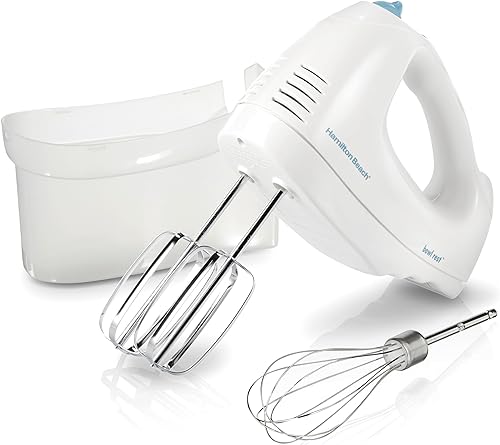 Best for flexible baking prep
Hamilton Beach 6-Speed Electric Hand Mixer
 Best for compact everyday mixing
KitchenAid 5 Ultra Power Speed Hand Mixer
Hand mixer vs blender: which tool does each job better?
A hand mixer is better for aerating and combining ingredients, while a blender is better for breaking ingredients into smaller pieces. That difference explains why the tools aren't direct replacements for most recipes.
Hand mixer beaters move through a bowl to combine ingredients. This suits cake batter, cookie dough, mashed potatoes, egg whites and heavy cream, depending on the recipe and attachment.
Blender blades create a finer mixture from ingredients with enough liquid or softness for the tool. This suits smoothies, milk shakes, soups, sauces, hummus and purées.
A hand mixer can add air to a mixture without turning every ingredient into a smooth paste. A blender can create a texture that beaters cannot reach, but it may not give you the same control for thick batter.
When should you choose a hand mixer?
Choose a hand mixer when your main tasks are baking, whipping or bowl-based mixing. It gives you direct control over the bowl and lets you change speed as the mixture thickens.
The Hamilton Beach 6-Speed Electric Hand Mixer has 6 speeds, a QuickBurst button and a 250 watt peak-power motor. It includes 2 traditional beaters, a whisk and a snap-on storage case.
Its Bowl Rest feature helps stabilize the mixer on the edge of a bowl between additions.
The KitchenAid 5 Ultra Power Speed Hand Mixer has 5 speeds and 2 stainless steel Turbo Beater accessories. Speed one suits slowly adding chunky ingredients such as nuts or chocolate chips, while higher speeds suit tasks such as whipping egg whites or heavy cream.
A hand mixer is also easier to use when you need to watch the texture as you mix. Start at a low speed to reduce splatter, then increase the speed only when the ingredients are combined enough to handle it.
For more attachment and setup ideas, see our guide to Baking Prep Tools: The Complete Buying Guide. If you want more options for cake and cookie work, compare our Best Hand Mixers for Baking.
Hand mixer vs blender for batter and dough
Use the hand mixer for batter and light-to-moderate dough work, but don't assume every dough suits a handheld motor. For a stand mixer method, see how to use a Bosch universal mixer.
Thick mixtures place more demand on the beaters and your control over the bowl.
The Hamilton Beach includes traditional beaters and a whisk. The KitchenAid KHM512 includes 2 stainless steel Turbo Beater accessories.
Neither product's included components identify dough hooks, so check the recipe and attachment needs before starting.
Use a low speed while combining dry ingredients with wet ingredients. Stop to scrape the bowl when needed, and avoid forcing the beaters through a mixture that is too stiff for the tool.
Our guide answers Can You Use a Hand Mixer for Dough? with more detail on dough texture, attachment limits and safer mixing habits.
When should you choose a blender?
Choose a blender when you need smooth blending, liquid processing or ingredient chopping. An immersion blender can work in a pot, bowl or included container, depending on the recipe and the tool's instructions.
The Turelar Immersion Blender Handheld Corded has a 1100W full copper motor, 5 speeds and a variable speed trigger. Its 5-in-1 set includes a stick blender, whisk, milk frother, 600 ml mixing beaker and 500 ml food processor.
The Turelar includes a food-grade nylon blade guard designed to reduce suction and help limit scratches on pots and pans. Its blending shaft, whisk and frother are dishwasher-safe up to 167°F, while the motor unit and chopper lid can be wiped clean.
Turelar says the immersion blender can handle hot soups and purées when liquid is added, but it advises short bursts for ice. Large ice blocks and whole frozen fruit can overheat or damage the motor.
The KitchenAid Variable Speed Corded Hand Blender has an 8 in removable blending arm with a 4-point stainless steel blade. It includes a variable speed trigger, a pan guard and a 3-cup BPA-free blending jar with lid.
Use the KitchenAid hand blender for smoothies, milk shakes, soups, sauces and hummus. Its pan guard helps protect cookware while the blending arm works in a pot or another suitable container.
For a closer comparison with another blade tool, read Hand Mixer vs Immersion Blender: Which Should You Choose?. That comparison focuses on the overlap between handheld mixing and immersion blending.
Which tool is better for whipping?
A hand mixer is the stronger choice for repeated whipping because both hand mixers here include beater attachments, while only the Turelar blender set includes a whisk. The right choice depends on whether whipping is your main task or one part of a wider prep set.
The Hamilton Beach includes a whisk along with 2 traditional beaters. Its 6 speed options and QuickBurst button give you more speed choices for moving from gentle mixing to a faster finish.
The KitchenAid hand mixer includes 2 Turbo Beater accessories and 5 speeds. Its compact shape and lockable swivel cord suit routine bowl mixing when you don't need a separate whisk attachment.
The Turelar includes a whisk and milk frother, so it can cover some lighter mixing jobs as part of a broader attachment set. Its core design is still an immersion blender with a blade, beaker and food processor attachment.
The KitchenAid hand blender is aimed at blending rather than traditional whipping. Its included components are a blender arm, blending jar with lid, juice container and pan guard.
Which tool handles thick mixtures?
A hand mixer is usually the better fit for batters and some doughs, while a blender is better for softer ingredients with enough liquid. Do not judge suitability by wattage alone because the attachments and recipe texture change the job.
The Hamilton Beach uses a 250 watt peak-power motor with traditional beaters and a whisk. The KitchenAid KHM512 uses 60 watts and Turbo Beater accessories.
Their listed speed controls help you begin slowly and adjust as ingredients combine.
The Turelar's 1100W motor supports blending and chopping, but its own guidance limits hard or frozen ingredients. Use short bursts for ice and avoid large ice blocks or whole frozen fruit.
The KitchenAid hand blender has 3 speed settings and a variable speed trigger. Its 4-point blade is suited to blending and puréeing, not mixing a thick cookie dough in the way a beater does.
How should you choose between these 4 products?
Choose by your most common task: baking, multi-purpose prep, or controlled blending. The highest score here goes to the Hamilton Beach because its included beaters, whisk, 6 speeds, QuickBurst button and storage case cover a broad baking routine.
Choose the Hamilton Beach 6-Speed Electric Hand Mixer for the broadest baking setup in this group. The 2 beaters, whisk, Bowl Rest and snap-on case reduce the need to manage separate attachments.
Choose the KitchenAid 5 Ultra Power Speed Hand Mixer for compact everyday mixing. Its 5 speeds, 2 stainless steel Turbo Beaters and lockable swivel cord suit batter, chunky additions and whipped mixtures.
Choose the Turelar Immersion Blender Handheld Corded when one set needs to cover blending, chopping, whisking and frothing. Its 500 ml food processor and 600 ml mixing beaker add prep options, but frozen ingredients need care.
Choose the KitchenAid Variable Speed Corded Hand Blender for controlled purées and smaller blending jobs. Its removable 8 in blending arm, pan guard, variable speed trigger and 3-cup jar fit soups, sauces, smoothies and hummus.
If you want a hand mixer that can stay supported between tasks, see Best Hand Mixers with Stands. A stand can change the storage and workflow decision, especially when you mix often.
How do you use and care for a hand mixer or blender?
Start at a low speed, keep the tool stable and clean removable parts according to the product's instructions. Good setup matters because splatter, stuck attachments and overloaded motors can make a simple recipe harder.
For a hand mixer, place the beaters into the bowl before starting. Begin slowly, keep the beaters below the surface where practical and use the bowl's shape to guide the mixture.
Use the Hamilton Beach's speed dial and QuickBurst only when the mixture can handle the added movement. Its attachments are dishwasher-safe, and the snap-on storage case keeps the 2 beaters and whisk together.
For the KitchenAid hand mixer, use the single-handed release button to remove accessories. Its stainless steel Turbo Beater accessories are dishwasher-safe, and the lockable swivel cord can stay out of your way during mixing.
For an immersion blender, keep the blade or blending arm below the mixture to reduce splashing. Add enough liquid for the recipe, especially when making soups or purées.
Let the motor rest during demanding tasks. With the Turelar, use short bursts for ice and avoid large ice blocks or whole frozen fruit.
Keep its motor unit and chopper lid away from direct rinsing.
The KitchenAid hand blender includes a removable blending arm and a pan guard. Its blending jar has a lid, so it can support an individual blending job and later storage when used as directed.
What is the final hand mixer vs blender choice?
Pick a hand mixer if baking and whipping fill most of your week, and pick a blender if smooth purées, soups or chopping matter more.
Pick the Hamilton Beach for the most complete baking attachment set in this group. Its 2 beaters, whisk, Bowl Rest and snap-on storage case suit varied baking prep and simple storage.
Pick the KitchenAid hand mixer for compact everyday mixing. Its 5 speeds and 2 stainless steel Turbo Beaters suit batter, chunky additions and whipped mixtures without a large setup.
Pick the Turelar for several prep attachments in one set. Its stick blender, whisk, milk frother, 500 ml food processor and 600 ml mixing beaker cover more than one job, but frozen ingredients need care.
Pick the KitchenAid hand blender for controlled purées. Its removable 8 in blending arm, pan guard, variable speed trigger and 3-cup jar fit soups, sauces, smoothies and hummus in smaller jobs.
A hand mixer and blender can share a kitchen because they solve different texture problems. One combines and aerates in a bowl, while the other breaks ingredients down with a blade.
Choose the tool that matches your usual bowl, ingredient and finish. Then add the other type only when its specific blade or beater action would save real work.
If baking leads your week, start with a hand mixer. Use low speeds first, add ingredients gradually and let the beaters catch up before you increase the speed.
If blending leads your week, start with an immersion blender. Keep the blade below the surface, add enough liquid for the recipe and work in short, controlled bursts.
Keep storage in mind before you buy either tool. A snap-on case helps with the Hamilton Beach attachments, while the Turelar set needs room for its several parts.
Care also differs by tool. Dishwasher safe attachments simplify cleaning, but motors and lids should be wiped as directed rather than rinsed.
The best final choice is the one you will reach for most often. It should fit your recipes, your counter space and the texture you want at the end.
Frequently asked questions
Can a hand mixer replace a blender?
A hand mixer can replace some whisking and mixing tasks, but it doesn't replace a blender for smooth purées, soups, sauces or ingredient chopping. Hand mixers use beaters for batters, whipped cream and some dough work.
Blenders use blades to break down ingredients into a smoother mixture.
Is a hand mixer or blender better for baking?
A hand mixer is better for most baking prep because beaters mix batter, cookie dough and whipped mixtures directly in a bowl. Choose a blender only when the recipe needs puréeing or liquid processing.
For more baking equipment choices, compare a hand mixer with a stand mixer before you buy.
Can you use a hand mixer to blend soup?
A hand mixer isn't the right tool for blending soup smooth because its beaters are made for mixing and whipping, not puréeing. An immersion blender is better suited to soup, sauce and purée work.
Keep the blade or blending arm below the liquid surface to reduce splashing.
Which is better for small kitchens, a hand mixer or blender?
A hand mixer usually takes less storage space for baking tasks, while an immersion blender can cover blending, whisking, frothing and chopping with attachments. Choose by your most common recipes.
Our guides to Best For Small Kitchens and What Is the Best Oven for Small Kitchens? can help with the wider setup.