
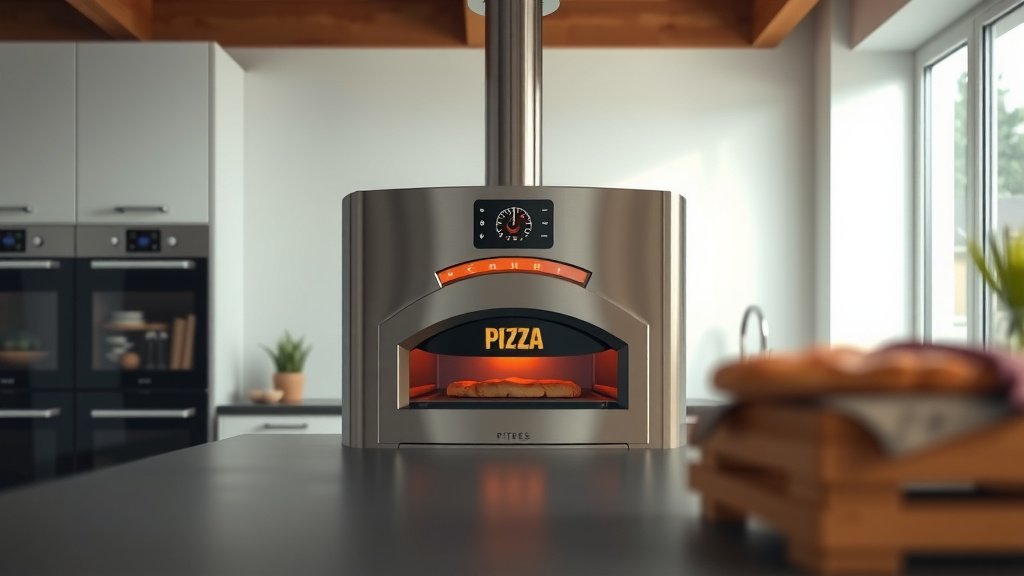
Heating a pizza oven typically takes anywhere from 10 minutes for smaller electric models up to 90 minutes or more for traditional wood-fired ovens. Your pizza oven’s type, fuel source, and even the weather outside all play a big role in how long it will take to reach perfect pizza-making temperatures.
Understanding these factors helps you plan your pizza night so you are ready to cook when the time is right.
TL;DR: Here’s a quick look at what matters most for heating your pizza oven:
- Wood-fired ovens need the most time, often over an hour, to get super hot.
- Gas-fired ovens are much faster, usually ready in 15-30 minutes.
- Electric and portable ovens warm up quickly, sometimes in just 10-20 minutes.
- A stable, high temperature is key for a crispy crust and perfectly cooked toppings.
- Always use an infrared thermometer to confirm your oven is at the ideal cooking temperature.
How Long Does It Take To Heat A Pizza Oven?
The time it takes for a pizza oven to heat up varies greatly, typically ranging from 10 to over 90 minutes. This depends mostly on the oven type and its fuel, affecting your wait time significantly.
Why Does Heat-Up Time Differ So Much?
You might wonder why some ovens are ready in a flash while others take a long warm-up. It’s not just about turning it on. Several key elements come together to influence the entire process. Thinking about these helps you manage your expectations.
The Role of Oven Type and Size
Just like cars, pizza ovens come in many shapes and sizes. A tiny portable oven will heat much faster than a large, brick-built outdoor model. Smaller ovens have less mass to heat, so they reach cooking temperatures more quickly.
Fuel Source Matters A Lot
What powers your oven makes a huge difference. Are you using wood, gas, or electricity? Each fuel has a different heat output and efficiency. This directly impacts how fast your oven gets hot and stays hot.
Outdoor Temperature and Weather Conditions
Imagine trying to boil water outside on a cold, windy day compared to a warm, calm one. Your outdoor pizza oven faces similar challenges. Colder air and strong winds can make it take longer to heat up and maintain that intense cooking temperature (research often points to ambient temperature effects on heat transfer efficiency).
Heating Times for Different Pizza Oven Types
Let’s break down the typical heat-up times you can expect from popular pizza oven styles. Knowing these estimates helps you plan your pizza party effectively. We want you to feel prepared.
Traditional Wood-Fired Pizza Ovens
Ah, the classic! If you’re using a wood-fired oven, expect to spend some time coaxing it to temperature. We found these ovens often need 60 to 90 minutes, sometimes even longer for larger models. Building a proper fire and letting the dome absorb heat takes patience and skill (many expert guides recommend a slow, steady heat-up).
Gas Pizza Ovens (Propane or Natural Gas)
For convenience and speed, gas ovens are often a top choice. These ovens can typically reach cooking temperature much faster. You’re usually looking at around 15 to 30 minutes to get ready. Just turn them on, and they do the work for you.
Electric Pizza Ovens (Indoor and Portable)
Electric ovens, especially compact indoor models or small portable units, are the quickest to heat. Many experts say these can be ready to cook in as little as 10 to 20 minutes. They often have precise temperature controls, making them very user-friendly.
Here’s a quick comparison of common pizza oven heat-up times:
| Oven Type | Typical Heat-Up Time | Notes |
|---|---|---|
| Wood-Fired (Outdoor) | 60-90+ minutes | Requires building a fire, longer preheat for stone. |
| Gas (Outdoor) | 15-30 minutes | Quick and consistent heat. |
| Electric (Indoor/Portable) | 10-20 minutes | Fastest, good for small spaces. |
| Hybrid (Gas & Wood) | 30-60 minutes | Combines speed of gas with wood flavor. |
Tips for Faster Heating and Better Results
Want to shave a few minutes off that wait time? Or maybe ensure your oven is truly ready for that perfect bake? There are a few tricks you can use. Little adjustments can make a big difference in your pizza-making experience.
Preheat Your Pizza Stone Effectively
For any oven, the pizza stone or cooking surface needs to get screaming hot. This is where your pizza cooks directly. We found that letting the stone soak up heat for an extra 10-15 minutes after the air temperature is reached can really help. A cold stone means a soggy crust, and nobody wants that.
Use Good Quality Fuel
If you’re using a wood-fired oven, the type of wood matters. Dry, seasoned hardwood burns hotter and cleaner. Avoid softwoods or damp wood, as they create more smoke and less efficient heat (many professional chefs stress the importance of quality wood). For gas, ensure your tank isn’t running low.
Close the Door When Heating (If Applicable)
Just like your home oven, if your pizza oven has a door, keep it closed during preheating. This traps the heat inside, allowing it to build up more quickly and evenly. Opening it constantly lets valuable heat escape.
How Do You Know Your Pizza Oven is Ready?
This is a critical question. You don’t want to launch a pizza into an oven that’s not hot enough. Knowing when your oven has hit its stride is a bit of an art and a science. The right temperature means a beautifully cooked pizza every time.
Using an Infrared Thermometer
This is your best friend for pizza making. Point it at the center of your pizza stone. For most Neapolitan-style pizzas, you’re aiming for a stone temperature between 700-900°F (370-480°C). For New York style, a bit lower, perhaps 500-600°F (260-315°C) (we found this is a consistent recommendation across many pizza communities).
Visual Cues for Wood-Fired Ovens
For wood-fired ovens, look for a clean, white-hot dome interior. Soot should have burned off, indicating consistent, high heat. The flame should be rolling across the top, showing the air inside is scorching hot.
The Flour Test (Use with Caution)
Some people gently toss a pinch of flour onto the stone. If it burns instantly, it’s too hot. If it slowly toasts, you’re getting close. If it just sits there, it’s not ready. Use this as a rough guide, as it can be messy.
Here’s a quick checklist to see if your oven is ready:
- Has the oven reached its target air temperature (if displayed)?
- Is the pizza stone temperature at your desired range (checked with an infrared thermometer)?
- For wood-fired, is the dome completely clear of soot and glowing white?
- Does the oven feel like a blast furnace when you briefly open the door?
- Have you allowed enough “soak” time for the heat to penetrate the stone?
Patience is a Pizza Virtue
Like a good story, a great pizza takes time to develop. Rushing the preheating process often leads to disappointing results. You might get a pizza with a burnt top and a soggy bottom. No one wants that for their masterpiece!
Why a Fully Heated Oven Matters
A properly heated oven doesn’t just cook the pizza; it cooks it evenly and quickly. This intense heat causes the crust to puff up, develop those delicious char spots, and cooks your toppings without drying them out. It’s the secret to a professional-tasting pizza at home.
Safety Considerations During Heat-Up
Remember, we are talking about extreme temperatures here. Always keep children and pets away from the hot oven. Use heat-resistant gloves when handling doors or tools. Ensure proper ventilation, especially with gas or wood ovens, to avoid any carbon monoxide build-up (Food Safety and Inspection Service guidelines always stress proper ventilation for fuel-burning appliances).
Conclusion
Heating your pizza oven to the perfect temperature is the first and perhaps most important step to making amazing pizzas. While the time can vary significantly based on your oven type and fuel, understanding these differences helps you plan. Whether you have a quick-heating electric model or a patient wood-fired behemoth, the goal is always a stable, intensely hot cooking surface. So, grab your infrared thermometer, let your oven truly come alive, and get ready to create some truly unforgettable pizzas!
FAQ: Can I speed up my wood-fired pizza oven?
You can encourage faster heating in a wood-fired oven by starting with plenty of small kindling, building a strong initial fire quickly, and using dry, dense hardwood. Keeping the door closed (if applicable) helps trap heat. However, always allow sufficient time for the oven dome and hearth to fully saturate with heat for best results.
FAQ: How hot should a pizza oven be for cooking?
For most traditional Neapolitan-style pizzas, a stone temperature between 700-900°F (370-480°C) is ideal. For other styles, like New York or thin crust, 500-600°F (260-315°C) can also work very well. Use an infrared thermometer to precisely check your cooking surface.
FAQ: Do portable pizza ovens heat faster than built-in ones?
Yes, generally, portable pizza ovens, especially gas or electric models, heat up much faster. They are usually smaller, have less thermal mass, and are designed for quick heat-up, often ready in 15-20 minutes, compared to larger, built-in masonry ovens.
FAQ: What happens if my pizza oven isn’t hot enough?
If your pizza oven isn’t hot enough, your pizza will likely have a pale, soft crust that might be soggy in the middle. The cheese won’t bubble or char properly, and toppings may not cook through. The signature quick, high-heat bake is essential for the ideal pizza texture and flavor.
FAQ: Is preheating a pizza oven different from a regular kitchen oven?
Yes, it’s quite different. A pizza oven typically aims for much higher temperatures (often 700-900°F) than a standard kitchen oven (usually maxing out around 550°F). Pizza ovens also focus on intense, direct heat to the stone and radiant heat from the dome, designed for very rapid cooking. A kitchen oven’s preheat is for a much lower, more even ambient temperature.
