
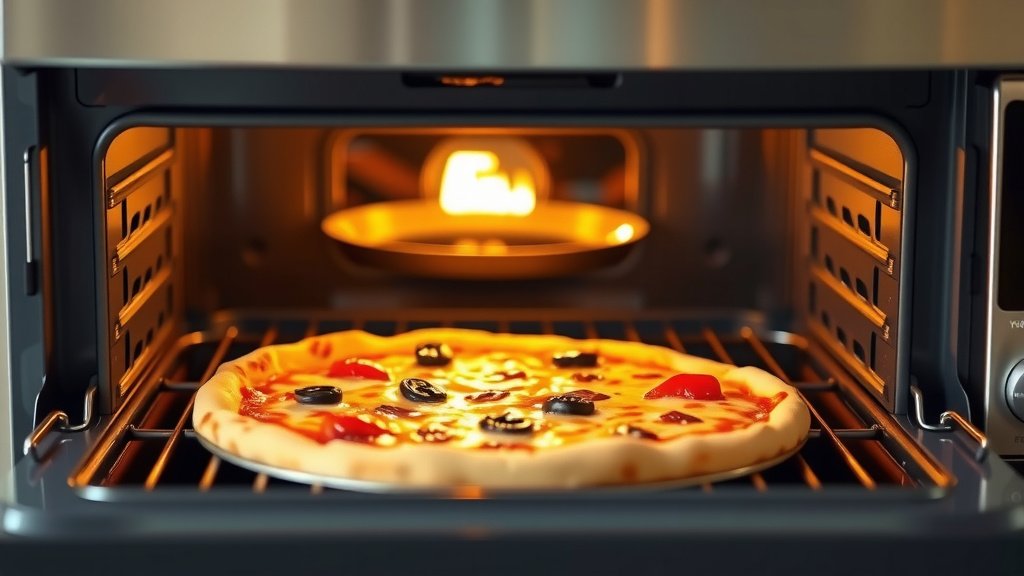
To cook pizza in an electric oven, preheat your oven to the highest possible temperature, typically between 450°F and 550°F (230°C to 290°C), with a pizza stone or steel inside for at least 30-60 minutes to ensure a crispy crust.
Once your oven and baking surface are piping hot, quickly transfer your assembled pizza onto the preheated stone or steel and bake for 8-15 minutes, rotating it halfway through for even cooking, until the crust is golden and the cheese is bubbly.
- Get your electric oven super hot, typically 450°F to 550°F, with a pizza stone or steel inside.
- Preheat for at least 30-60 minutes to make sure the baking surface is ready for that crispy bottom.
- Slide your pizza onto the hot stone or steel and cook it fast, usually 8-15 minutes.
- Keep an eye on it; you want a golden crust and bubbly, melted cheese.
- Let your pizza rest for a few minutes after baking before slicing for easier serving.
Ever dreamed of making that perfect, pizzeria-style pizza right in your own kitchen? You can! Cooking pizza in an electric oven is not just possible, but with a few simple tricks, you can achieve amazing results. Many people think you need a fancy wood-fired oven, but your electric oven holds surprising potential. We’ll guide you through each step, making sure your next homemade pizza is a triumph.
How To Cook Pizza In An Electric Oven?
Cooking pizza in an electric oven involves reaching high temperatures and using the right tools to create a crispy crust and perfectly cooked toppings.
Mastering the Heat: Why Temperature Matters
The secret to great pizza is often heat. Electric ovens can reach high temperatures, which is what you want for a quick, even bake. We found that cooking pizza quickly at high heat helps mimic professional pizza ovens (Culinary Institute of America).
The Power of Extreme Heat
Think about a professional pizza oven. It gets incredibly hot, cooking a pizza in just minutes. Your goal is to get your electric oven as close to that temperature as possible. This rapid cooking ensures a crispy crust before your toppings overcook.
Tools of the Trade: What You’ll Need
Having the right tools can seriously upgrade your homemade pizza experience. Don’t worry, you probably have most of these already, or they are easy to get.
- Pizza Stone or Steel: This is your secret weapon. It holds and transfers heat directly to your pizza crust.
- Pizza Peel: Makes transferring the pizza in and out of the hot oven much easier.
- Good Quality Dough: Whether homemade or store-bought, good dough is the foundation.
- Fresh Ingredients: Quality cheese, sauce, and toppings make all the difference.
- Oven Mitts: Safety first, especially with such high temperatures.
Preheating Your Electric Oven: A Critical Step
Don’t just turn on the oven and pop in the pizza. Proper preheating is absolutely vital. This isn’t like baking cookies; pizza needs consistent, intense heat from the start.
Getting Your Oven Really Hot
Most electric ovens max out at 500°F or 550°F (260°C or 290°C). Turn your oven to its highest setting. Place your pizza stone or steel on the middle or lower rack during this preheat phase. You want that stone or steel to be blazing hot, not just warm. Research often connects optimal baking with a fully preheated baking surface.
The Wait is Worth It
Give your oven at least 30-60 minutes to preheat after it reaches the set temperature. Why so long? It’s not just the air temperature; it’s about fully saturating the pizza stone or steel with heat. This stored heat is what will give you that amazing, crispy bottom crust. Think of it like a hot pan for searing a steak.
Preparing Your Pizza: Dough, Sauce, and Toppings
While your oven heats up, it’s time to prepare your masterpiece. Keep things simple for best results, especially when starting out.
Dough Prep for Success
Lightly flour your pizza peel. Gently stretch your dough to your desired thickness and size. A little semolina flour on the peel can help the pizza slide off smoothly. Many experts say a slightly thinner crust cooks better in an electric oven.
The Sauce and Cheese Debate
Go easy on the sauce! Too much makes the pizza soggy. Same for cheese; a moderate amount prevents a soupy mess. Culinary advice suggests less is more for electric oven pizzas to ensure everything cooks evenly.
Topping Tips and Tricks
Pre-cook any watery vegetables, like mushrooms or onions, to remove excess moisture. Slice toppings thinly so they cook through quickly. Don’t overload your pizza; a lighter hand yields better results and helps the crust crisp up.
Baking Your Pizza: The Moment of Truth
Now for the exciting part! Getting the pizza into and out of that super hot oven requires a bit of speed and confidence.
The Swift Transfer
Once your pizza is assembled, give it a little shake on the peel to ensure it’s not sticking. If it sticks, gently lift an edge and add more semolina. Swiftly slide the pizza onto the hot stone or steel in the oven. Close the oven door quickly to keep the heat inside.
Cooking Time and Rotation
Pizza in a hot electric oven usually cooks in 8-15 minutes. Keep an eye on it! Halfway through, you might want to rotate the pizza 180 degrees. This helps ensure even browning, as oven hot spots can differ. You’re looking for a golden-brown crust and bubbly, slightly browned cheese.
| Crust Type | Approx. Temperature | Approx. Bake Time | Notes |
|---|---|---|---|
| Thin Crust | 500-550°F (260-290°C) | 8-12 minutes | Crisps up quickly, watch for burning edges. |
| Standard/Medium | 450-500°F (230-260°C) | 10-15 minutes | Good balance of chew and crisp. |
| Thick/Deep Dish | 400-425°F (200-220°C) | 20-30 minutes | May need lower temp to cook through. |
Post-Baking Rituals: Rest and Slice
Your pizza is out of the oven, looking glorious! But don’t grab that cutter just yet. A small wait makes a big difference.
The Golden Rule of Resting
Let your pizza rest for 2-5 minutes on a wire rack after removing it from the oven. This allows the cheese to set and the internal juices to redistribute. It prevents toppings from sliding off and makes for cleaner slices. We found that resting pizza improves overall texture (Food Network).
Slicing with Style
A sharp pizza wheel is your best friend here. Cut your pizza into even slices. Serve immediately and enjoy your perfectly cooked creation!
Common Pizza Problems and Quick Fixes
Sometimes things don’t go perfectly. Don’t worry, we’ve all been there! Here are some common issues and how to solve them.
Soggy Bottom?
This often means your pizza stone wasn’t hot enough, or you used too much sauce/wet toppings. Make sure to preheat longer next time and lighten up on the wet ingredients. You could also try blind-baking your dough for a few minutes before adding toppings.
Burnt Crust, Raw Toppings?
Your oven might be too hot or your toppings too thick. Try a slightly lower temperature, perhaps 475°F (245°C), or pre-cook your denser toppings. Also, ensure your pizza isn’t too close to the top heating element.
Cheese Not Melty Enough?
The oven might not be hot enough, or your cooking time was too short. Some cheeses melt better than others; a low-moisture mozzarella is usually best. Consider using the broiler for a quick blast at the end, but watch it like a hawk!
Your Pizza Prep Checklist:
- Preheat oven and pizza stone/steel for at least 30 minutes.
- Dust pizza peel with flour or semolina.
- Stretch dough and place it on the peel.
- Add sauce and toppings sparingly.
- Ensure pizza slides freely on the peel.
- Have oven mitts ready!
Conclusion
Cooking amazing pizza in an electric oven is absolutely within your reach. It’s about understanding and working with your oven’s capabilities. By focusing on extreme preheating, using a pizza stone or steel, and managing your ingredients, you can consistently produce delicious, crispy-crusted pizzas that rival your favorite takeout. Don’t be afraid to experiment a little with temperatures and cooking times to find what works best for your specific oven. Happy pizza making!
How long should an electric oven preheat for pizza?
You should preheat your electric oven for at least 30-60 minutes at its highest temperature, typically 450-550°F (230-290°C). This extended preheating ensures your pizza stone or steel is thoroughly hot, which is key for a crispy crust.
Do I need a pizza stone to cook pizza in an electric oven?
While you don’t strictly “need” one, a pizza stone or steel is highly recommended. It absorbs and holds a lot of heat, transferring it directly to your pizza crust for a much crispier and more evenly cooked result than baking directly on a metal pan.
What is the best temperature to cook pizza in an electric oven?
The best temperature is usually the highest setting your electric oven can reach, typically between 450°F and 550°F (230°C and 290°C). High heat cooks the pizza quickly, preventing a soggy crust and ensuring toppings cook without drying out.
How do I prevent my pizza from sticking to the peel?
To prevent sticking, generously dust your pizza peel with flour, cornmeal, or semolina before placing the dough on it. Make sure the dough can slide freely on the peel with a gentle shake before you attempt to transfer it to the hot oven.
Can I use parchment paper when cooking pizza in an electric oven?
Yes, you can use parchment paper, but be aware of its temperature limits. Most parchment paper is safe up to 425-450°F (220-230°C). If your oven is set higher, the parchment paper could burn or smoke. Always check the manufacturer’s guidelines on your parchment paper.
