
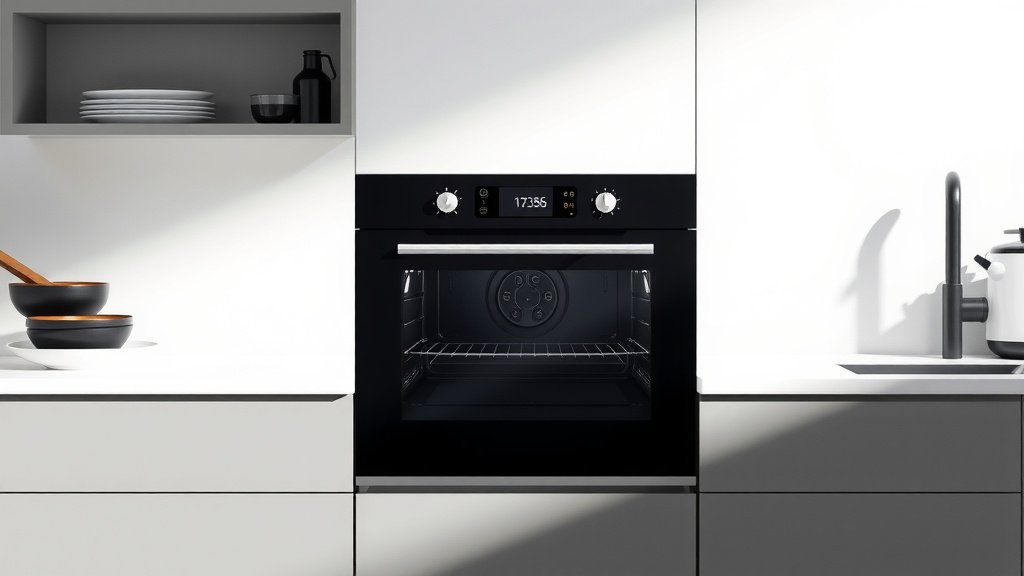
A single wall oven typically requires a 240-volt electrical supply to function properly and safely in most homes.
This higher voltage is essential for your single wall oven to generate the necessary heat for cooking efficiently and reliably.
- Most single wall ovens operate on a 240-volt electrical circuit.
- This requires a dedicated circuit from your home’s main electrical panel.
- Never attempt a DIY installation if you are unsure about electrical work.
- Improper voltage can lead to poor oven performance or safety hazards.
What Voltage Does A Single Wall Oven Need?
A single wall oven usually requires a 240-volt electrical supply. This specific voltage ensures your oven functions with optimal performance and safety.
When you are looking to purchase a new wall oven or replace an old one, understanding its electrical needs is critical. It is like knowing the right fuel for your car; use the wrong one, and things simply will not work as they should.
Understanding the 240-Volt Standard
Most large cooking appliances, like your single wall oven, need more power than typical household outlets provide. That is why they are designed for 240 volts instead of the standard 120 volts.
Think of it this way: your toaster or hairdryer plugs into a 120-volt outlet. Your dryer, water heater, or, in this case, your oven, needs double that power. This extra power heats up those big elements fast.
Why 240 Volts for Your Oven?
You might wonder why an oven needs so much power. It all comes down to heat. Ovens need to reach and maintain high temperatures consistently for cooking perfection.
A 240-volt supply allows the heating elements to draw enough current. This means your oven will preheat quickly and cook your meals evenly. We found that without adequate voltage, ovens struggle to reach their set temperature (National Electrical Code).
The Dedicated Circuit: A Must-Have
For your single wall oven, you will always need a dedicated electrical circuit. This is not just a suggestion; it is a safety requirement.
A dedicated circuit means your oven has its own direct connection to your home’s electrical panel. No other appliances or outlets share this power line. This prevents overloads and potential fire hazards.
What if My Home Has Only 120-Volt Outlets?
If your current setup only has 120-volt outlets where you plan to install a wall oven, you will need an electrical upgrade. Do not try to plug a 240-volt appliance into a 120-volt outlet; it simply will not work.
This upgrade usually involves running a new, heavier-gauge wire from your electrical panel to the oven location. It also means installing a new breaker in your panel. This is definitely a job for a qualified electrician.
Identifying Your Existing Electrical Setup
Before you even unbox that shiny new oven, take a moment to check your current electrical situation. What kind of receptacle is in the wall?
A 240-volt outlet for an oven often looks different from a standard 120-volt outlet. It usually has three or four prongs and is larger. If you are unsure, a quick photo sent to a licensed electrician can provide quick clarity.
Voltage Types and Their Uses
Here is a quick look at common household voltages and what they power:
| Voltage Type | Common Use | Typical Appliances |
|---|---|---|
| 120 Volts | Standard household power | Lamps, TVs, Blenders, Microwaves |
| 240 Volts | High-power appliances | Wall Ovens, Electric Dryers, Central AC, Electric Water Heaters |
Installation: When to Call a Professional
Unless you are a certified electrician, installing a 240-volt appliance like a wall oven is best left to the experts. Wiring mistakes can be incredibly dangerous, leading to electrical shocks or fires.
An electrician will ensure the correct wiring gauge, breaker size, and proper grounding. They will also verify that your home’s electrical panel can handle the extra load (NFPA 70: National Electrical Code Handbook).
Benefits of Professional Oven Installation
Hiring a professional might feel like an extra expense, but it is an investment in your safety and the longevity of your appliance. We found that many appliance warranties require professional installation for valid claims.
- Correct voltage verification.
- Proper wiring and grounding.
- Circuit breaker sizing expertise.
- Adherence to local electrical codes.
- Peace of mind for your family.
Checking Your Electrical Panel
Do you know where your main electrical panel is? It is usually in your basement, garage, or utility closet. Take a peek inside (carefully, do not touch anything).
You will see rows of switches, called breakers. A 240-volt circuit for an oven typically uses a double-pole breaker, which looks like two connected switches. It might be labeled for the “Oven” or “Range.” These are often 30 or 40 amp breakers.
The Impact of Incorrect Voltage
What happens if your single wall oven gets the wrong voltage? It is not good news. If it is too low (like trying to run a 240V oven on a 120V circuit), your oven will barely work, if at all.
It will heat slowly, if it heats. It will not reach target temperatures. In some cases, it might even damage the internal components over time. Many experts say that consistent correct voltage is key for appliance lifespan (Appliance Manufacturers Association).
Safety Concerns with Wiring
Incorrect wiring can lead to serious hazards. Overloaded circuits can overheat, causing wiring insulation to melt. This can spark fires.
Improper grounding could mean you get an electrical shock if you touch the oven. Your safety and the safety of your home should always be the top priority. Think of it as putting the right pieces in a puzzle; if they do not fit, something is wrong.
Key Checklist Before Buying Your Wall Oven
Before you make that big purchase, let us run through a quick checklist:
- Confirm your home has a 240-volt circuit available.
- Check if there is a dedicated circuit for the oven.
- Measure your cabinet opening for the oven’s dimensions.
- Review the oven’s installation manual for electrical specifications.
- Plan for professional installation to ensure compliance and safety.
- Consider the oven’s amperage requirements (usually 30-50 amps).
Conclusion
Ultimately, a single wall oven requires a 240-volt dedicated electrical circuit. This higher voltage is absolutely essential for its proper function, efficiency, and most importantly, your safety. While understanding these electrical details might seem complicated, remember that your well-being and consistent cooking results depend on it.
Always prioritize professional installation if you are in any doubt about your home’s electrical capacity or the wiring process. It is a small investment for peace of mind, ensuring your kitchen remains safe and your new oven performs flawlessly for years to come.
What is the difference between 120V and 240V for appliances?
120V is standard household voltage for smaller appliances like lamps and TVs. 240V is higher voltage, typically used for large, high-power appliances like electric dryers and ovens that need more energy to operate efficiently.
Can a single wall oven share a circuit with another appliance?
No, a single wall oven should always be on its own dedicated 240-volt circuit. Sharing a circuit with other appliances can lead to overloading, tripping breakers, or even electrical fires, as ovens draw significant power.
How do I know if my home can support a 240-volt oven?
You can check your electrical panel for a double-pole breaker labeled for an oven or range, typically 30 or 40 amps. If you are unsure, it is best to consult with a licensed electrician who can assess your home’s electrical capacity.
What kind of electrical outlet does a 240-volt oven use?
A 240-volt oven uses a special three- or four-pronged receptacle, which is larger and different from standard 120-volt outlets. It is designed to prevent incorrect plugging and ensure the appliance gets the correct power.
Is it possible to convert a 120V outlet to 240V for an oven?
Converting a 120V outlet to 240V is not a simple conversion. It requires significant electrical work, including running new wiring from your main electrical panel and installing a new 240-volt breaker. This is a complex task that should only be performed by a qualified electrician for safety reasons.
