
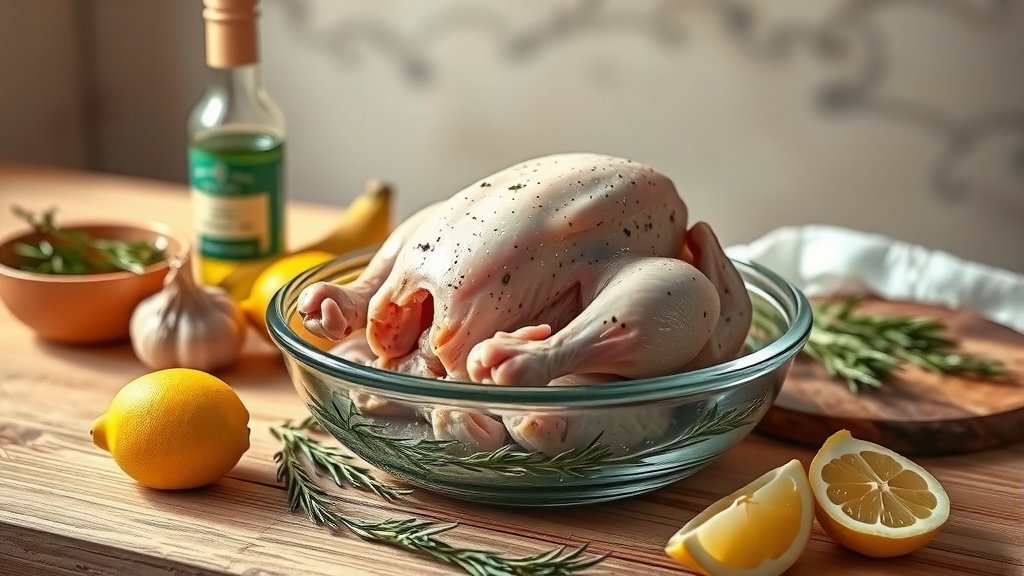
Making a rotisserie chicken marinade involves combining an acid, oil, aromatics, and seasonings to tenderize and flavor the meat deeply.
The best homemade rotisserie chicken marinade balances savory, sweet, and tangy elements, ensuring a juicy, flavorful bird straight from your oven or rotisserie.
- A fantastic rotisserie chicken starts with a balanced marinade, blending acid, oil, and spices.
- You’ll learn key components: acidity for tenderizing, oil for moisture, and a mix of herbs and spices for rich flavor.
- Discover simple, versatile recipes that can be adapted to your taste, from classic savory to zesty and spicy.
- Proper marinating time and technique are important for safety and the best results, ensuring a succulent chicken every time.
How To Make Rotisserie Chicken Marinade?
To make a rotisserie chicken marinade, you blend an acidic component, a fat, and a mix of herbs and spices to infuse flavor and moisture.
This careful combination prepares your chicken for a perfectly cooked, golden-brown finish.
The Secret to a Juicy Rotisserie Chicken
Have you ever wondered why some rotisserie chickens are so incredibly juicy? It often starts with a great marinade. We found that a good marinade tenderizes the meat fibers and adds incredible depth of flavor.
Think of it like a spa treatment for your chicken. The liquid soaks in, preparing it for the heat of your oven or rotisserie spit.
Why Marinade Matters for Rotisserie Cooking
When you rotisserie cook, the chicken spins, allowing even heat distribution. A marinade helps this process by keeping the meat moist, preventing it from drying out.
Many experts say it’s not just about flavor; it’s also about creating a barrier that locks in the natural juices (Cleveland Clinic).
Essential Marinade Components
Every great marinade has a few core building blocks. Understanding these helps you create your own winning recipe.
We found that these components work together like a symphony to transform plain chicken into a culinary delight.
Here’s a quick breakdown of what you need:
- Acid: Lemon juice, vinegar, or buttermilk tenderize the meat.
- Oil: Olive oil, vegetable oil, or avocado oil helps keep moisture in and carries fat-soluble flavors.
- Aromatics: Garlic, onion, ginger add layers of smell and taste.
- Salt: Crucial for flavor penetration and moisture retention.
- Sweetness: Honey, brown sugar, or maple syrup helps with browning and adds a touch of balance.
- Herbs & Spices: Your personal touch for the flavor profile you desire.
Building Your Basic Rotisserie Marinade
Let’s start with a versatile, go-to recipe. This base is easy to remember and adjust.
You’ll notice how simple ingredients combine to create something wonderful. It’s like mixing primary colors to get a whole spectrum!
The Classic Herb & Garlic Marinade
This marinade is a crowd-pleaser and always delivers. It’s perfect for a savory, aromatic chicken.
Gather your ingredients, and let’s mix up some magic.
Here’s what you’ll need:
1/4 cup olive oil
1/4 cup fresh lemon juice
4 cloves garlic, minced
2 tablespoons fresh rosemary, chopped
1 tablespoon fresh thyme, chopped
1 teaspoon onion powder
1 teaspoon smoked paprika
1.5 teaspoons salt
1/2 teaspoon black pepper
1 teaspoon brown sugar (optional, for extra browning)
Instructions:
1. Combine all ingredients in a bowl. Whisk until well blended.
2. Place your whole chicken in a large resealable bag or a dish. Pour the marinade over the chicken, making sure it’s evenly coated.
3. Massage the marinade into the chicken. Get it under the skin too, if you can.
4. Refrigerate for at least 4 hours, or ideally overnight for maximum flavor.
Flavor Profiles You Can Explore
Don’t stop at the classics! Marinades are wonderful for experimenting. You can take your chicken on a culinary trip around the world.
Many recipes we found highlight how simple changes create entirely new experiences.
Mediterranean Zest
Imagine sun-drenched flavors with herbs like oregano and a strong lemon kick. This is bright and refreshing.
Add some dried oregano, a bit more lemon, and perhaps some red wine vinegar to your base. It’s like a mini-vacation in every bite!
Smoky BBQ Delight
If you love a little char and sweetness, this is for you. Think of summer cookouts. Smoked paprika is your best friend here.
Add extra smoked paprika, a touch more brown sugar, a dash of Worcestershire sauce, and maybe a hint of liquid smoke for that authentic BBQ taste.
Spicy Kick
For those who like a bit of heat, introducing chili elements is key. How hot do you dare to go?
Include cayenne pepper, chili powder, or a dash of your favorite hot sauce. A little cumin also pairs beautifully with heat.
Marinating for Success: Tips and Tricks
Getting the marinade right is only half the battle. Proper technique ensures your efforts pay off with a spectacular chicken.
Research often connects proper marinating with both safety and optimal taste (USDA).
Timing Is Everything
Marinating time can make a big difference. For a whole chicken, 4 to 24 hours is ideal. Less than 4 hours, and the flavors might not penetrate deeply.
More than 24 hours, especially with strong acids, can start to make the meat mushy. Nobody wants that!
Even Coating Matters
Ensure every part of the chicken gets covered in marinade. Use a large resealable bag, turning the chicken occasionally.
If using a dish, flip the chicken every few hours. This ensures uniform flavor and tenderness.
Food Safety First
Always marinate in the refrigerator. Never at room temperature. Raw chicken can quickly become a breeding ground for bacteria.
Do not reuse marinade that has touched raw chicken. It’s a one-way ticket for those delicious flavors.
| Flavor Profile | Key Ingredients to Add | Pairs Well With |
|---|---|---|
| Classic Herb | Rosemary, Thyme, Garlic, Lemon | Roast vegetables, mashed potatoes |
| Mediterranean | Oregano, Red Wine Vinegar, Olive Oil | Couscous, Greek salad |
| Smoky BBQ | Smoked Paprika, Brown Sugar, Worcestershire | Coleslaw, baked beans |
| Spicy Chili | Cayenne, Chili Powder, Cumin | Rice, corn on the cob |
| Asian-inspired | Soy Sauce, Ginger, Sesame Oil | Stir-fried noodles, steamed greens |
Common Marinade Mistakes to Avoid
Even experienced cooks can sometimes make these small errors. Being aware helps you steer clear of them.
We found that avoiding these pitfalls is key to a consistently great rotisserie chicken.
Too Much Acid
An overly acidic marinade can “cook” the chicken’s surface, making it tough or mushy. It’s like leaving a raw fish in ceviche for too long.
Aim for balance. A quarter cup of lemon juice or vinegar for a whole chicken is usually plenty.
Not Enough Salt
Salt is more than just seasoning; it helps draw flavor into the meat. If your marinade tastes bland, your chicken will too.
Many chefs agree that proper salting is fundamental to good cooking. Don’t be shy, but don’t overdo it either.
Marinating at Room Temperature
This is a big food safety no-no. It allows bacteria to multiply rapidly, making your chicken unsafe to eat.
Always keep that chicken chilled during its marinating bath.
The Perfect Marinating Checklist
Before you pop that chicken onto the rotisserie, run through this quick list.
It’s like a final quick inspection before a big trip.
- Did you use fresh, high-quality ingredients?
- Is the chicken evenly coated with marinade?
- Has it marinated for at least 4 hours, ideally overnight?
- Was the chicken kept in the refrigerator the whole time?
- Have you patted the chicken dry before cooking for better browning?
Conclusion
Crafting your own rotisserie chicken marinade is a simple yet impactful way to elevate your home-cooked meals.
By understanding the basic components, experimenting with flavors, and following key safety tips, you’re well on your way to making a truly memorable chicken.
Don’t be afraid to adjust recipes to your taste. Your kitchen is your playground, after all! Enjoy the process, and savor those delicious results.
How long should I marinate a whole chicken for rotisserie?
You should marinate a whole chicken for rotisserie for at least 4 hours, and ideally up to 24 hours. This allows the flavors to penetrate deeply and helps tenderize the meat without making it mushy.
Can I use bottled marinade for rotisserie chicken?
Yes, you can certainly use bottled marinades for rotisserie chicken. They offer convenience. However, homemade marinades often give you more control over ingredients and fresh flavors, letting you customize to your liking.
What kind of oil is best for rotisserie chicken marinade?
Olive oil is a popular choice for rotisserie chicken marinades due to its flavor. However, neutral oils like vegetable oil, canola oil, or avocado oil also work very well. They help carry flavors and keep the chicken moist without overpowering it.
Should I rinse the marinade off the chicken before cooking?
No, you generally should not rinse the marinade off the chicken before cooking. Patting it dry with paper towels is sufficient and helps achieve crispy skin. Rinsing can wash away the flavors you worked hard to build.
Can I make rotisserie chicken marinade ahead of time?
Absolutely! You can prepare your rotisserie chicken marinade a few days in advance and store it in an airtight container in the refrigerator. This saves time on cooking day and lets the flavors meld even more.
