
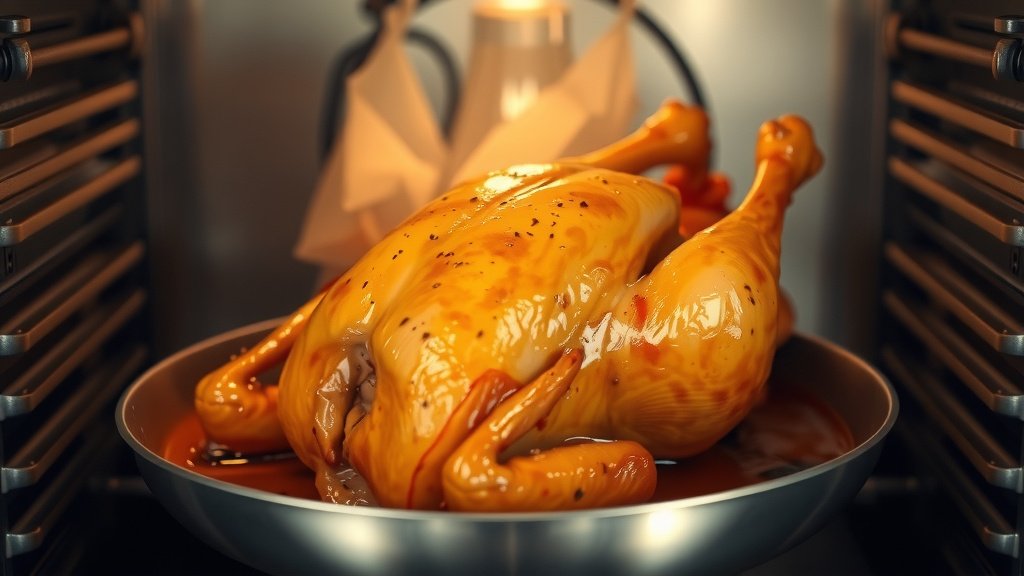
For a beautifully browned, juicy rotisserie chicken, we found that a temperature range of 350°F to 375°F (175°C to 190°C) is generally ideal.
This temperature allows the chicken to cook through evenly while developing a crispy skin, ensuring your rotisserie chicken is both safe and delicious.
- The sweet spot for rotisserie chicken temperature is typically 350-375°F.
- Always aim for an internal temperature of 165°F (74°C) in the thickest part of the thigh.
- Convection ovens might require a slight temperature reduction compared to conventional.
- Trussing your chicken properly helps ensure even cooking and a compact shape.
- Don’t forget to let your chicken rest after cooking to keep it wonderfully juicy.
What Temperature To Use For Rotisserie Chicken?
The best temperature for your rotisserie chicken typically sits between 350°F and 375°F (175°C to 190°C). This range helps you achieve that golden, crispy skin and a tender, moist inside.
Why Temperature Matters for Juicy Chicken
Think of cooking temperature as a balancing act. Too high, and your chicken skin might burn before the inside is cooked. Too low, and you risk a rubbery texture and long cooking times. Finding the right temperature means your chicken cooks evenly, from skin to bone, staying wonderfully juicy.
We found that maintaining a consistent heat is key to preventing dry spots. This precise heat application is what separates a good rotisserie chicken from a truly great one.
Oven Types and Their Impact
Not all ovens are created equal, right? Your oven type definitely plays a role in the temperature you should pick. Understanding your equipment helps you adjust for the perfect cook.
Conventional Oven Settings
If you’re using a conventional oven with a rotisserie kit, sticking to the 350°F to 375°F range is a safe bet. This oven style cooks by surrounding the chicken with heat. It’s like a warm hug for your bird.
Many experts say that starting closer to 375°F for the first 15-20 minutes can help crisp the skin. Then, you can drop it to 350°F for the remainder of the cooking time.
Convection Oven Settings
Convection ovens use a fan to circulate hot air. This means they cook food faster and more evenly. If you have a convection oven, you might want to reduce the temperature by about 25°F.
So, if a recipe calls for 375°F in a conventional oven, try 350°F in your convection model. It’s like having a little chef’s assistant spreading the heat around for you.
Preparing Your Chicken for Rotisserie Success
Before your chicken even touches the rotisserie spit, a little prep work goes a long way. This initial effort helps ensure a fantastic final product. It’s about setting the stage for success.
The Role of Brining and Marinades
Want truly flavorful and moist chicken? Consider a brine or a marinade. A brine helps the chicken retain moisture during cooking, while a marinade adds deep flavor notes. Research often connects these steps with a more succulent chicken experience (USDA).
Just remember to pat your chicken very dry before putting it on the spit. Dry skin means crispy skin, and that’s usually the goal, isn’t it?
Trussing is also super important. Binding the wings and legs close to the body creates a compact shape. This ensures your chicken cooks evenly and doesn’t flop around as it spins.
Monitoring Doneness: Beyond Just Temperature
While oven temperature is important, the internal temperature of your chicken is the real boss. It tells you when your chicken is safe to eat and perfectly cooked.
What Internal Temperature Are We Aiming For?
You’ll want to aim for an internal temperature of 165°F (74°C) in the thickest part of the thigh, without touching the bone. Many guidelines point to this as a good first step (FDA).
Use a reliable meat thermometer. It’s your best friend in the kitchen for preventing guesswork. A thermometer takes all the mystery out of knowing when your chicken is done.
| Chicken Weight (Approx.) | Recommended Oven Temp | Approximate Cooking Time (Conventional) | Target Internal Temp |
|---|---|---|---|
| 3-4 lbs (1.4-1.8 kg) | 375°F (190°C) | 1.5 – 2 hours | 165°F (74°C) |
| 4-5 lbs (1.8-2.3 kg) | 350-375°F (175-190°C) | 2 – 2.5 hours | 165°F (74°C) |
| 5-6 lbs (2.3-2.7 kg) | 350°F (175°C) | 2.5 – 3 hours | 165°F (74°C) |
Troubleshooting Common Rotisserie Challenges
Even experienced cooks face small hurdles. Don’t worry if things don’t go perfectly on your first try. Let’s look at some common issues and how to fix them.
- Dry Chicken: Often caused by overcooking. Ensure you pull the chicken once it hits 165°F.
- Uneven Cooking: Double-check your trussing. Loose limbs cook faster and dry out.
- Soggy Skin: Ensure your chicken is patted completely dry before cooking. A slightly higher initial temperature can help too.
- Chicken Falling Off Spit: Make sure the forks are firmly secured. Avoid overloading the spit with too large a chicken for your oven.
The Importance of Resting Your Chicken
Once your chicken reaches that perfect internal temperature, it’s tempting to slice right into it. But wait! Allowing your chicken to rest for 10-15 minutes is a game-changer.
This rest period lets the juices redistribute throughout the meat. Cutting too soon will cause those precious juices to run out, leaving you with a drier chicken. Think of it as a brief, well-deserved nap for your chicken, ensuring it wakes up wonderfully moist.
Can You Rotisserie a Frozen Chicken?
We found that it is not recommended to rotisserie a chicken directly from frozen. This practice can lead to uneven cooking, where the outside cooks too quickly while the inside remains raw for too long. It also raises food safety concerns.
Always thaw your chicken completely in the refrigerator before placing it on the rotisserie. This ensures safe and delicious results every single time.
Conclusion
Mastering the rotisserie chicken at home is incredibly rewarding. The core idea is to find that sweet spot of temperature, typically 350-375°F, combined with careful monitoring of the internal temperature. Remember to always aim for 165°F in the thickest part of the thigh.
By preparing your chicken properly, understanding your oven, and giving it a crucial rest, you’re well on your way to creating a perfectly golden, crispy, and juicy rotisserie chicken. Enjoy the process and the delicious outcome!
How do I know my rotisserie chicken is cooked through?
The most reliable way is to use a meat thermometer. Insert it into the thickest part of the thigh, avoiding the bone. The chicken is fully cooked when it reaches an internal temperature of 165°F (74°C).
Should I brine my chicken before rotisserie cooking?
Brining is highly recommended if you want a consistently moist and flavorful chicken. It helps the meat retain juices during cooking and adds a deeper taste. However, it’s not strictly necessary for a good result.
Can I use butter or oil to help crisp the skin?
Yes, lightly brushing your chicken with olive oil or melted butter before and during cooking can help achieve a beautiful, crispy skin. Some people also rub spices mixed with oil directly onto the skin.
Why is my rotisserie chicken skin not crispy?
Several factors can lead to non-crispy skin: the chicken might not have been patted dry enough before cooking, the oven temperature might be too low, or there might be too much moisture in the oven. Ensure good airflow and a dry chicken surface.
What size chicken is best for rotisserie?
A chicken between 3 to 5 pounds (1.4-2.3 kg) generally works best for home rotisserie setups. Larger chickens might cook unevenly or be too heavy for some rotisserie motors, while smaller ones might dry out faster.
