How to Cook Chicken in a Dutch Oven
Cook chicken in a Dutch oven by browning it first, then covering it with controlled heat and enough liquid to keep it moist. Check the thickest part with a thermometer before serving.
On this page (9 sections)
- What is the best method for dutch oven chicken?
- How do you control moisture when cooking chicken in a Dutch oven?
- Should you brown chicken before braising it?
- How much liquid should you add?
- Can you make chicken in a Dutch oven without drying it out?
- Which pot size works for chicken recipes?
- What are simple dutch oven chicken recipes?
- How do you care for a Dutch oven after cooking chicken?
- What is the easiest way to choose a Dutch oven for chicken?
Cook dutch oven chicken by browning the chicken, adding a small amount of cooking liquid, covering the pot, and finishing gently until the thickest part reaches a safe internal temperature. This method works for thighs, drumsticks, breasts, and larger chicken pieces.
A Dutch oven controls moisture better than an uncovered roasting pan. Its heavy walls hold heat, while the lid helps keep steam around the chicken instead of letting the surface dry out.
What is the best method for dutch oven chicken?
The best method is a brown, add liquid, cover, and finish process. Start on the stovetop when your pot allows it, then move the covered pot to the oven.
- Pat the chicken dry with paper towels.
- Season it before browning.
- Heat a small amount of cooking oil in the Dutch oven.
- Brown the chicken in batches so the pieces have room.
- Remove the chicken and cook aromatics in the same pot.
- Add stock, water, wine, or another suitable cooking liquid.
- Return the chicken, cover the pot, and cook gently.
- Check the thickest piece with a food thermometer.
The chicken should be cooked through without relying on color alone. The USDA's safe minimum internal temperature chart is the final reference for doneness.
How do you control moisture when cooking chicken in a Dutch oven?
Use the lid and a measured amount of liquid to control moisture. Too little liquid can leave a braise dry, while too much can make browned chicken taste boiled.
For chicken thighs and drumsticks, add enough liquid to come partway up the pieces. Keep the skin above the liquid when you want it to retain more color.
For boneless breasts, use gentler heat and a shorter cooking time. These pieces contain less connective tissue and can become dry if left in a hot oven too long.
Don't keep opening the lid to check the chicken. Each opening releases heat and steam, so check near the expected finish time instead.
Should you brown chicken before braising it?
Browning comes first when you want deeper flavor and better color. Dry the chicken well, season it, and place it in a hot pot with space between the pieces.
Let the first side brown before turning it. If the chicken sticks firmly, it may need more time to release naturally.
Lower the heat if the fond starts to burn.
Remove the chicken before adding onions, garlic, carrots, or other vegetables. The browned bits left in the pot can flavor the liquid as it simmers.
Which Dutch oven helps with browning and one-pot cooking?
The Lodge Cast Iron Double Dutch Oven suits cooks who want one pot that also works as a dual-handle skillet. Its 4.75-liter cast iron body retains heat, and the Dutch oven and lid support covered chicken meals.
The 2-in-1 design can reduce the number of pieces you need for a stovetop-to-oven recipe. It is oven safe and also works on stovetops, grills, and campfires.
Its cast iron construction is heavy, so plan how you will move it before adding hot food. Hand wash it and follow the oven-safe care instructions.
How much liquid should you add?
Add liquid to support moist cooking, not to drown the chicken. Stock, water, wine, or a sauce base can work, depending on the recipe.
A shallow braise usually needs liquid partway up the chicken. A covered roast may need only a smaller amount in the bottom of the pot.
Add liquid after browning and scrape the bottom gently with a suitable utensil. This loosens the browned bits without needing a separate pan.
Keep the liquid at a gentle simmer. A hard boil can make chicken pieces tighten and can reduce the cooking liquid too quickly.
Can you make chicken in a Dutch oven without drying it out?
Yes. Use moderate heat, keep the pot covered, and check the chicken early.
Moisture helps, but time and temperature still control the final texture.
Bone-in thighs and drumsticks generally tolerate longer cooking than boneless breasts. If pieces vary in size, check the largest and thickest piece first.
For crispy skin, brown the skin before covering the pot. You can also uncover the Dutch oven near the end if the recipe needs more surface color, but watch the liquid level.
Rest the chicken briefly before serving. This gives the juices time to settle while you finish the sauce or adjust its seasoning.
Which pot size works for chicken recipes?
Choose a pot that holds the chicken in a mostly even layer with room for liquid and vegetables. Crowding prevents browning, while an oversized pot can make a small batch of sauce spread too thin.
When is a braiser useful for chicken?
A braiser works well for shallow chicken recipes with vegetables or sauce. Its broad shape gives pieces room to brown and keeps them close to the cooking liquid.
The Lodge Essential Enamel Cast Iron Braiser has a 3.6-quart capacity, a moisture-locking lid, and dual assist handles. It is designed for broiling, braising, baking, and roasting.
Its enamel finish does not need seasoning, and the pan is oven safe up to 500°F. The handles can make a full pan easier to control, but the pan itself weighs 13.5 pounds before food is added.
Use care when moving it from the stovetop to the oven. Hand washing is recommended in the care instructions.
When is a 6-quart Dutch oven better?
A 6-quart Dutch oven suits larger chicken portions, whole-meal recipes, and recipes with plenty of vegetables or sauce. The extra capacity gives ingredients room without forcing them into a tight stack.
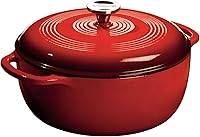
The Lodge Essential Enamel Cast Iron Dutch Oven has a 6-quart capacity, cast iron construction, an enamel finish, and a cast iron lid. It is oven safe up to 500°F and works on gas, electric, ceramic, and induction cooktops.
The enamel surface is suitable for marinating, cooking, refrigerating, and serving. Hand washing with warm, soapy water and a nylon scrub brush is recommended for care.
The larger pot is useful when you want leftovers, but it is also heavy at 13.5 pounds before food. Measure your storage space and make sure you can lift the filled pot safely.
What are simple dutch oven chicken recipes?
Simple dutch oven chicken recipes include braised thighs with onions, chicken and vegetables in stock, chicken soup, and covered chicken with herbs. Start with the cooking method, then change the seasoning and vegetables.
For a soup, brown chicken first if you want a richer base, then add broth and vegetables. Our guide to dutch oven soup recipes covers the liquid-first approach in more detail.
For a roast-style meal, keep the chicken above most of the liquid and use the lid to hold in moisture. If you want a different oven method, see How To Cook Chicken In A Pizza Oven?.
For another covered-pot dinner, compare this method with our dutch oven roast beef recipe. The same browning and moisture principles apply, but beef cuts need different cooking times.
How do you care for a Dutch oven after cooking chicken?
Let the pot cool enough to handle, then wash it according to its finish. Remove food residue while it is still manageable, and dry the pot fully before storing it.
Enameled cookware does not need seasoning. Bare cast iron needs more careful drying and oil maintenance, so follow the specific care instructions for your pot.
Don't pour cold water into a very hot pot. Sudden temperature changes can stress cookware and may damage an enamel finish.
If you see rust on bare cast iron, read Is It Safe to Cook with a Rusty Dutch Oven? before preparing another meal. For broader technique guidance, see how to cook with a Dutch oven.
What is the easiest way to choose a Dutch oven for chicken?
Choose the Lodge Cast Iron Double Dutch Oven if you want a 4.75-liter cast iron pot that also serves as a dual-handle skillet. Choose the Lodge Essential Enamel Cast Iron Braiser for shallow chicken dishes in a 3.6-quart pan.
Choose the Lodge Essential Enamel Cast Iron Dutch Oven if you need 6 quarts for larger batches, vegetables, or leftovers. Whichever pot you choose, brown the chicken first, control the liquid, keep the lid closed, and verify the final temperature.
Frequently asked questions
How long does chicken take in a Dutch oven?
Chicken usually needs about 30 to 60 minutes in a covered Dutch oven, depending on the cut, size, starting temperature, and oven heat. Use time as a guide only.
Check the thickest part with a food thermometer and remove the chicken when it reaches a safe internal temperature.
Should you brown chicken before cooking it in a Dutch oven?
Yes, browning chicken first adds color and flavor while leaving browned bits in the pot for the sauce. Work in batches if needed, keep the heat moderate, and avoid cooking the chicken fully during this step.
It will finish cooking during the covered braise or roast.
How much liquid do you put in a Dutch oven with chicken?
Use enough liquid to create moist cooking conditions without covering the chicken completely. For a braise, liquid often reaches partway up the chicken.
For a covered roast, a smaller amount of stock, wine, or water can support moisture while the chicken cooks in its own juices.
Can you cook chicken in an enameled Dutch oven?
Yes, an enameled Dutch oven suits chicken braises, roasts, soups, and one-pot meals. The enamel surface does not need seasoning and handles acidic ingredients better than bare cast iron.
Follow the cookware's heat and care instructions, and avoid sudden temperature changes.