How to Cook with a Dutch Oven
To cook with a Dutch oven, preheat it gradually, sear over moderate heat, then add liquid and cook covered for tender braises. You can also simmer soups or bake bread in the same heavy pot.
On this page (9 sections)
- How do you start cooking with a Dutch oven?
- How do you sear food in a Dutch oven?
- How do you braise meat or vegetables?
- How do you simmer soup, beans, or rice?
- Can you bake bread in a Dutch oven?
- How do you choose a Dutch oven for your cooking?
- How do you keep a Dutch oven safe to handle?
- How should you clean a Dutch oven after cooking?
- Which cooking method should you try first?
To cook with a Dutch oven, heat it gradually, sear ingredients in batches, and add liquid for covered braising or simmering. The heavy pot also works for soups, roasts, and bread, as long as you follow its heat limits and care instructions.
Start with a clean, dry pot and match the method to the meal. Searing builds browned flavor, braising cooks tougher ingredients slowly in liquid, and baking uses the pot's stored heat.
How do you start cooking with a Dutch oven?
Preheat the Dutch oven over low to medium heat, then add oil and food once the pot is warm. Cast iron holds heat, so a gradual start helps you control the temperature.
Don't heat an empty pot on high for a long time. If you're using an enameled pot, check its care instructions and avoid heating it empty unless the instructions allow it.
Pat meat and vegetables dry before searing. Moisture on the surface can cause food to steam instead of brown.
How do you sear food in a Dutch oven?
Sear in small batches over medium or medium-high heat, leaving room between pieces. Crowding the pot traps steam and makes it harder to brown the food.
Let each side brown before turning it. If food sticks, give it more time; it often releases more easily after a crust forms.
Move the browned pieces to a plate while you cook the next batch. Then soften aromatics in the same pot and scrape up the browned bits as you add liquid.
Which Dutch oven shape helps with searing?
A wide cooking surface helps when you want to brown several pieces without stacking them. A braiser has a broader, shallower shape than a traditional Dutch oven, which can make it handy for searing and cooking food in a single layer.
The Lodge Essential Enamel Cast Iron Braiser has a moisture-locking lid and dual assist handles. Its maker describes it for broiling, braising, baking, and roasting.
Choose it when you want a shallower pan for braises or roasts. A deeper Dutch oven may suit soups, larger batches, and bread better.
How do you braise meat or vegetables?
Brown the main ingredients, add enough liquid to come partway up them, cover, and cook gently until tender. You can braise on the stovetop at a low simmer or in the oven, following the recipe's temperature and timing.
Keep the liquid at a gentle bubble rather than a hard boil. Check occasionally, and add a little more liquid if the pot is drying out before the food is tender.
A snug lid helps hold moisture in the pot. For a step-by-step meal, see how to cook chicken in a Dutch oven or try this Dutch oven roast beef recipe.
How do you simmer soup, beans, or rice?
Keep soups and beans at a steady simmer, with the lid partly open if you need liquid to reduce. Stir now and then, especially when ingredients are thick or starchy.
For rice, measure the liquid and follow the recipe's timing instead of lifting the lid repeatedly. Our guide to how to cook rice in a Dutch oven covers the method in more detail.
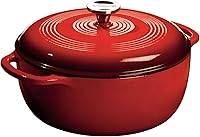
A 6-quart Dutch oven can suit larger batches, though the right size depends on the amount you cook and the space you need for bubbling. The Lodge Essential Enamel Cast Iron Dutch Oven has a cast iron body and an enamel finish.
Use it when you want a deeper pot for soups or one-pot meals. Hand washing with warm, soapy water and a nylon brush is recommended to maintain its surface.
Can you bake bread in a Dutch oven?
Yes, a Dutch oven can bake bread by surrounding the dough with steady heat and trapping moisture beneath the lid. Follow your bread recipe for preheating, dough placement, lid timing, and temperature.
Check the pot and lid's oven-safe limits before preheating. Use dry oven mitts and a stable surface when handling a hot, heavy pot.
The Lodge Cast Iron Double Dutch Oven has a lid that can also be used as a skillet, giving you a second cooking surface for frying or searing. For outdoor cooking options, compare Lodge camp Dutch ovens.
Lodge describes the pot for use in ovens, on stovetops, grills, and campfires.
This style may suit cooks who want one pot and a usable skillet lid. Its care instructions call for hand washing.
How do you choose a Dutch oven for your cooking?
Choose the pot by its finish, capacity, and the meals you make most often. Compare Staub Dutch ovens when weighing enameled options.
A deep pot suits soups and larger batches, while a braiser gives you more surface area for searing and shallow cooking.
Bare cast iron needs seasoning care, while enamel avoids the need to season the cooking surface. For a wider overview of common uses, read what a Dutch oven is used for.
Consider the pot's weight and handles if you'll move it between stovetop, oven, and table. A lid lifter can help when working with a hot cast iron lid; see our guide to the best Dutch oven lid lifter for cast iron cooking.
How do you keep a Dutch oven safe to handle?
Use dry, heat-safe oven mitts and clear a stable landing spot before lifting the pot. Cast iron stays hot after cooking, including the handles and lid.
Grip both handles when the pot is full, and ask for help if it feels too heavy to move safely. Compare options in our guide to the best oven mitts for cast iron cooking.
Avoid setting a hot pot directly on a surface that could be damaged by heat. Use a trivet or another heat-safe rest.
How should you clean a Dutch oven after cooking?
Let the pot cool enough to handle, then clean it according to its finish and care instructions. Sudden temperature changes can stress cookware, so don't pour cold water into a very hot pot.
For enamel, use warm water and a soft sponge or nylon brush, and avoid tools that can scratch the surface. For seasoned cast iron, clean and dry it promptly, then maintain its seasoning as directed.
Don't store food in the pot for longer than needed. Dry the pot fully before storing it to help prevent moisture problems.
Which cooking method should you try first?
For a first meal, sear ingredients, add liquid, cover, and cook gently until tender. This teaches you how the pot holds heat while giving you a simple path to soups, braises, and one-pot dinners.
Choose a deeper Dutch oven for soups, rice, and larger meals. Choose a braiser when a broad surface for browning and shallow cooking matters most, and use a skillet-lid design if that second cooking surface fits your routine.
Frequently asked questions
How do you cook in a Dutch oven?
Preheat the pot gradually, add a little cooking oil, and brown food in batches so it sears instead of steams. Add liquid for soups or braises, cover, and cook at a steady simmer or in the oven as your recipe directs.
Use oven mitts to move the hot pot.
Do you need to season an enameled Dutch oven?
No, an enameled Dutch oven doesn't need seasoning. Wash it before first use and follow its care directions.
Bare cast iron needs a maintained seasoning layer, so check the instructions for your pot and avoid treating the two finishes the same way.
Can you bake bread in a Dutch oven?
Yes, many bread recipes use a preheated Dutch oven to hold heat and trap steam around the dough. Check the pot and lid's oven limits, follow the recipe's preheating instructions, and use heat-safe mitts when handling the pot.
Avoid sudden temperature changes.
What should you not cook in a Dutch oven?
Avoid cooking anything that exceeds your pot's temperature limits or conflicts with its care instructions. For uncoated cast iron, long cooking with acidic ingredients can affect seasoning and flavor.
Enameled cast iron handles acidic foods more readily, but use utensils and cleaning methods suited to its surface.