
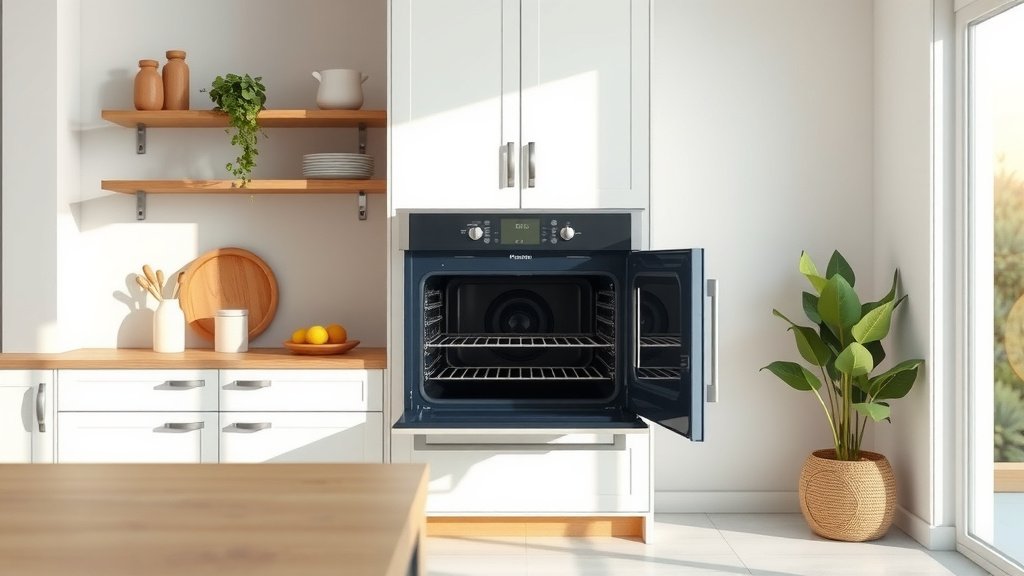
An average electric oven uses between 2,000 to 5,000 watts per hour, translating to 2 to 5 kilowatt-hours (kWh) of electricity. This range depends heavily on the oven’s size, model, and the temperature you set it to.
To calculate your specific oven’s usage, you’ll need its wattage (usually found on a label) and your electricity rate, as ovens don’t draw their maximum wattage constantly.
- Understanding your oven’s electricity use helps you manage household energy bills.
- Most electric ovens fall within the 2,000-5,000 watt range for active heating.
- Factors like temperature, oven size, and insulation greatly impact how much power is drawn.
- You can estimate costs by multiplying kilowatts used by your electricity rate.
- Simple habits, like batch cooking, can lead to noticeable savings over time.
How Much Electricity Does An Oven Use Per Hour?
Generally, an electric oven consumes anywhere from 2 kWh to 5 kWh per hour of operation. This figure helps us understand the cost of cooking in our homes.
Understanding Oven Wattage
Ovens are powerful appliances, and their energy hunger is measured in watts. Think of wattage as the muscle power of your oven. The higher the watts, the more electricity it can use.
Most electric ovens you find in homes hover around 2,000 to 5,000 watts. A thousand watts equals one kilowatt (kW), so a 3,000-watt oven uses 3 kW. Knowing this helps you picture the energy demands.
It’s important to remember that your oven doesn’t always pull its maximum wattage. It cycles on and off to maintain the set temperature, which saves some energy.
Factors Affecting Oven Electricity Usage
Several elements play a role in how much electricity your oven truly consumes. It’s not just a simple on/off switch with a fixed rate.
- Temperature Setting: A higher temperature requires more energy to reach and maintain. Roasting at 400°F will use more power than baking at 350°F.
- Oven Type and Size: A larger oven has more space to heat, needing more energy. Convection ovens, while often more efficient overall, might have higher peak wattages.
- Age and Efficiency: Older ovens tend to be less insulated and less efficient, meaning they work harder to keep warm. Newer models often have better insulation.
- Preheating vs. Cooking Time: The initial preheating phase uses a significant burst of energy. Once at temperature, it cycles to maintain heat.
- Opening the Oven Door: Every time you peek, a blast of heat escapes, forcing the oven to kick back on to restore the temperature. Try to resist the urge!
Calculating Your Oven’s Electricity Cost
Want to know the real cost? It’s simpler than you might think. You need your oven’s wattage, how long you use it, and your electricity rate.
Here’s the basic formula: (Oven Wattage / 1,000) * Hours Used * Cost per kWh.
For example, if you have a 3,000-watt oven and use it for 2 hours, and your electricity costs $0.15 per kWh:
(3,000 watts / 1,000) * 2 hours * $0.15/kWh = 3 kW * 2 hours * $0.15/kWh = $0.90.
So, that baking session cost you 90 cents. Knowing your local rate is key (check your utility bill!).
Average Oven Consumption Table
This table gives you a general idea of how different oven types might stack up. Keep in mind these are averages, and your specific model might vary.
| Oven Type | Average Wattage (Active Heating) | Estimated kWh per Hour | Approximate Cost per Hour ($0.15/kWh) |
|---|---|---|---|
| Standard Electric Oven (Small) | 2,000 – 3,000 W | 2 – 3 kWh | $0.30 – $0.45 |
| Standard Electric Oven (Large) | 3,000 – 4,000 W | 3 – 4 kWh | $0.45 – $0.60 |
| Convection Electric Oven | 2,500 – 3,500 W | 2.5 – 3.5 kWh | $0.38 – $0.53 |
| Electric Double Oven | 3,500 – 5,000 W | 3.5 – 5 kWh | $0.53 – $0.75 |
Real-World Scenarios: Baking vs. Roasting
Think about how you use your oven. Are you baking cookies at 350°F for 15 minutes or roasting a turkey at 425°F for three hours? The energy bill sees the difference.
Shorter, lower-temperature tasks generally use less overall energy. Long, high-temperature roasting will naturally add up. It’s like driving a car; short trips use less gas than long journeys, even if you drive efficiently.
Many experts say that batch cooking is a smart move. Using a hot oven to cook multiple dishes back-to-back saves you from preheating it several times.
Saving Electricity: Smart Oven Habits
Want to trim down those electricity costs without giving up your favorite baked goods? We found that small changes can make a big impact. Here are some smart habits.
- Use the Right Cookware: Glass or ceramic dishes cook faster and more evenly in an oven. They retain heat better.
- Thaw Frozen Foods First: Putting frozen food directly into the oven makes it work harder and longer. Thawing it beforehand saves significant energy.
- Don’t Peek: Every time you open the door, the oven’s internal temperature drops by 25-50 degrees. This forces it to use more electricity to recover.
- Clean Your Oven Regularly: A dirty oven with baked-on spills can absorb heat, making it less efficient. A clean oven heats more effectively.
- Size Matters: For smaller dishes, consider using a toaster oven or microwave. These often use far less energy than a full-sized oven.
- Utilize Residual Heat: For dishes with long cooking times, turn off the oven 5-10 minutes before it’s done. The residual heat will finish the cooking.
The Myth of Preheating Efficiency
Is preheating always necessary? For some delicate baked goods, absolutely. But for many dishes, like casseroles or roasted vegetables, it’s not always critical. Research indicates that skipping preheating for certain items can shave off a few minutes of high-energy use.
If a recipe calls for a specific bake time *after* the oven is preheated, you should follow it. But for less precise cooking, consider putting the food in when you turn the oven on.
When to Replace Your Old Oven
An aging oven can be a silent energy guzzler. If your oven takes forever to preheat, struggles to maintain a steady temperature, or has a broken door seal, it might be time for an upgrade. Many experts suggest that newer ovens, especially those with an Energy Star rating, can be significantly more efficient (Energy Star).
The upfront cost of a new oven can be intimidating, but the long-term savings on your electricity bill can make it worthwhile. Plus, newer models often offer improved cooking performance.
Conclusion
Understanding how much electricity your oven uses per hour empowers you to make smarter choices in the kitchen. From knowing the wattage to adopting simple energy-saving habits, you can keep your cooking costs in check. Remember, every little bit adds up, and being mindful of your oven’s consumption helps both your wallet and the planet. Happy cooking!
How many watts does an oven use per hour on average?
An average electric oven uses between 2,000 to 5,000 watts per hour, depending on its size, model, and the temperature setting you choose. This range translates to 2 to 5 kilowatt-hours (kWh) of electricity.
Does a convection oven use less electricity than a conventional oven?
Convection ovens often use slightly less electricity overall than conventional ovens because they circulate hot air, cooking food more quickly and often at lower temperatures. While their peak wattage might be similar, their shorter run times can lead to energy savings.
How can I find my oven’s exact wattage?
You can usually find your oven’s exact wattage on a label or plate located on the appliance itself, often around the oven door frame, on the back, or sometimes in the owner’s manual. Look for a specification listed in “W” or “kW.”
Does preheating an oven use a lot of electricity?
Yes, preheating an oven uses a significant amount of electricity because the heating elements must work at maximum capacity to rapidly bring the oven to the desired temperature. Once the oven reaches temperature, it uses less energy to maintain it.
What is the most energy-efficient temperature to bake at?
There isn’t one “most energy-efficient” temperature, as it depends on what you’re cooking. However, baking at lower temperatures for shorter durations, or using a convection setting, generally uses less energy than very high-temperature, long-duration cooking. The key is using the lowest effective temperature for your dish.
