
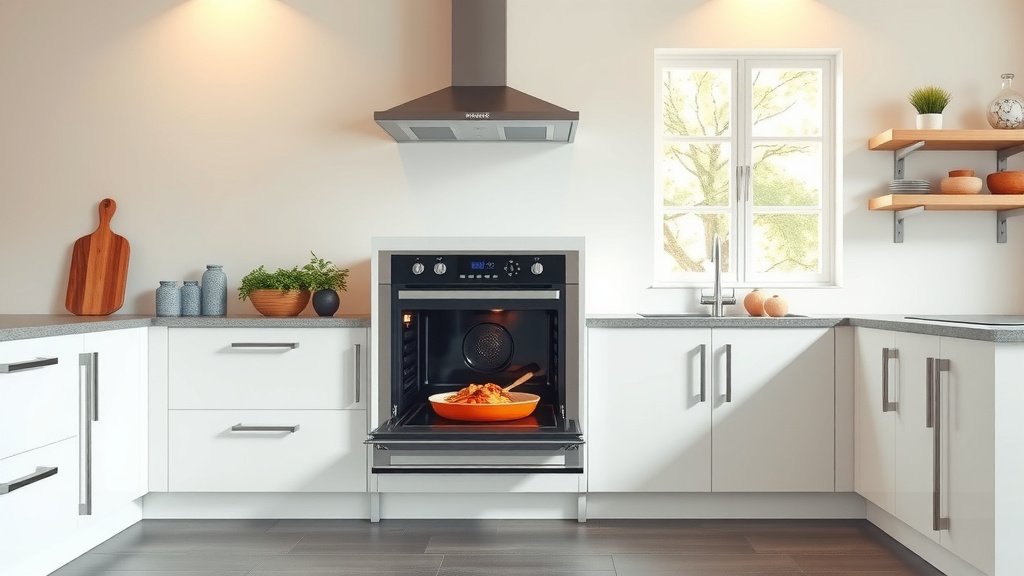
Cooking a large meal with a double oven becomes effortless when you coordinate dish temperatures and cooking times across both compartments. Think of it as a culinary orchestra, where each oven plays a vital role in bringing your feast to perfection simultaneously.
To cook a large meal with a double oven efficiently, plan your menu around similar temperatures, utilize the separate compartments for different heat needs, and master timing so everything finishes at once.
- Master Temperature Matching: Group dishes that bake at similar temperatures.
- Strategic Timing: Work backward from your serving time to schedule when each dish starts.
- Utilize Each Oven: Assign higher temperature needs to one oven, lower to the other.
- Prep Smart: Do all chopping and mixing ahead to save time during cooking.
- Monitor Closely: Use oven thermometers to ensure accurate temperatures.
How To Cook A Large Meal With Double Oven?
Cooking a large meal with a double oven simply means using both compartments to manage different dishes or temperatures at the same time. This setup allows you to juggle multiple items without sacrificing quality or timing.
Why a Double Oven is Your Secret Weapon
Imagine Thanksgiving dinner or a big family gathering. One oven trying to handle the turkey, casseroles, and pies is a recipe for stress! A double oven changes the game entirely. You get two separate cooking zones, each with its own temperature controls. We found this setup really cuts down on cooking time and helps you manage complex meals.
Understanding Your Oven’s Power
Your double oven isn’t just two boxes; it’s a powerful tool for cooking flexibility. Generally, the upper oven heats faster and is often smaller, ideal for quick bakes or roasting. The lower oven might be larger and takes a bit longer to preheat but often holds its temperature very well for longer cooking tasks. Understanding these nuances helps you decide what goes where.
The Art of Meal Planning for Two Ovens
Before you even preheat, a little planning goes a long way. Start by listing every dish you want to make. Then, look at their required temperatures and cooking times. Many experts say that thoughtful planning is the most important step for any large meal. This helps you see how your double oven can work for you.
Temperature Triumphs: Matching Dishes
This is where your double oven truly shines. Can you bake a casserole at 375°F in one oven while roasting vegetables at 400°F in the other? Absolutely! Or, even better, group dishes that bake at the same temperature, like a lasagna and a potato gratin both needing 375°F. Research often connects efficient cooking with temperature matching across oven compartments (Culinary Institute of America).
Timing is Everything: Your Culinary Choreography
Think of yourself as a conductor, guiding your dishes to a grand finish. Work backward from the time you want to serve your meal. If dessert needs 30 minutes, and the main course needs 60, you’ll start the main course first. Some people might even pop in the dessert components while the main course is resting, using residual heat if appropriate.
- Chart It Out: Create a simple timetable for each dish.
- Factor in Resting: Remember that meats need to rest outside the oven.
- Preheat Time: Don’t forget to add oven preheating to your schedule.
- Dish Rotation: Plan to rotate dishes if one oven has hot spots.
- Last-Minute Warms: Save quick warm-ups for the final few minutes.
Leveraging Both Compartments Smartly
Decide which oven is best for which dish. Does your turkey need a long, slow roast in the larger, lower oven? Perhaps your pies and bread can fit perfectly in the upper oven. Consider air circulation too; don’t overcrowd the racks. We found that giving each dish enough space helps it cook evenly.
Batch Cooking and Prepping Ahead
Maximize your efficiency by preparing as much as possible before cooking begins. Chop all your vegetables, mix your dry ingredients, and marinate your meats. Many experts say that 80% of the work happens before anything touches the heat. This makes the actual cooking phase much smoother and less stressful.
Dealing with Different Cooking Times
Not every dish cooks at the same speed, even at the same temperature. Some items might need more time. You can partially cook certain elements beforehand, like par-boiling potatoes. You can also cover dishes with foil to slow down browning, or remove items that finish early and keep them warm (or reheat them briefly later).
Common Double Oven Challenges & Solutions
Even with two ovens, you might face challenges. Hot spots, where some areas cook faster, are common. Rotate your dishes halfway through cooking to counter this. Opening the oven doors too often also lets heat escape, making cooking times longer. Try to resist peeking too frequently. Many guidelines point to a reliable oven thermometer as a good first step to address temperature inconsistencies (Food Safety & Inspection Service).
Essential Tools for Your Double Oven Adventure
Having the right tools makes a huge difference. A reliable meat thermometer is a must for ensuring meats are cooked safely and perfectly. Multiple timers (even phone timers!) can help you track each dish. Having extra baking sheets and cooling racks also helps with meal flow and transition.
| Dish Type | Ideal Double Oven Temp | Notes for Placement |
|---|---|---|
| Roasts (Beef, Lamb) | 325-375°F | Often better in lower, larger oven for even cooking. |
| Casseroles | 350-375°F | Can go in either oven, depending on other dishes. |
| Baked Goods (Pies, Cookies) | 350-400°F | Upper oven often works well for faster browning. |
| Roasted Vegetables | 400-425°F | Higher heat usually means better caramelization; use either. |
| Poultry (Whole Chicken/Turkey) | 325-350°F | Lower oven is usually best for large birds; ensure space. |
Don’t Forget Food Safety!
Cooking large meals also means thinking about food safety. Always ensure meats reach their safe internal temperatures before serving (USDA). Use a meat thermometer to check. We found that cooking food to the right temperature prevents potential issues and keeps everyone healthy.
A Quick Checklist for Your Next Big Cook
- Menu planned with cooking times and temperatures noted?
- Dishes assigned to specific ovens and racks?
- All ingredients prepped and ready to go?
- Timers set and ready for each item?
- Meat thermometer handy for safe cooking?
- Resting spot for finished dishes prepared?
Conclusion
Using a double oven to cook a large meal isn’t just about fitting more food; it’s about smart planning, precise timing, and leveraging your equipment to its fullest potential. By thinking strategically about temperatures, prioritizing preparation, and trusting your oven’s capabilities, you’ll find hosting large gatherings becomes less about kitchen chaos and more about culinary confidence. It’s your kitchen, and your double oven is ready to make those big meals easy.
What are the typical temperature ranges for double ovens?
Double ovens typically offer a wide range, often from 150°F to 550°F, allowing you to bake, roast, broil, and even keep food warm in separate compartments. This flexibility is key for diverse meal preparation.
Can I bake different types of food at different temperatures in each oven?
Yes, absolutely! That’s the main advantage of a double oven. You can roast a chicken at 400°F in one oven while baking a delicate pie at 350°F in the other, all at the same time.
How do I prevent flavors from mixing between ovens?
Because double ovens have separate compartments and ventilation systems, flavor transfer is generally not an issue. Strong odors usually dissipate within their own oven, especially if dishes are covered. We’ve found this makes them very versatile.
Should I preheat both ovens even if I’m not using them simultaneously?
It’s best to only preheat the oven you plan to use. Preheating both unnecessarily consumes energy. If you plan to use the second oven later, preheat it closer to its required start time.
What’s the best way to clean a double oven?
Most double ovens feature a self-cleaning function for baked-on messes. For everyday spills, wipe them up immediately with a damp cloth once the oven cools. Always check your oven’s manual for specific cleaning instructions and recommended products.
