
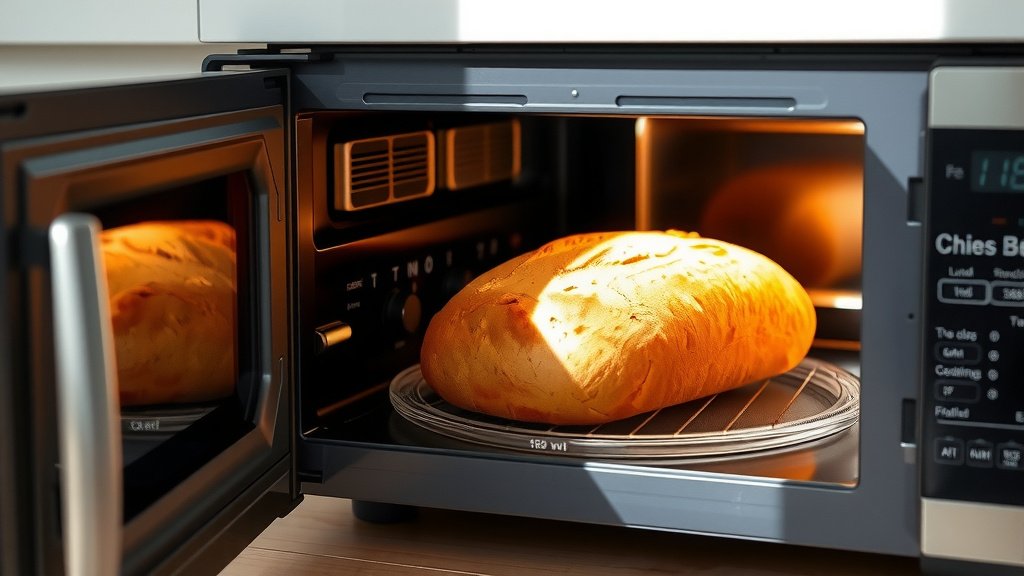
Making bread in a microwave oven is certainly possible, especially when using a convection microwave model. You can bake various types of quick bread recipes, often achieving delicious results in a shorter timeframe compared to traditional ovens.
To successfully make bread in a microwave oven, focus on recipes designed for this method, choose the right microwave setting like convection bake, and pay close attention to ingredient ratios and baking times.
Here’s a quick overview of what you’ll find in this guide:
- Discover which types of microwave ovens are best for baking bread.
- Learn about the ideal bread recipes to try in your microwave.
- Find simple, step-by-step instructions for baking a tasty loaf.
- Get practical tips to make your microwave bread-making journey easier.
- Understand the benefits and potential trade-offs of this baking method.
How To Make Bread In Microwave Oven?
You can make delicious bread in a microwave, especially if your model has a convection setting. This method offers a quicker way to enjoy homemade loaves, perfect for smaller batches and specific recipes.
Can Any Microwave Oven Bake Bread?
Not all microwaves are created equal for baking. Your standard, basic microwave is fantastic for reheating leftovers or making popcorn. However, it uses microwaves to heat food molecules directly, which can make bread chewy or dense.
For true baking, you need a convection microwave oven. These appliances combine microwave technology with a heating element and a fan, much like a conventional oven. This allows them to brown, crisp, and bake just like you’d expect.
Understanding Your Microwave’s Capabilities
If your microwave has a “Bake” or “Convection” setting, you’re in luck. This feature circulates hot air, creating an oven-like environment. Without it, you might make something that resembles steamed bread, not a traditional loaf.
Always check your appliance manual to confirm its capabilities. Knowing your oven’s functions is the first step to baking success.
What Kind of Bread Can You Make?
When baking in a convection microwave, certain bread types shine. Quick breads are often the easiest and most forgiving. Think banana bread, cornbread, or even a simple soda bread.
Yeast breads can also be made, but they sometimes require a bit more finesse. We found that smaller loaves or rolls often yield better results than large, crusty artisan loaves.
Best Bread Types for Microwave Baking
- Quick Breads: These use baking powder or soda for leavening. They’re fast, simple, and usually come out moist.
- Mug Breads: Perfect for single servings. These are designed to cook very quickly and often use microwave-safe mugs.
- Small Yeast Loaves: If your convection microwave is powerful, you can try smaller yeast bread recipes. You’ll get a decent crust and soft interior.
Many experts say to avoid very wet doughs or recipes needing a very crisp crust. The microwave environment is different, even with convection.
Essential Tools and Ingredients
You don’t need a lot of fancy equipment to get started. Most items are likely already in your kitchen. Having the right tools makes the process smoother and more enjoyable.
What You’ll Need
A few basics make all the difference. You’ll want sturdy mixing bowls and accurate measuring tools. These ensure your recipe comes out as intended.
Here’s a quick checklist to get ready:
- Microwave-safe baking dish or loaf pan (glass or silicone works well)
- Mixing bowls
- Measuring cups and spoons
- Whisk or spatula
- Oven mitts (even convection microwaves get hot!)
Key Ingredients for Bread
The ingredients are the heart of your bread. Fresh, high-quality ingredients always lead to better taste and texture. Don’t cut corners here; your taste buds will thank you.
For most basic breads, you’ll need:
- All-purpose flour or bread flour
- Leavening agent (baking powder, baking soda, or active dry yeast)
- Salt
- Sugar (optional, for flavor and browning)
- Liquid (milk, water, or buttermilk)
- Fat (oil or melted butter)
Remember, the precise measurements for these are really important. Baking is often like a science experiment!
Step-by-Step Guide to Making Microwave Bread
Ready to bake? Let’s walk through the process together. It’s simpler than you might think, especially for quick breads.
Preparing Your Dough
Start by mixing your dry ingredients in one bowl and your wet ingredients in another. Then, gently combine them. Overmixing can make your bread tough, so mix until just combined.
If using yeast, make sure it’s properly activated. Warm liquid is key for waking up those tiny yeast cells (NIH).
Baking Your Bread
Grease your microwave-safe baking dish. Pour or spoon your batter into the prepared pan. Don’t fill it more than two-thirds full, as the bread will rise.
Place the pan into your convection microwave. Select the “Convection Bake” setting and set the temperature. A common starting point is 350°F (175°C).
Typical Baking Times
Baking times will vary widely based on your recipe and microwave’s power. A small loaf of quick bread might take 25-40 minutes. Yeast breads might take longer.
Use a toothpick test: if it comes out clean when inserted into the center, your bread is probably done. Don’t be afraid to adjust times; every oven is a little different.
Tips for Perfect Microwave Bread
Achieving a great loaf in your microwave is about understanding a few key tricks. These simple tips can really elevate your baking results.
Achieving Even Baking
Some convection microwaves have hot spots. To help with even baking, rotate your bread halfway through the cooking time. This helps ensure a consistent texture and color all around.
Also, preheating your convection microwave is just as important as a regular oven. It helps create a stable temperature from the start.
Troubleshooting Common Issues
Did your bread turn out too dense? You might have overmixed the dough or used too much flour. Is it undercooked in the middle? It might need more time or a slightly lower temperature for a longer bake.
Keep a baking journal! Note down your settings, times, and results. This helps you learn and improve with each batch.
| Issue | Possible Cause | Solution |
|---|---|---|
| Dense/Hard Bread | Overmixing, too much flour | Mix gently until just combined; ensure accurate flour measurement. |
| Undercooked Center | Too high temperature, too short time | Lower temperature slightly, increase bake time; use toothpick test. |
| No Browning | Not convection mode, low sugar | Confirm convection setting; add a touch more sugar or glaze. |
| Dry Crumb | Overbaking, too little liquid | Reduce bake time slightly; ensure correct liquid measurement. |
Benefits and Limitations of Microwave Bread Making
Baking bread in a microwave oven offers some unique advantages, but it also has its limitations. Knowing these can help you decide if it’s the right method for your baking needs.
Why Choose Microwave Baking?
The primary benefit is often speed. Smaller loaves or quick breads can be ready much faster than in a conventional oven. This is fantastic when you’re short on time but still crave homemade goodness.
Another plus is energy efficiency for smaller items. You’re heating a smaller space, which can use less power than preheating a large traditional oven for a single loaf.
Understanding the Trade-offs
While convenient, microwave bread might not always achieve the same crust or texture as a traditional oven. Artisan breads with a really chewy crust are harder to get. Also, the size of your loaf is often limited by the microwave cavity.
Research often connects traditional oven baking with specific crust development (Food Science & Technology). This is something a convection microwave tries to mimic but doesn’t always perfectly replicate.
Making Bread with Regular Microwave Oven
If you only have a regular microwave, you can still make certain types of bread. These will be more like steamed or mug breads, not typically baked loaves with a crust. You won’t get the same browning or crispy edges.
These breads are often very moist and dense, similar to a cake-like texture. They’re great for a quick snack but differ significantly from convection-baked bread. Remember, a regular microwave heats differently, so expectations need to adapt.
Conclusion
Baking bread in a microwave oven is a practical and accessible option, especially with a convection model. While it may not replace the traditional oven for every type of loaf, it certainly opens up a world of quick, homemade bread possibilities. From speedy banana bread to savory cornbread, your convection microwave can be a valuable tool in your baking routine. Experiment with recipes, pay attention to your oven’s unique characteristics, and enjoy the satisfaction of fresh bread, often in less time!
Can I bake any bread recipe in a convection microwave?
While many recipes work, those specifically designed for convection microwaves or quick breads are best. Very large, dense, or crusty artisan loaves might not achieve their ideal texture.
How do I prevent my microwave bread from becoming rubbery?
Overmixing the dough is a common cause of rubbery bread. Mix only until the ingredients are just combined. Also, avoid overbaking, as this can dry out the bread and alter its texture.
Do I need to preheat my convection microwave for baking bread?
Yes, preheating your convection microwave is important for baking bread. Just like a conventional oven, it ensures a consistent and stable temperature from the moment your bread starts to bake, promoting even cooking and proper rising.
What kind of bakeware is safe for microwave bread making?
Use microwave-safe bakeware such as glass, silicone, or ceramic dishes. Metal pans are only safe if your microwave specifically states they can be used on a convection setting, but always consult your oven’s manual.
Can I make gluten-free bread in a convection microwave?
Absolutely! Many gluten-free bread recipes, especially quick breads, can be successfully baked in a convection microwave. The key is to find recipes adapted for smaller loaves and microwave baking times, ensuring the right balance of moisture and texture.
