How to Use a Pizza Turning Peel
To use a pizza turning peel, slide its small round head under the pie, lift just enough to free it, and turn the pie a quarter or half turn in one smooth motion. Pull the peel straight out, keep your hand steady, and repeat only when the crust needs even browning.
On this page (9 sections)
- What is a pizza turning peel and how does it work?
- How do you use a pizza turning peel step by step?
- When should you turn a pizza in the oven?
- How do you turn a pizza without tearing the dough?
- What size and handle length should you choose?
- How does oven design change how you turn a pizza?
- How do you set up your workspace before you bake?
- How do you finish the bake after turning?
- Which tools help you cut and serve after the turn?
To use a pizza turning peel, slide the small round head under the pie, lift just enough to free it, and rotate it in one smooth motion. This guide explains how to use a pizza turning peel step by step, when a turn helps, and how to avoid tearing the dough.
A turning peel is not the same as a large launching peel. A launching peel carries a raw pizza into the oven.
A turning peel turns a pizza that is already baking. That small difference changes how you hold it, how fast you move, and how much you lift.
What is a pizza turning peel and how does it work?
A pizza turning peel is a small, round metal head on a long handle. You slide that head under a baking pizza, lift the edge slightly, and spin the pie so the side closest to the heat changes places.
The round shape matters. It can go under the crust without a sharp corner digging into the dough.
It also lets you pivot the pie in place instead of dragging it across the hot stone or steel.
Most turning peels are metal because metal slides easily and can take oven heat. A wooden peel is better for launching a raw pizza, but it is not built for repeated turns inside a hot oven.
Our comparison of pizza peel metal vs wood explains that choice in more detail.
How is a turning peel different from a regular pizza peel?
A regular peel has a large, flat blade for launching and retrieving a whole pizza. A turning peel has a head only a few inches across.
That small head is the point. It fits under the pie while the rest of the pie stays on the stone.
Think of the regular peel as a tray and the turning peel as a spatula. You use the tray to move the pizza in and out.
You use the spatula to adjust it while it bakes.
How do you use a pizza turning peel step by step?
The basic move is slide in flat, lift the edge, turn once, and pull out level. Keep the handle steady and let the head do the work.
Rushed or jerky motion is what tears dough and spills sauce.
Start with the peel head flat on the stone, with the handle angled down a little. Push the head under the crust until it reaches the center of the pie.
Lift just the edge, turn the pie a quarter turn, set it down gently, and pull the head straight back out.
If the pie sticks, do not force it. Dust the head lightly with flour or semolina before you slide it in.
That thin layer helps the crust release. A short pause to let the bottom firm up also makes the first turn easier.
How do you hold a turning peel without burning your hand?
Hold the handle near the end with a firm, relaxed grip. Keep your wrist level so the head stays flat.
Your other hand can guide the handle from above, but don't push down on it.
Keep the handle clear of the oven door and the hot opening. A long handle gives you distance, but only if you hold it at the end.
Choking up on the handle brings your hand closer to the heat and makes the head tip.
When should you turn a pizza in the oven?
Turn a pizza once the crust has firmed up and the cheese has started to set. Timing depends on your oven and how hot the stone or steel is.
You turn to fix uneven heat, not to follow a strict timer. One side may brown faster near a burner or at the back of the oven, so a turn moves it away from that heat.
Check once early when the bottom is just firm, and again later only if one side still looks pale. More turns lose heat without adding much benefit.
You can also review how to use a pizza peel correctly for the launching and retrieving steps that pair with turning.
How do you turn a pizza without tearing the dough?
Use one slow, level slide and lift only the edge you need to move. Tearing usually happens when the head hits a soft spot, lifts too high, or drags toppings with it.
Wait until the crust firms before the first turn. Fresh, wet dough sticks and stretches, while a set bottom holds its shape and slides more easily.
If the pie is still very soft, wait another minute instead of forcing it.
Keep the head flat and low, lift just enough to clear the stone, turn, and set it down. If cheese or sauce catches on the head, pull out, wipe it clean, and try again more lightly.
Our guide to how to get pizza off peel covers the flour and semolina habits that prevent that problem.
What size and handle length should you choose?
Choose a head that fits under the pie without poking past the far edge. A head that is too large can lift too much crust at once.
A head that is too small can make the turn feel tippy and slow.
Handle length depends on your oven depth. A deep outdoor oven or a wood-fired oven needs a longer handle to keep your hand out of the heat.
A shallow countertop oven needs less reach, and a long handle can be hard to control in a small space.
Our roundup of best long handle pizza turning peel options helps if your oven is deep. If you are still comparing head shapes and materials, the best pizza turning peel guide walks through the trade-offs.
How does oven design change how you turn a pizza?
A closed door and steady heat make turning easier. A door that seals well holds heat while you work, while an open door lets heat escape and cools the stone.
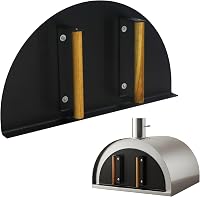
The SIMOND STORE door measures 20 inches by 11 inches and is made of 304 stainless steel. It includes two wooden handles, and you place it against the opening to seal in heat.
That door suits brick and outdoor ovens and long bakes. It is not a turning peel, so use it as a partner tool.
Close the door to hold heat, open it briefly to turn, then close it again.
Which oven setup works best for frequent turning?
A compact oven with a clear front opening works best. You can see the crust, slide the peel in at a level angle, and pull out without hitting the door frame.
A cart at a comfortable working height helps keep the handle level. The WEASHUME grill cart measures 31.5 by 24 by 35.5 inches, has three shelves, and has two lockable wheels.
Lock the wheels before you start turning. A cart that rolls during a turn can tilt the peel and spill toppings.
Keep ingredients on the lower shelf and tools within reach so you don't have to step away with the oven open.
How do you set up your workspace before you bake?
Set up your workspace before the pizza goes in the oven. Once the pie is baking, you will have only seconds to find the peel, dust the head, and get a clear line to the oven.
Place the turning peel where you can grab it with one hand. Dust the head lightly with flour or semolina, shake off the extra, and keep a small bowl nearby for a quick re-dust between pizzas.
Clear the path from the counter to the oven. If you use a cart, lock its wheels and check that the top shelf is level, since a level surface helps you keep the peel head flat.
Our guide to pizza oven accessories covers the full setup, from peels to cutters to storage.
How do you finish the bake after turning?
Check the crust color, not just the clock, before you pull the pizza out. After a turn, the pale side should start to brown, the cheese should bubble, and the crust should feel firm at the edge.
Use your regular peel to slide under the whole pizza for removal. The turning peel is too small to carry the full pie out safely, and the center can fold and spill hot cheese.
Rest the pizza on a board or rack for a minute before you cut it, so the crust sets and toppings stay in place. Set the turning peel on a heat-safe surface while it rests.
The best pizza peel for pizza ovens guide compares peels by oven depth and handle length, which helps match the peel to your oven.
Which tools help you cut and serve after the turn?
A good cutter makes the final step clean and safe. The Generic handmade pizza cutter has an 11 inch overall length and a 10 inch carbon steel blade.
It comes with a leather sheath and a dark wood handle.
Roll the blade in one steady motion instead of sawing back and forth. Let the weight of the blade do the work.
Hand wash the blade and store it in the sheath when you are done.
Keep the cutter away from the peel head and other tools while the oven is hot. A crowded counter makes it easy to knock a hot peel or grab the wrong tool.
A clear board and a clear path to the table keep serving calm. Wipe the peel head clean, let it dry fully, and store it where the head won't bend.
A bent head will not slide flat under a crust, and it can catch on the stone.
Frequently asked questions
How often should you turn a pizza with a turning peel?
Turn the pie once or twice during the bake, or whenever one side browns faster than the other. A short check after the cheese sets is enough for most home ovens.
More turns mean more door-open time and more heat loss.
What is a pizza turning peel used for?
A turning peel rotates a pizza inside a hot oven without removing it. Its small, round head fits under the crust, lets you turn the pie toward or away from the heat source, and pulls back out so the oven stays hot and the door stays open for less time.
Can a turning peel tear a soft pizza?
Yes, if you push it in too fast or lift too much. Slide the head in flat, keep it level, and lift only the edge you need to turn.
A firmer crust, a light dusting of flour or semolina, and one smooth motion help prevent tears and cheese spills.
Do you need a long handle on a turning peel?
A long handle helps when the oven is deep or the heat source sits at the back. It keeps your hand farther from the hot opening.
For a shallow countertop oven, a shorter handle gives you more control and is easier to store.