
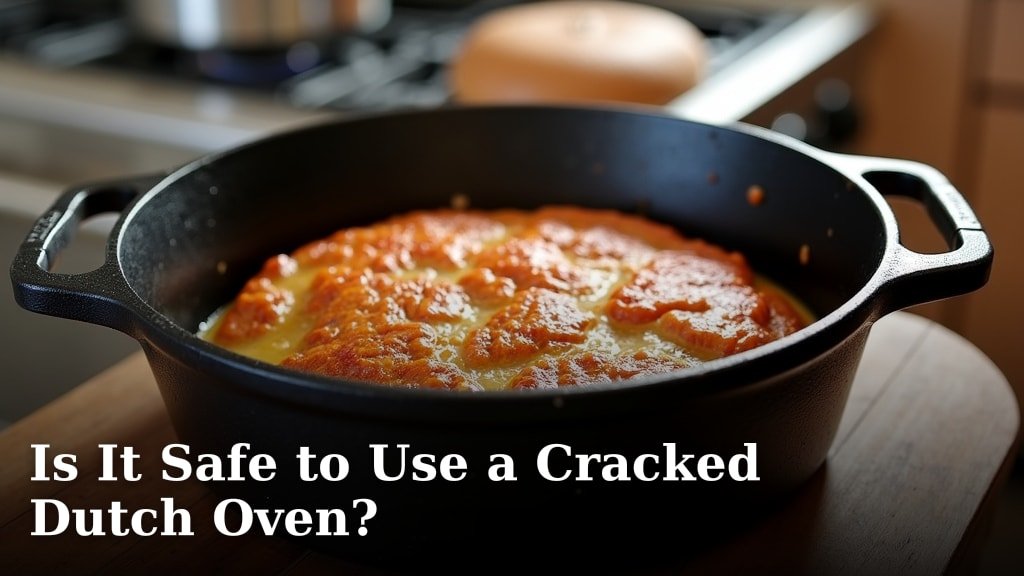
Using a cracked Dutch oven depends on the type of crack and its location. For minor chips or small hairline cracks in the enamel, it’s often safe to continue using, though you should monitor it closely. Major cracks, especially those that go through the cast iron, can pose a safety risk and compromise cooking performance.
A cracked Dutch oven might still be usable, but you need to understand the potential risks. For instance, enamel chips can end up in your food, and structural cracks can lead to breakage or uneven heating. We’ll help you figure out if your beloved pot is still a kitchen companion or needs a retirement.
- Minor enamel chips are usually okay.
- Watch for larger cracks in the cast iron.
- Enamel fragments can get into your food.
- Structural cracks can cause the pot to break.
- Your pot’s performance might be affected.
Let’s walk through exactly what to look for and how to decide if your cracked Dutch oven is still safe to cook with.
Assessing Your Cracked Dutch Oven’s Safety
So, you’ve discovered a crack in your trusty Dutch oven. That can be a heart-stopping moment, especially if it’s your go-to pot for Sunday roasts or hearty stews. The immediate question is: Is it still safe to use?
The answer isn’t a simple yes or no. It truly depends on what kind of crack you’re looking at and where it’s located. We’ve found that understanding the material and the type of damage is key to making the right call. Let’s break down what you need to inspect on your Dutch oven.
Understanding Dutch Oven Materials
Most Dutch ovens are made of two main components: cast iron and enamel. The condition of each part plays a big role in safety. Cast iron is the sturdy, heavy base. Enamel is the glassy coating applied to it.
Think of the cast iron as the pot’s skeleton. It provides the structure and heat retention. The enamel is like the skin; it provides a smooth, non-reactive surface for cooking. Damage to either can affect your cooking experience and, more importantly, your safety.
Types of Cracks and Their Implications
Not all cracks are created equal. Some are minor cosmetic issues, while others can signal a serious problem. We’ve categorized the most common types of damage you might find.
Enamel Chips and Dings
These are perhaps the most common types of damage. You might see small
Conclusion
Deciding if your cracked Dutch oven is still safe to use comes down to the type and severity of the crack. Small, cosmetic enamel chips are usually not a problem. But if you see deep cracks in the cast iron or a crack that goes all the way through, it’s time to retire your pot. We’ve found that prioritizing your safety and food quality is always the best approach. If you’re unsure, it’s always better to err on the side of caution and replace the damaged cookware.
Frequently Asked Questions
Will a small enamel chip make my food unsafe?
Generally, a small chip in the enamel that doesn’t expose the cast iron is often considered safe. You should just monitor it closely. If the chip is large or exposes the cast iron, it’s best to stop using it.
Can I use a Dutch oven with a crack in the lid?
A crack in the lid can be problematic. If it’s a minor enamel chip, it might be okay. However, a crack that compromises the lid’s structure could affect heat distribution and even break.
What happens if cast iron chips get into my food?
While not common with minor enamel chips, if cast iron fragments do get into your food, they aren’t typically toxic. However, they can create an unpleasant texture and are a sign of serious damage to your pot.
How can I tell if a crack is serious enough to stop using the pot?
Look for cracks that are deep, wide, or go through the cast iron material itself. If the pot feels wobbly, uneven, or you can see light through a crack, it’s likely too damaged to use safely.
Is it safe to repair a cracked Dutch oven?
For enamel-lined cast iron, repairing significant cracks is generally not recommended for safety and cooking performance. The materials and heat involved make DIY repairs difficult and often unreliable. It’s usually best to replace a badly cracked Dutch oven.
