
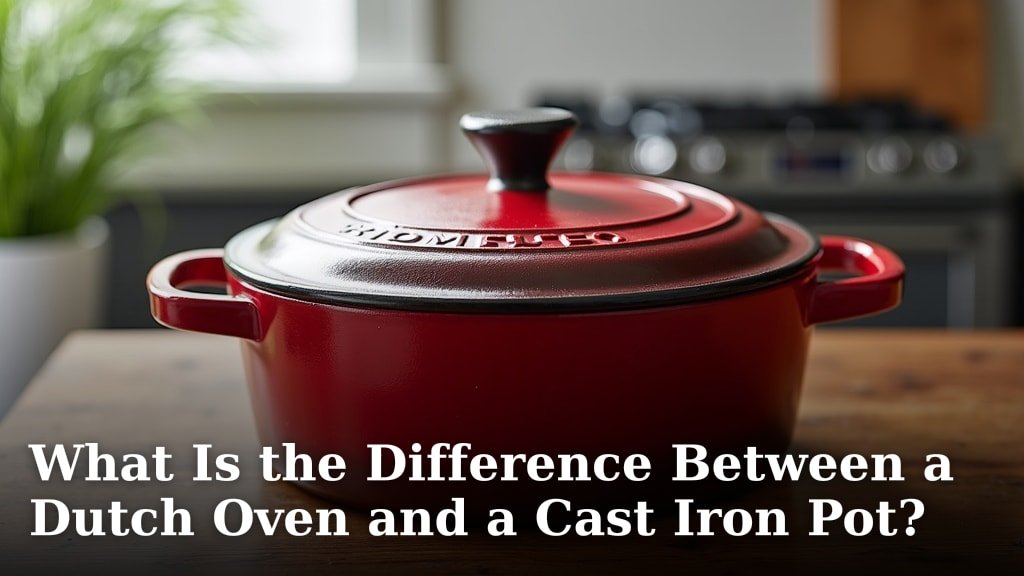
The main difference between a Dutch oven and a cast iron pot is their construction and enamel coating. A Dutch oven is a type of cast iron pot that often features an enamel coating, while a traditional cast iron pot is made entirely of bare cast iron and requires seasoning. This coating affects how you cook and care for them.
You might be wondering if you truly need both in your kitchen, right? Many home cooks find that these versatile pieces of cookware serve different purposes. We found that understanding these differences helps you choose the best pot for your cooking needs, from slow braises to searing steaks.
- Dutch ovens often have an enamel coating; cast iron pots are bare.
- Enamel makes Dutch ovens easier to clean and non-reactive.
- Bare cast iron needs seasoning for a non-stick surface.
- Both offer excellent heat retention and even cooking.
- Your cooking style dictates which one is better for certain dishes.
Let’s walk through exactly how these two kitchen workhorses stack up against each other.
Unpacking the Core Differences Between These Popular Pots
The main differences between a Dutch oven and a cast iron pot really come down to their coating and how you care for them.
Think of it this way: a Dutch oven is usually a fancy, dressed-up version of a cast iron pot. It has a beautiful, smooth enamel coating. A traditional cast iron pot is more rugged, bare, and needs a little extra attention from you.
Both are workhorses in the kitchen. But that coating changes everything about their best uses and upkeep.
What is a Dutch Oven?
A Dutch oven is a heavy pot, usually made from cast iron, with a tightly fitting lid. The key feature is often its enamel coating, both inside and out.
This enamel isn’t just for looks. It creates a smooth, non-reactive surface. This means you can cook acidic foods, like tomato sauce or wine-braised dishes, without any metallic taste or damage to the pot (Cleveland Clinic).
Many home cooks love Dutch ovens for their versatility. You can use them on the stovetop, in the oven, and even bring them right to the table for serving. They look good doing it, too!
The Magic of Enamel Coating
That glossy enamel layer makes a big difference. It’s essentially a type of glass fused to the cast iron at very high temperatures. This creates a durable, non-stick-like surface.
Cleaning an enameled Dutch oven is a breeze. Warm soapy water and a soft sponge are usually all you need. You don’t have to worry about seasoning it, ever.
We found that this coating also helps distribute heat evenly. It keeps your food from sticking as easily as bare cast iron might, especially when new.
Common Uses for a Dutch Oven
What can you cook in one of these beauties? Plenty! Dutch ovens are perfect for slow cooking methods.
- Braising meats: The heavy lid keeps moisture in, making tough cuts tender.
- Soups and stews: Their deep shape and even heat are ideal for simmering.
- Baking bread: The enclosed environment mimics a professional bread oven.
- Frying: The heavy bottom holds temperature well for deep frying.
You can go from stovetop searing to oven roasting seamlessly. Many folks even use them for baking casseroles or roasting whole chickens. They are true kitchen chameleons.
What is a Cast Iron Pot?
When we talk about a “cast iron pot,” we’re usually referring to traditional, bare cast iron cookware. This means it has no enamel coating.
It’s made from a single piece of cast iron. These pots are incredibly durable. They can last for generations with proper care. You might even have one passed down from your grandparents!
The surface of a bare cast iron pot is rougher than an enameled one. It needs a process called “seasoning” to become non-stick and prevent rust.
Understanding Cast Iron Seasoning
Seasoning is key for bare cast iron. It’s not just oil; it’s polymerized oil baked onto the surface. This creates a natural, non-stick layer (Cook’s Illustrated).
Every time you cook with oil and heat in a seasoned cast iron pot, you’re strengthening that layer. It gets better with age and use. You wouldn’t want to skip this step.
A well-seasoned cast iron pot is a joy to cook with. Eggs glide across the surface, and searing meat creates a beautiful crust. It’s a testament to simple, effective cooking.
Common Uses for a Cast Iron Pot
Bare cast iron pots are excellent for high-heat cooking and dishes that benefit from a well-developed crust.
- Searing steaks: It gets incredibly hot and stays hot, perfect for a perfect sear.
- Frying chicken: It maintains oil temperature wonderfully.
- Cornbread: The crispy crust from a cast iron pan is unmatched.
- Camping and outdoor cooking: Its ruggedness stands up to open flames.
Because they can handle very high temperatures, cast iron pots are often used for frying, baking, and even campfire cooking. They’re incredibly resilient.
Key Distinctions and Performance
So, you’ve seen what each pot is. Now, let’s stack them up against each other. How do their core characteristics translate into real-world cooking?
Maintenance and Durability
Here’s where you’ll notice a big difference. An enameled Dutch oven is very low maintenance. Wash it, dry it, and put it away. Easy peasy.
Bare cast iron requires more attention. You need to keep it seasoned. This means avoiding harsh soaps and always drying it immediately after washing to prevent rust. Some people even put a thin layer of oil on it after each cleaning.
Both are durable, but in different ways. Bare cast iron can take a beating and be re-seasoned. Enamel can chip if dropped or hit hard. A chipped enamel pot can still be used, but it’s not ideal.
Cooking Performance and Heat Retention
Both types of pots are champions of heat retention. Once they get hot, they stay hot. This is fantastic for even cooking and consistent results.
However, enamel-coated Dutch ovens tend to distribute heat a little more evenly initially. Bare cast iron can sometimes have hotter spots until it’s fully heated through. This is a subtle difference, though.
For high-heat searing, many chefs still prefer bare cast iron. It can handle extremely high temperatures better without risking damage to the enamel surface over time.
Acidity and Reactivity
This is a big one. Enamel is non-reactive. You can cook anything you want in a Dutch oven – tomatoes, wine, vinegar – without any worry. The food won’t pick up a metallic taste, and the pot won’t be damaged.
Bare cast iron, on the other hand, is reactive. Cooking highly acidic foods for long periods can strip away your seasoning. It can also impart a metallic flavor to your food. This is why you rarely see bare cast iron used for long-simmering tomato sauces.
If you love making chili or coq au vin, a Dutch oven is your friend. If you’re searing a steak, either works, but bare cast iron often gets the nod for that perfect crust.

Side-by-Side Comparison: Dutch Oven vs. Cast Iron Pot
Let’s put it all together in a quick table so you can see the main points at a glance.
| Feature | Dutch Oven (Enameled) | Cast Iron Pot (Bare) |
|---|---|---|
| Surface | Smooth, glass-like enamel coating | Rough, porous bare metal |
| Seasoning Needed? | No | Yes, essential for non-stick & rust prevention |
| Acidic Foods | Excellent, non-reactive | Avoid prolonged cooking, reactive |
| Cleaning | Easy, soap & water safe | Careful, no harsh soaps, dry immediately |
| Durability | Very durable, but enamel can chip | Extremely durable, can be re-seasoned |
| Appearance | Comes in many colors, often decorative | Typically dark gray/black, utilitarian |
Choosing the Right Pot for Your Kitchen
So, which one should you choose? Or perhaps, do you need both? It really depends on your cooking style and what you plan to make most often.
When to Reach for Your Dutch Oven
If you’re making a big batch of soup, a hearty stew, or baking a beautiful loaf of artisan bread, your Dutch oven is probably the star. It’s also great if you want cookware that’s easy to clean and requires minimal fuss.
Think about dishes where you want consistent, gentle heat over a longer period. Or anything with tomatoes or wine. If you want cookware that can go from oven to table and look great, the Dutch oven wins on aesthetics, too.
When Your Cast Iron Pot Shines
For high-heat searing, deep frying, or anything needing an intensely crispy crust, your bare cast iron pot will be your best friend. It excels at cooking things like pan-fried chicken, perfectly seared steaks, or skillet cornbread.
It’s also the choice for camping and outdoor cooking. Its rugged nature means it can handle direct flames and rough treatment that might damage an enameled piece. Many outdoor enthusiasts swear by it for its durability.
Can You Have Both?
Absolutely! We’ve found that many home cooks benefit from having both a Dutch oven and a traditional cast iron skillet or pot. They truly complement each other.
One for your slow-cooked, acidic stews. The other for your crispy, high-heat sears. Together, they cover almost every cooking need you might have. You wouldn’t want to use a hammer for every job, right? Different tools for different tasks.
Here’s a quick checklist to help you decide what’s best for your next recipe:
- Do I need to cook acidic ingredients (tomatoes, wine)? -> Dutch Oven
- Am I looking for easy, no-fuss cleaning? -> Dutch Oven
- Do I want to bake bread or braise meat slowly? -> Dutch Oven
- Is a super-high heat sear or crispy crust the goal? -> Cast Iron Pot
- Am I comfortable with seasoning and specific cleaning methods? -> Cast Iron Pot
- Will I be using it outdoors or over an open flame? -> Cast Iron Pot
Ultimately, both are fantastic cooking vessels. Knowing their strengths helps you choose the right one for the job. You’ll get better results and enjoy your cooking even more.
Conclusion
Choosing between a Dutch oven and a cast iron pot isn’t about one being “better” than the other. It’s about understanding their distinct strengths. We found that your cooking goals and preferred maintenance level really guide your decision. A Dutch oven offers convenience for braises and acidic dishes, while bare cast iron excels at high-heat searing and rugged durability. Consider what culinary tasks you tackle most often. Armed with this knowledge, you can confidently select the perfect workhorse for your kitchen, or perhaps even decide you need both to cover all your bases!
Frequently Asked Questions
Is an enameled Dutch oven safer than bare cast iron?
Yes, in certain situations. The enamel coating on a Dutch oven creates a non-reactive surface, meaning it won’t leach iron into your food or react with acidic ingredients. Bare cast iron can react with acidic foods, potentially altering the taste or stripping its seasoning if cooked for extended periods.
Can I use a cast iron pot on a glass top stove?
You can, but with caution. Bare cast iron pots are very heavy and have a rough surface, which can scratch delicate glass stove tops. Always lift the pot instead of sliding it, and check with your stove manufacturer’s guidelines for compatible cookware to avoid damage.
How do I properly season a new cast iron pot?
To season a new cast iron pot, first wash it with warm water and mild soap, then dry it completely. Apply a very thin, even layer of high-smoke-point oil (like flaxseed or grapeseed oil) to all surfaces. Bake it upside down in a preheated oven at 450-500°F (232-260°C) for one hour. Let it cool in the oven, and repeat this process 3-4 times for a good initial seasoning.
What are the signs that my Dutch oven’s enamel is damaged?
Signs of damaged enamel include chips, cracks, or discoloration that won’t wash off. If the enamel is chipped down to the bare cast iron, food can stick and the pot may rust in that area. While minor discoloration is usually cosmetic, significant chipping or cracking suggests it might be time for a replacement or careful use.
Does a bare cast iron pot add iron to my food?
Yes, cooking in bare cast iron can indeed add small amounts of dietary iron to your food. This can be beneficial for some individuals. We found this is particularly true when cooking acidic foods, though those are generally not recommended for bare cast iron due to reactivity and potential seasoning damage.
