
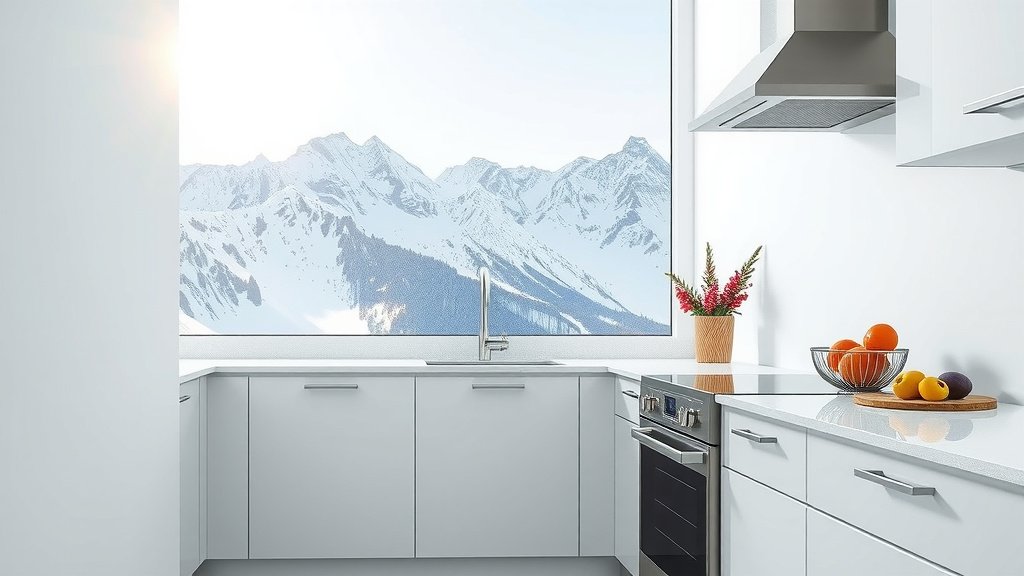
For high-altitude baking, a convection oven is often considered best due to its even heat distribution and fan-forced air. This helps baked goods cook more uniformly and often reduces baking time.
However, gas ovens also perform well, providing a slightly more moist heat that can be advantageous for preventing dryness in certain recipes.
Here’s a quick summary of what you’ll find in this article:
- Convection ovens often lead the pack for their even baking at higher elevations.
- Gas ovens offer a great alternative, especially if you need a little extra moisture.
- Understanding altitude’s effects on ingredients is more important than oven type alone.
- You’ll need to adjust recipes no matter which oven you use.
- An accurate oven thermometer is your secret weapon for success.
What Oven Type Handles High Altitude Baking Best?
When you’re baking at a higher elevation, your oven type can make a real difference. Many experts and seasoned high-altitude bakers find that a convection oven really shines in these conditions.
Its unique design helps overcome some common baking problems you might face. We’ll dive into why and what other ovens offer.
Why Does High Altitude Affect Baking?
Ever wonder why your favorite cookie recipe turns out differently when you move to the mountains? It’s not just you!
The air pressure is lower at higher altitudes. This impacts how ingredients behave and how quickly things cook. It’s a fascinating challenge for any baker.
The Science Behind the Challenge
Lower air pressure means water boils at a lower temperature. This affects moisture in your baked goods. Also, gases expand more quickly. This can cause your cakes to rise too fast and then collapse (USDA).
The air is also often drier at higher elevations. This can lead to ingredients drying out faster during baking. It’s a multi-faceted problem that needs smart solutions.
Convection Ovens: Your High-Altitude Champion?
Many high-altitude bakers swear by convection ovens. What makes them so special? Convection ovens use a fan to circulate hot air evenly throughout the baking cavity.
This consistent temperature distribution is a huge advantage. It prevents hot spots and cold spots, giving you a more predictable bake.
How Convection Helps You
The circulating air in a convection oven can help baked goods set more quickly. This means less chance of them collapsing from too much expansion. You might even find you can reduce your baking temperature by about 25 degrees Fahrenheit (Kansas State University Extension).
Plus, the even heat promotes better browning and crisping. This is great for cookies, crusts, and roasted vegetables. It’s like having an extra helper in the kitchen.
Gas Ovens: A Moist Heat Advantage
Don’t count out gas ovens for high-altitude baking! While convection gets a lot of praise, gas ovens have their own unique benefits. They typically produce a more moist heat than electric conventional ovens.
This extra moisture can be a real blessing. It helps counteract the dry air often found at higher elevations. Your cakes and breads might just thank you for it.
When Gas Ovens Shine
For items that need to stay moist, like certain cakes, quick breads, or casseroles, a gas oven can be a fantastic choice. The gentle, moist heat helps prevent excessive drying. It keeps your food tender and delicious.
Many home bakers grew up with gas ovens and feel comfortable with their baking quirks. Knowing your oven well is always an advantage, no matter the type.
Electric Conventional Ovens: A Bit More Work
Most homes have an electric conventional oven. Can you bake at high altitude with one? Absolutely, but it might require a few more adjustments and careful monitoring. These ovens don’t circulate air with a fan.
They rely on radiant heat from heating elements. This can create more temperature fluctuations and hot spots inside the oven. You’ll need to be extra vigilant.
Overcoming Their Challenges
If you have an electric conventional oven, using an oven thermometer is non-negotiable. You’ll want to know the true temperature. You might also need to rotate your pans more often to ensure even baking. A baking stone can also help stabilize temperatures (The Kitchn).
It’s all about understanding your specific oven. Learn its quirks, and you can still achieve wonderful results. Many incredible bakers use these ovens every day.
Comparing Oven Types for High Altitude Baking
Let’s put it all together. Here’s a quick overview of how different oven types stack up for baking at higher elevations. It helps to see the pros and cons clearly.
| Oven Type | Pros for High Altitude | Cons for High Altitude |
|---|---|---|
| Convection Oven | Even heat distribution, faster cooking, helps set goods quickly. | Can dry out some items if not adjusted, potentially higher cost. |
| Gas Oven | Moist heat helps prevent dryness, familiar for many bakers. | Can have hot spots, may require more rotation. |
| Electric Conventional | Widely available, generally good for many recipes with adjustments. | Uneven heating, more prone to drying, requires careful monitoring. |
Beyond the Oven: High-Altitude Baking Tips
Remember, the oven is just one part of the equation. Your baking success at high altitude also depends heavily on how you adjust your recipes. Think of it as a dance between your ingredients and your appliance.
Here are some universal tips that help regardless of your oven type. These small changes can make a big impact on your final product.
- Increase Liquids: Add 1-2 tablespoons of liquid per cup of flour to combat dryness.
- Reduce Sugar: Cut sugar by 1-2 tablespoons per cup. Excess sugar weakens structure.
- Adjust Leavening: Decrease baking powder or soda slightly (e.g., 1/8 to 1/4 teaspoon per teaspoon).
- Add Flour: Sometimes, a tablespoon or two of extra flour helps strengthen the batter.
- Increase Oven Temperature: Often, increasing the baking temperature by 15-25°F helps set the structure faster (Colorado State University Extension).
Recipe Adjustments Are Key
You’ll almost always need to modify your recipes for high altitude. This isn’t just about the oven; it’s about the physics of baking. Even a perfect oven can’t fix a recipe that hasn’t been adjusted.
Start with small changes and keep notes on what works. It’s a learning process, but a delicious one!
Use an Oven Thermometer
This is perhaps the most important tool for any baker, especially at high altitudes. Your oven’s display might not be telling you the truth. We found that many ovens can be off by 25-50 degrees Fahrenheit (Cook’s Illustrated).
An inexpensive oven thermometer gives you the real temperature. This allows you to make accurate adjustments for baking time and temperature. It takes the guesswork out of it.
Your High-Altitude Baking Checklist
Ready to tackle those mountain-high recipes? Here’s a quick checklist to help you get started on the right foot. Keep this handy in your kitchen.
-
Get an accurate oven thermometer.
-
Understand your oven type (convection, gas, electric conventional).
-
Research specific high-altitude recipe adjustments for your chosen recipe.
-
Keep a baking journal to track successes and needed changes.
-
Be prepared for slightly longer preheating times.
-
Don’t open the oven door too often during baking.
Conclusion
Ultimately, while a convection oven often handles high-altitude baking best, any oven can yield great results with the right approach. Your success depends less on having a fancy oven and more on your understanding of high-altitude physics. Combine a good oven with smart recipe adjustments and careful monitoring. You’ll be baking delightful treats even at the highest elevations.
Experiment, take notes, and don’t be afraid to make small changes. Every batch helps you learn more about your unique baking environment. Happy baking!
Can I bake at high altitude without a convection oven?
Absolutely! You can bake successfully at high altitude with a gas or electric conventional oven. The key is to make appropriate recipe adjustments for leavening, liquids, and sugar. Also, use an oven thermometer to ensure accurate baking temperatures.
How much should I adjust baking time at high altitude?
Baking times generally remain similar, but you might need to increase the oven temperature slightly (15-25°F) to help set baked goods faster. Always keep a close eye on your food. It might finish baking a little sooner or later depending on the specific recipe and adjustments.
Does high altitude affect all baked goods equally?
No, not all baked goods are affected equally. Recipes with significant leavening, like cakes, muffins, and quick breads, are most susceptible to issues like collapsing or dryness. Cookies, brownies, and denser items tend to be less affected, but still benefit from minor adjustments.
Should I increase or decrease oven temperature for high-altitude baking?
Many experts recommend slightly increasing the oven temperature for high-altitude baking, typically by 15-25°F. This helps to speed up the setting of the structure before too much leavening gas escapes. Always monitor your baked goods closely.
What ingredients are most affected by high altitude?
Ingredients like leavening agents (baking powder, baking soda, yeast) are greatly affected because they produce gases that expand more quickly. Sugar and liquids also need adjustment. Sugar can weaken structure, and extra liquid helps counter the drier high-altitude air.
