
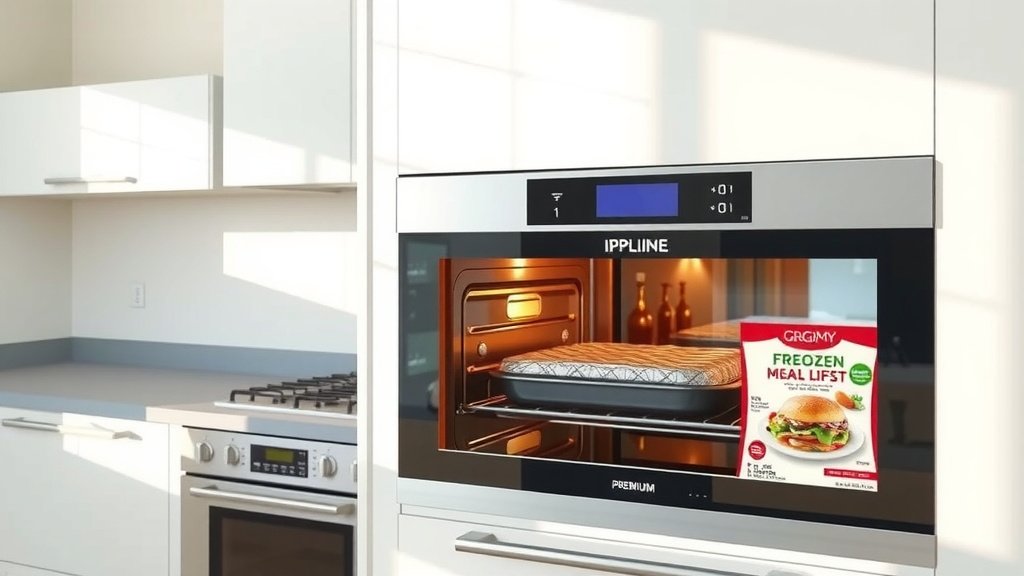
To cook frozen meals in an infrared oven, preheat the oven as per package instructions and typically reduce the cooking time by 20-30% due to the efficient, direct heat. Place food on the middle rack or in an oven-safe dish.
Always use a food thermometer to ensure the frozen meal reaches a safe internal temperature of 165°F (74°C) before serving.
- Infrared ovens cook frozen meals faster and more evenly than traditional ovens.
- Always preheat your oven and check package instructions for initial guidance.
- Expect to reduce cook times by 20-30% compared to conventional oven directions.
- Use oven-safe bakeware and allow space for proper heat circulation.
- Verify food safety by checking internal temperatures with a thermometer.
How To Cook Frozen Meals In Infrared Oven?
Cooking frozen meals in an infrared oven uses direct radiant heat. This results in faster and more even cooking than traditional ovens.
You can achieve crispier textures and better overall results with simple adjustments. Are you ready to transform your frozen meal experience?
The Infrared Oven Edge: Faster, Better Frozen Meals
Infrared ovens feature special elements emitting radiant energy, directly heating food like sunlight. This process is very efficient, cooking food without just warming the air.
Many experts say this direct heat significantly cuts cooking times and ensures consistent browning (USDA Food Safety and Inspection Service). It’s ideal for quickly achieving delicious results.
Essential Setup: Reading Instructions and Preheating
Before any cooking begins, proper preparation is vital for safety and taste. Getting your oven and meal ready sets you up for success.
Don’t skip these simple first steps. They ensure your meal cooks perfectly from the start.
Always review the frozen meal’s package for its conventional oven temperature and time. This provides your initial cooking baseline.
Knowing the manufacturer’s recommendations prevents guesswork and guides your adjustments. It is the smartest way to begin.
Preheating is crucial for even cooking and proper browning. It ensures your infrared oven is at the target temperature before food enters.
A properly preheated oven guarantees consistent and quick results every time. Manufacturers often recommend 5-10 minutes.
Bakeware Selection and Optimal Placement
Using the right bakeware and placing food correctly maximizes the infrared heat’s efficiency. Wrong choices can lead to unevenly cooked food.
Give your frozen meal the best chance to cook perfectly. Proper positioning truly matters.
Always use dishes labeled “oven-safe,” such as glass, ceramic, or metal. These materials are built to withstand direct heat.
Avoid any plastic containers unless specifically marked for oven use. Always check for oven compatibility symbols on your dishes.
For crispy items like pizzas, place them directly on the middle oven rack. Dishes in bakeware should also go on the middle rack for balanced heat exposure.
Avoid placing food too close to the heating elements. This can cause uneven, rapid cooking on some parts.
Mastering Cooking Time Adjustments
The speed of infrared cooking means you must adjust package suggested times. Your oven cooks much faster!
Embrace this efficiency; you’ll enjoy meals quicker. How much time will you save today?
As a general rule, shorten the package’s conventional cooking time by 20-30%. For example, a 30-minute bake might need only 20-24 minutes.
Start with the reduced time, then check for doneness. You can always add a few more minutes if necessary.
Usually, you do not need to change the temperature setting itself. The infrared oven’s powerful, direct heat handles cooking efficiently.
Stick to the temperature listed on the food package. Adjusting time is the primary modification for infrared cooking.
Specific Tips for Popular Frozen Foods
Different frozen foods benefit from tailored approaches. Knowing these nuances helps achieve ideal results.
Let’s explore how to get your favorites just right. Say goodbye to soggy surprises!
For a crispy crust, place frozen pizzas directly on the middle rack. Reduce cooking time by about 25% for a golden, bubbly finish.
Watch the cheese closely to prevent burning. You want perfectly melted, not scorched edges.
Initially cover casseroles and baked dishes with foil for even heating. Remove the foil during the last 10-15 minutes for browning.
This ensures the center cooks without drying the top. Confirm internal temperatures for safety (Cleveland Clinic).
Spread items like frozen fries or tater tots in a single layer on a baking sheet. This maximizes crispiness.
Expect significantly faster cooking and a much more satisfying crunch. Infrared heat makes these snacks shine.
Roast frozen vegetables in a single layer on a baking sheet. Infrared heat often creates lovely caramelized edges, enhancing flavor.
They cook very quickly, so check frequently. Aim for tender-crisp vegetables, never mushy ones.
Monitoring and Food Safety
Fast cooking means attentive monitoring is crucial. Overcooking ruins meals, and undercooking can be unsafe.
Visual checks are a start, but a thermometer ensures safety. Your health is important!
For dishes with meat, poultry, or eggs, a food thermometer is non-negotiable. Confirm it reaches a safe 165°F (74°C) internal temperature.
Insert the thermometer into the thickest part, avoiding bones. This guarantees safety and provides peace of mind (FoodSafety.gov).
Avoiding Common Cooking Mistakes
Even seasoned cooks can make errors. Knowing these pitfalls helps you avoid them, ensuring great results.
A little foresight prevents cooking mishaps. Keep your kitchen routine smooth and enjoyable.
- Overcrowding the Oven: Heat needs space to circulate freely. Cook in batches if your oven seems too full for even results.
- Ignoring Package Basics: While adjusting time, always follow the package’s temperature and bakeware advice.
- Using Unsafe Materials: Only use bakeware specifically rated as oven-safe. Non-rated plastics can melt and cause issues.
- Skipping Preheat: A cold oven leads to unevenly cooked food. Always allow it to reach the correct temperature before starting.
Infrared vs. Conventional Oven: A Quick Look
Let’s quickly compare how your infrared oven performs against a traditional one for frozen foods. It’s about making smart cooking choices.
Understanding these differences helps you utilize your oven’s strengths. Work smarter, not harder, in the kitchen.
| Feature | Infrared Oven | Conventional Oven |
|---|---|---|
| Heat Source | Direct radiant energy | Heated air circulation |
| Cooking Speed | Much faster (20-30% less) | Standard, longer times |
| Food Texture | Crispier exteriors, often moist inside | Evenly cooked, less exterior crisp |
| Energy Use | Generally more energy-efficient | Can use more energy over longer cooks |
Your Quick-Start Checklist
Here’s a concise checklist for consistently perfect frozen meals. Keep these steps in mind for hassle-free cooking!
This simple guide ensures your frozen meal comes out great every time. You’re becoming an infrared expert, aren’t you?
- Review frozen meal package instructions.
- Always preheat your infrared oven.
- Select appropriate oven-safe bakeware.
- Place food on the middle rack.
- Reduce recommended cooking time by 20-30%.
- Confirm internal temperature with a thermometer.
Conclusion
Your infrared oven makes cooking frozen meals incredibly efficient and delicious. By understanding its direct heating and making simple time adjustments, you’ll achieve consistent, high-quality results.
Always preheat, adjust cooking times, and prioritize food safety. Your infrared oven is a fantastic tool for quick, perfectly cooked meals, simplifying your kitchen life considerably.
FAQs About Cooking Frozen Meals in Infrared Ovens
Can I use aluminum foil in an infrared oven?
Yes, aluminum foil is generally safe in an infrared oven. It is helpful for covering dishes to prevent excessive browning or to keep food moist. Just ensure the foil doesn’t touch the heating elements directly.
Do I need to defrost frozen meals before cooking them in an infrared oven?
No, defrosting frozen meals is typically unnecessary. Infrared ovens are designed to cook efficiently from a frozen state, often yielding better textures and faster results than if defrosted first.
Why does my infrared oven cook faster than a conventional one?
Infrared ovens cook faster due to direct radiant heat transfer. They send energy directly into the food, cooking it from both inside and out simultaneously. This method significantly reduces overall cooking time compared to conventional, air-heating methods.
What temperature should I set my infrared oven for frozen meals?
You should generally set your infrared oven to the temperature recommended on the frozen meal’s package. While you’ll reduce cooking time, the suggested temperature is usually the ideal heat level. Focus on adjusting time, not temperature.
Is an infrared oven healthier for cooking frozen meals?
The cooking technology itself doesn’t inherently make food healthier. However, its efficiency and ability to crisp foods might reduce the need for added oils or fats. This could contribute to a healthier meal, depending largely on the frozen meal’s original ingredients.
