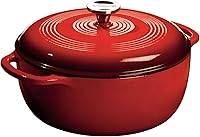
Why Is It Called a Dutch Oven?
A Dutch oven is called a Dutch oven because the name is commonly traced to Dutch metalworkers and an iron-casting method they helped popularize. The cookware is a heavy, lidded pot suited to slow cooking and baking.
On this page (6 sections)
A Dutch oven is called a Dutch oven because the name is commonly traced to Dutch metalworkers and an iron-casting method they helped popularize. Today, the term usually means a heavy pot with a close-fitting lid, often made from cast iron.
The name doesn't mean every Dutch oven comes from the Netherlands. It points to a history often connected with Dutch metalworking, though the full story has a few competing explanations.
Why is it called a Dutch oven?
The name is commonly linked to Dutch metalworkers and their cast-iron pots. In the early 18th century, English inventor Abraham Darby visited the Netherlands, observed a method for casting pots in sand molds, and later adapted a similar process in England.
Darby's casting method made it possible to produce iron cookware with smoother surfaces. The method and the pots became associated with the Dutch, which is the explanation most often given for the name.
The exact naming path isn't certain. Historical accounts connect the term to both Dutch-made cookware and the casting technique, so it's safer to describe the Dutch connection as the leading explanation than as a settled fact.
Did the Dutch invent Dutch ovens?
The Dutch are strongly associated with the name's history, but that doesn't mean they invented every pot now called a Dutch oven. Covered cooking pots have existed in different forms and places for a long time.
The name may have spread as Dutch metalworkers' casting methods became known beyond the Netherlands. Over time, it came to describe a style of cooking pot, not just cookware from one country.
What does “Dutch” refer to in the name?
“Dutch” most likely refers to Dutch metalworking and casting traditions. It doesn't tell you where a particular pot was made or who manufactured it.
That distinction still matters when shopping. Focus on the pot's material, lid, size, and intended cooking surfaces, rather than assuming its name identifies its country of origin.
What is a Dutch oven used for today?
A Dutch oven is used for slow cooking, simmering, braising, roasting, and baking. Its heavy body helps retain heat, while a lid helps hold in moisture during covered cooking.
Cast-iron versions can be used on a stovetop and in an oven when the manufacturer allows it. Some models also work over a grill or campfire, but check the specific care and use instructions for your pot.
The Lodge Cast Iron Double Dutch Oven pairs a cast-iron pot with a lid that also works as a skillet, giving you two cooking pieces in one.
Enameled Dutch ovens add a smooth coating over the cast iron. The Lodge Essential Enamel Cast Iron Dutch Oven is a 6-quart pot with dual handles, designed for stovetop use and oven cooking up to 500°F.
A braiser is related cookware with a different shape and purpose. The Lodge Essential Enamel Cast Iron Braiser has a 3.6-quart capacity and a moisture-locking lid for braising, baking, broiling, or roasting.
How is a Dutch oven different from other covered pots?
A Dutch oven is usually deeper than a braiser and built for larger batches or more liquid. A braiser has a wider, shallower shape that suits browning and cooking food in a smaller amount of liquid.
A roaster is generally designed to hold larger cuts of meat or poultry. For a closer look at their uses, compare a Dutch oven vs roaster.
If you're deciding between low, wide cookware and a deeper pot, see the Dutch oven vs braiser comparison. To understand which features matter when you choose a pot, read what makes a good Dutch oven.
Does the name tell you how to choose one?
No, the name tells you little about a specific pot's size, coating, or care needs. Check those details and confirm that the cookware suits your stove, oven, and cooking habits.
For a first pot, start with the Best Dutch Oven For Beginners guide. If your cooking space is a toaster oven, check whether a Dutch oven can go in a toaster oven and compare the pot's dimensions with the oven interior.
A cast-iron Dutch oven isn't suitable for microwave use. See whether you can use a Dutch oven in a microwave for the material and appliance considerations.
What should you remember about the Dutch oven name?
The name is commonly connected to Dutch metalworkers and a casting method, though its exact origin isn't certain. It doesn't mean every Dutch oven was made in the Netherlands.
Choose cookware by its shape, material, capacity, and care instructions. For an enameled oval option, compare the best Le Creuset oval Dutch ovens.
If you want a deeper, versatile pot for covered cooking, start with how to choose a Dutch oven; if a lower pan better suits your meals, compare it with a braiser.
Frequently asked questions
Why is it called a Dutch oven?
The name is commonly linked to Dutch metalworkers who used sand molds to cast iron cookware. English inventor Abraham Darby later adapted a similar method after seeing it in the Netherlands, helping spread the name for heavy, lidded iron pots.
Historians differ on the precise path from that process to the cookware name.
Did the Dutch invent the Dutch oven?
Dutch metalworkers are associated with the casting method that helped popularize the name, but that does not prove they invented every form of heavy, lidded cooking pot. Similar pots existed in different places, and the name's exact history is not fully settled.
Is a Dutch oven from the Netherlands?
Not necessarily. Dutch oven is a cookware name, and pots sold under that name are made by brands in different countries.
The term is commonly tied to Dutch metalworking and a casting method, rather than being a guarantee that a specific pot was made in the Netherlands.
What makes cookware a Dutch oven?
A Dutch oven is generally a sturdy pot with a close-fitting lid, used for cooking on a stovetop or in an oven. Many are made from cast iron, including enameled versions.
Shapes and materials vary, so check a pot's construction and intended use before choosing it.