Dutch Oven vs Braiser: Which Should You Choose? (November 2026)
Choose a Dutch oven for deeper soups, stews and baking, or choose a braiser for wide searing and shallow, even cooking. Your usual recipes, storage space and lifting comfort should decide between them.
On this page (9 sections)
- Dutch oven vs braiser: which shape works better?
- What can you cook in each vessel?
- How much capacity do you need?
- Which material and construction suit your kitchen?
- Which Dutch oven is the better match?
- How should you care for either vessel?
- Can a braiser replace a Dutch oven?
- Do these vessels work in small ovens or microwaves?
- Dutch oven vs braiser: what is the final choice?
Choose a Dutch oven for deeper soups, stews and baking, or choose a braiser for wide searing and shallow, even cooking. The Dutch oven vs braiser choice depends on the meals you make, the capacity you need and how much weight you want to handle.
For another vessel comparison, see casserole dish vs Dutch oven.
A Dutch oven usually has taller sides and a deeper body. That shape holds more liquid for chili, soup, stew and boiling, while also supporting bread baking and covered oven cooking.
For a bread-specific comparison, see bread oven vs Dutch oven.
A braiser usually has a broad base and lower sides. That layout gives ingredients more room to spread out for searing before you add liquid and cover the pan.
The best choice is not based on the name alone. Some cookware combines both designs, such as the HexClad 5-quart hybrid braiser Dutch oven in this comparison.
 Best for classic Dutch oven cooking
Lodge Essential Enamel Cast Iron Dutch Oven
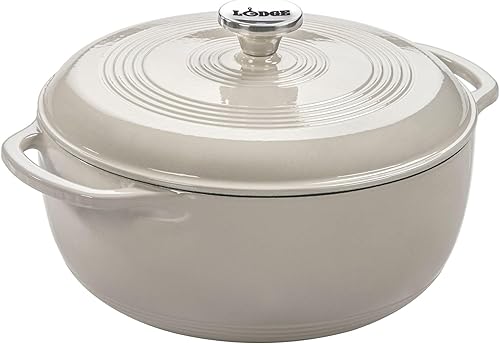 Best for a light kitchen look
Lodge Essential Enamel Cast Iron Dutch Oven
Dutch oven vs braiser: which shape works better?
Choose the deeper Dutch oven for liquid-heavy meals, or choose the wider braiser for surface contact and shallow cooking. The shape changes how much food you can spread out, stack and stir.
A Dutch oven has taller walls and a deeper body for broth, sauce and bubbling food. That depth gives ingredients room to shrink, such as greens, vegetables and large cuts of meat, without pushing liquid over the side.
A braiser has a broad base and lower sides for easier reach with tongs or a spatula. You can spread food in one layer across the base, which helps when browning before a slow braise.
Think about your usual stir. A deep pot can be awkward if you need to turn pieces often near the bottom.
A shallow pan can be awkward if a recipe starts to boil and needs headroom.
Think about searing in batches. A wide braiser gives several pieces direct contact with the base at once.
A Dutch oven can sear well, but you may need smaller batches to keep the base from crowding.
Think about liquid level. A Dutch oven suits soup, chili and stew where liquid covers ingredients for much of the cooking time.
A braiser suits a shallow braise where liquid sits lower and evaporation plays a bigger role.
Think about baking and oven work. A taller Dutch oven leaves more room for dough, vegetables and roasts to cook under a lid.
A braiser can still bake and roast, but stacked food may cook less evenly.
Think about serving. A braiser can look neat on a table when food sits in a broad layer.
A Dutch oven can also go to the table, especially when you want a deeper, more family style presentation.
Neither shape wins for every recipe. A deep Dutch oven can make a good braise, and a braiser can handle stews if its capacity suits the batch.
Consider storage and lifting as part of the choice. Taller pots need more vertical space and can feel harder to empty safely when full.
Wider pans need shelf width and may be easier to reach into with tools.
Consider set up for the recipe you make most. If that starts with browning across a wide surface, a braiser may save you time.
If that starts with simmering a full pot of liquid, a Dutch oven may save you stress.
Your cooktop and oven size also matter. A wide braiser needs a burner or rack that fits its base well.
A deep Dutch oven needs headroom and a door opening that clears its height and handles.
Choose based on the meal in front of you, not the label alone. The right shape makes stirring, browning and covering easier from the first step to the last.
What can you cook in each vessel?
Use a Dutch oven for soups, stews, bread and large braises, or use a braiser for seared meat, shallow braises and one-pan meals. Both vessels can move from stovetop cooking to the oven when the exact model allows it.
Dutch ovens suit recipes that need more depth and liquid. You can brown ingredients, add stock or sauce, cover the pot and continue cooking without transferring food to another dish.
Braisers suit recipes where browning and arrangement matter. Chicken pieces, vegetables and other ingredients can sit across the base before liquid is added for a covered finish.
The cooking method matters as much as the vessel. A pot that is too shallow may overflow, while a deep pot may leave too little surface area for even browning.
For broader guidance on what makes a good Dutch oven, see our guide to choosing a Dutch oven. It covers the features that matter beyond the word printed on the label.
Which is better for soups and stews?
A Dutch oven is usually the better choice for soups and stews because its depth holds more liquid and ingredients. The 6-quart Lodge models suit medium to large family meals, while the 7.5-quart JANSKA model gives you more room for batch cooking.
The Lodge Essential Enamel Cast Iron Dutch Oven in Island Spice Red has a 6-quart capacity. Its enameled cast iron construction supports heat retention, and it is oven safe up to 500°F.
The Oyster White Lodge version also holds 6 quarts and is oven safe up to 500°F. The difference between these 2 options is mainly the color and the listed dimensions and weight, not the cooking role.
The JANSKA MUELLER HOME model holds 7.5 quarts. Its self-basting lid makes it a practical match for longer covered cooking when you want more capacity.
Which is better for searing?
A braiser is usually better for searing several pieces because its lower, wider shape gives food more room. A Dutch oven still works well when you sear in batches and avoid crowding the base.
The HexClad 5QT Hybrid Nonstick Braiser Dutch Oven has a 5-quart capacity and weighs 3 pounds. Its aluminum core is designed for quicker, even heating, and its hybrid surface combines stainless steel with ceramic coating.
That lighter construction may appeal if you often lift cookware from the stovetop to the oven. It is compatible with all cooktops, including induction.
HexClad gives an oven rating of up to 900°F for the cookware with a stainless steel lid. A tempered glass lid is rated up to 400°F, so check which lid type you use before choosing a high-temperature recipe.
How much capacity do you need?
Choose 5 quarts for smaller braises, 6 quarts for everyday versatility and 7.5 quarts for larger batches. Capacity should match the amount of food you cook without leaving the vessel difficult to store or lift.
The HexClad model is the smallest option here at 5 quarts. It gives you a broad braiser-style format, but it has less room than the Lodge and JANSKA Dutch ovens.
Both Lodge models hold 6 quarts. That size is a useful middle ground for soups, stews, braises and baking without moving to the largest vessel in this comparison.
The JANSKA model holds 7.5 quarts and measures 12.2 x 12.2 x 7.7 inches. Choose it when you regularly cook large batches and have enough cabinet space for a 15.5-pound pot.
Measure your storage shelf, oven interior and sink before choosing a large cast iron vessel. A pot can fit the cooking job but still be awkward to store, wash or move.
Which material and construction suit your kitchen?
Choose enameled cast iron for heat retention and a deep, traditional Dutch oven feel, or choose the HexClad hybrid construction for lighter handling and quicker heating. Each option changes how the vessel feels during daily use.
The Lodge models use enameled cast iron with cast iron lids. Their enamel finish avoids the need to maintain bare cast iron seasoning, and the cookware is suitable for marinating, cooking, refrigerating and serving.
The JANSKA model also uses enameled cast iron and has an enameled cast iron lid with a stainless steel knob. Its glossy enamel finish and self-basting lid support covered cooking.
The HexClad model uses aluminum, ceramic and stainless steel. Its tri-ply construction has an aluminum core, while the hybrid surface is designed for searing and easier cleaning.
If you are comparing other Dutch oven designs, our Dutch oven vs double Dutch oven comparison explains how lid shape changes handling and cooking options.
Which Dutch oven is the better match?
Pick the 6-quart Lodge Island Spice Red model for a classic everyday Dutch oven, or choose the Oyster White version if its color better suits your kitchen. Both are deep, enameled cast iron options with a 500°F oven rating.
The Island Spice Red model weighs 13.5 pounds and has a 6-quart capacity. Its round body, dual handles and enameled finish suit cooks who want one pot for simmering, braising, baking and serving.
The Oyster White model also holds 6 quarts and has the same broad cooking role. It weighs 14.9 pounds, so the color choice comes with a slightly different listed weight.
Both Lodge pots are stovetop compatible and oven safe up to 500°F. That range suits gas, electric, ceramic and induction cooktops, plus oven work for braises and baking.
The enamel surface is made to stand up to acidic ingredients and will not react with food. You can marinate, cook, refrigerate and serve in the same pot without needing to season bare cast iron.
The moisture-sealing lid and dual handles help with covered cooking on the stove or in the oven. They also make it easier to move the pot from heat to table when the contents are hot.
Care is simple but worth doing right. Hand washing with warm, soapy water and a nylon scrub brush is recommended, even though the pots are dishwasher safe.
Let the pot cool before washing and dry it before storing. That habit helps protect the enamel and keeps the finish looking clean for daily use.
Both Lodge pots are stovetop compatible and oven safe up to 500°F. Hand washing with warm, soapy water and a nylon scrub brush is recommended to keep the enamel in good condition.
How should you care for either vessel?
Let cookware cool before washing, use the care method for the exact model and avoid treating a heavy vessel as disposable kitchen gear. Enameled cast iron and hybrid cookware still need sensible handling.
The Lodge models are dishwasher safe, but hand washing is recommended. Use warm, soapy water and a nylon scrub brush, then dry the pot before storing it.
The JANSKA model is dishwasher safe and is also recommended for hand washing with warm water and mild detergent. Let it cool first to reduce the risk of thermal shock.
HexClad describes the hybrid cookware as dishwasher friendly and safe for metal utensils. Even so, follow the care directions for the exact lid and avoid assuming that every part has the same oven rating.
Leave enough room to grip the handles safely. A full Dutch oven can become difficult to move, especially when it contains hot liquid.
Can a braiser replace a Dutch oven?
A braiser can replace a Dutch oven for searing, shallow braises and smaller meals, but it is less suitable when you need deep liquid or extra capacity. The right substitute depends on what you cook most often.
Choose a braiser if your meals begin with browning meat or vegetables across a broad base. It can also suit recipes where you want to serve food directly from a low, wide vessel.
Choose a Dutch oven if you make soup, chili, bread, deep-fried foods or large stews. Its taller walls help contain liquid and give ingredients more room to simmer.
A hybrid vessel can narrow the gap. The HexClad model combines “braiser” and “Dutch oven” in its name, but its 5-quart capacity and lower format still point toward lighter braising rather than the deepest batch cooking.
Do these vessels work in small ovens or microwaves?
Check the oven cavity and the cookware instructions before use, and never assume cast iron belongs in a microwave. Size, material, handles and lid construction all affect safe placement.
The Lodge models are oven safe up to 500°F. The JANSKA model is also oven safe up to 500°F, while the HexClad cookware has different lid ratings depending on whether the lid is stainless steel or tempered glass.
For appliance fit, compare the vessel's outside dimensions with the oven rack and door opening. Our guide on using a Dutch oven in a toaster oven covers the clearance questions to check first.
A microwave is a separate safety question because metal cookware should not be placed inside it. Read whether a Dutch oven can go in a microwave before trying to reheat food in the vessel.
Dutch oven vs braiser: what is the final choice?
Choose a Dutch oven if you want depth, capacity and broad recipe coverage. Choose a braiser if you value a wide searing surface, shallow cooking and lighter handling.
The Lodge 6-quart models are the balanced choices for everyday Dutch oven cooking. The JANSKA 7.5-quart model fits larger batches, while the HexClad 5-quart hybrid braiser suits cooks who want a lighter vessel for searing and covered meals.
If your next recipes are mostly soups, chili, bread and deep stews, choose the Dutch oven shape. If they begin with browning meat in a broad layer and finish with a shallow braise, choose the braiser shape.
For another cookware comparison, see our guide to Dutch oven vs roaster. If you want pressure cooking instead of traditional stovetop and oven cooking, compare the trade-offs in Dutch oven vs Instant Pot.
Frequently asked questions
What is the main difference between a Dutch oven and a braiser?
A Dutch oven is deeper and better suited to soups, stews, bread and large batches. A braiser is wider and shallower, so it gives food more surface area for searing and lets ingredients sit in a single layer.
Both can handle covered oven cooking.
Can a Dutch oven replace a braiser?
A Dutch oven can replace a braiser for many recipes, especially covered braises, stews and slow cooking. Its greater depth is useful for liquid-heavy meals, but its narrower cooking surface may make it harder to sear many pieces at once.
Is a braiser better for searing meat?
A braiser is often the easier shape for searing because its wide base gives meat more contact with the cooking surface. A Dutch oven can also sear well, but its deeper sides may give you less open surface for arranging several pieces.
Which is easier to lift, a Dutch oven or a braiser?
A lighter braiser is generally easier to lift, but check the exact model and lid together. The HexClad option here weighs 3 pounds, while the Lodge Dutch ovens weigh 13.5 and 14.9 pounds and the JANSKA model weighs 15.5 pounds.


