How to Choose a Dutch Oven
A good Dutch oven has heat-retaining construction, a well-fitting lid, secure handles and a size that matches your meals. Choose bare cast iron for seasoning and outdoor flexibility, or enamel for easier care and acidic foods.
On this page (9 sections)
- What makes a good Dutch oven?
- Is bare cast iron or enamel better?
- How important are the lid and handles?
- Which Dutch oven size fits your meals?
- What can you cook in a Dutch oven?
- Can you use a Dutch oven in a toaster oven?
- How should you care for a Dutch oven?
- What else should you check before buying?
- Which Dutch oven should you choose?
A good Dutch oven has heat-retaining cast iron, a secure lid, manageable handles and the right capacity for your cooking routine. Those traits work together during long, slow recipes, not just during the first few minutes on the stove.
Choose bare cast iron for seasoning and outdoor flexibility, or enamel for a smooth surface and easier care. Neither finish is automatically better, and the right pick depends on the foods you cook most often.
Bare cast iron suits cooks who want a traditional oil-seasoned surface. It can move from the stovetop or oven to a grill or campfire, which gives it a wider range of cooking locations.
Enamel suits cooks who want a smooth, non-seasoned finish. It handles acidic foods in a practical way and can feel simpler to wash after simmered sauces, braises, and tomato-based meals.
The best choice also depends on shape. A deep Dutch oven suits soups, stews and bread, while a wider braiser gives more surface area for browning and serving.
Depth matters when liquid needs room to bubble without spilling. A shallower pan matters when you want food spread out in a single layer before liquid is added.
Capacity, lid fit, and handle design should be checked together. A pot that looks right on paper may still be awkward to lift, store, or stir if those details do not match your kitchen.
Start with your usual recipes and batch size. That simple step makes the rest of the comparison clearer and helps you avoid buying a pot that is too small, too large, or too heavy for daily use.
What makes a good Dutch oven?
A good Dutch oven balances construction, lid fit, handles, capacity and cooking compatibility. These features affect how evenly food cooks, how easily you move the pot and which recipes fit comfortably.
Cast iron is valued for heat retention. It takes time to heat, but it can help maintain a steady cooking temperature during simmering, braising and baking.
A lid should sit securely and help hold moisture inside the pot. A moisture-locking lid is useful for stews, braises and other recipes where evaporation can dry the food.
Handles matter because cast iron is heavy, especially after you add food. Wide side handles or a loop handle can give you more control, but you still need oven mitts and a clear path to the counter.
Capacity should match your normal batch size. A pot that is too small can crowd ingredients, while a much larger pot may take more space and feel harder to handle.
Is bare cast iron or enamel better?
Bare cast iron suits cooks who want seasoning and outdoor flexibility, while enamel suits cooks who want a smooth surface without seasoning. Both can retain heat well when used with appropriate heat and care.
Bare cast iron uses an oil-seasoned surface. It can move from an oven or stovetop to a grill or campfire, which makes it useful for indoor cooking, outdoor cooking and bread baking.
Enamel creates a smooth surface over cast iron. It does not require seasoning and is useful when your recipes include acidic ingredients, such as tomato-based sauces.
Enamel can also make serving easier because the finish adds color and does not need the same seasoning routine. Hand washing is still a practical choice for protecting cookware over time.
For a closer comparison of cooking shapes, read our guide to Dutch oven vs braiser. If you are choosing a wider pan for browning, our Dutch oven vs roaster comparison covers another useful distinction.
How important are the lid and handles?
The lid should sit securely, and the handles should give you a balanced grip when the pot is full. These details matter during long cooking, oven transfers and serving.
A cast iron lid helps retain heat and hold moisture inside the pot during braising, stewing and slow simmering. A loose lid lets steam escape and can change that cooking environment.
For bread, a close-fitting lid helps keep moisture around the dough during the early part of baking. The pot holds heat while the lid creates a covered environment.
You will lift the lid often to stir, check progress or add ingredients. It should feel manageable when hot and easy to place back on the pot.
Handles should be large enough for your oven mitts. Small handles make a heavy pot harder to control, even when the pot itself is well made.
Dual assist handles make a wide pan easier to carry with both hands. That design spreads the load when moving from stove to oven.
A loop handle can support lifting a deeper pot. Use both hands and keep the pot close to your body for better control.
Do not judge a handle only by its shape. Think about the pot weight, the distance to your oven and whether you normally serve from the cookware.
A full Dutch oven is much heavier than an empty one. Food, liquid and the lid all add weight, so carrying distance matters.
Clear the path before you lift the pot. Move trivets, towels and utensils out of the way so you do not need to rush or twist.
If the pot goes straight to the table, the handles need to feel secure for a short, careful transfer. Store it where you can lift from a lower shelf without reaching overhead.
Practice with the empty pot first if you are new to cast iron. That helps you learn the balance and grip before adding a full batch.
Which Dutch oven size fits your meals?
Choose a size that leaves room for stirring, bubbling and ingredient expansion. Capacity alone does not determine how many servings you will make because the shape and recipe also matter.
A 4.75-liter pot can suit smaller batches, soups, stews and bread. A 6-quart Dutch oven gives more room for larger meals, braising and batch cooking.
Measure your storage shelf and oven before choosing. Include the lid and handles in your planning, then consider whether you can lift the full pot safely.
The products below show three different approaches. The first is a 2-in-1 bare cast iron design, the second is a wide enamel braiser and the third is a deeper 6-quart enamel Dutch oven.
Lodge Cast Iron Double Dutch Oven
The Lodge Cast Iron Double Dutch Oven combines a Dutch oven and dual-handle skillet in one 5-quart design. Its cast iron construction supports heat retention, while the lid can also serve as the skillet.
This option suits buyers who value traditional cast iron and want more than one cooking shape. It can move from an oven or stovetop to a grill or campfire, and its finish uses iron and oil rather than synthetic coatings.
The trade-off is care. It is hand wash only, so it asks for more attention than an enamel pot.
Its 13.1-pound weight also makes the full cookware harder to move than a lighter pan.
Choose it if the skillet conversion and outdoor use matter. For another comparison of related designs, see Dutch oven vs double Dutch oven.
Lodge Essential Enamel Cast Iron Braiser
The Lodge Essential Enamel Cast Iron Braiser is a 3.6-quart Caribbean Blue pan with a moisture-locking lid and dual assist handles. Its wide shape suits broiling, braising, baking and roasting.
This braiser fits buyers who brown food across a broad surface before adding liquid. The heavy cast iron body supports heat retention, while the smooth enamel finish does not need seasoning.
It is described as safe for induction and oven use up to 500°F. Hand washing is recommended, and the pan is 13.5 pounds, so plan where you will store and lift it.
Choose it when surface area matters more than deep capacity. It may not be the best match for large soups or recipes that need substantial vertical room.
Lodge Essential Enamel Cast Iron Dutch Oven
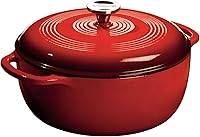
The Lodge Essential Enamel Cast Iron Dutch Oven is a 6-quart Island Spice Red pot designed for braising, roasting, baking, simmering, marinating and refrigerating. Its cast iron body and enamel finish combine heat retention with a smooth cooking surface.
The dual handles help with moving the pot from the stovetop to the oven or table. It is compatible with gas, electric, ceramic and induction cooktops, and it is oven safe up to 500°F.
The 13.5-pound weight is worth considering before you fill it. Hand washing with warm, soapy water and a nylon scrub brush is recommended to keep the enamel in good condition.
Choose it when you want the broadest capacity here and do not need a bare cast iron surface. For pressure-cooking comparisons, read Dutch oven vs Instant Pot.
What can you cook in a Dutch oven?
A Dutch oven works well for soups, stews, braises, roasts, simmered sauces and bread, provided the size and shape fit the recipe. Cast iron's heat retention helps the pot hold a steady temperature during longer cooking.
Deep pots are useful for liquid-heavy meals and large batches. Wider braisers give more contact with the cooking surface, which can help when you need to brown food in a single layer.
Dutch ovens are also useful for baking. If bread is your main use, compare a bread oven vs Dutch oven before choosing cookware.
If bread is your main goal, follow a recipe that matches your pot's size and temperature limits.
Our guide explains how to make no-knead bread in a Dutch oven.
Check the cookware's stated temperature rating before using it in the oven. Also confirm that the lid, handles and finish are suitable for the recipe and temperature.
Can you use a Dutch oven in a toaster oven?
Only use a Dutch oven in a toaster oven if the pot fits with safe clearance and the cookware is rated for that heat source. Measure the oven cavity, rack position and door before trying it.
A toaster oven is not a standard oven in miniature. The walls, heating elements and door sit much closer to the food than in a full-size oven.
A heavy cast iron pot can occupy most of a small oven. Its thick walls and lid take up space that a lighter pan would not need.
The lid may reduce available height. Even if the pot fits below the top element, the lid can sit too close for safe heating.
Handles can affect whether the door closes properly. Wide side handles or a loop handle may bump the door, rack or interior walls.
Do not force the cookware into a tight cavity. A pot that only fits by squeezing past the door or rack is not a safe choice.
Measure the inside width, depth and height before you buy or cook. Include the lid and handles, since those parts often decide whether the pot truly fits.
Check the rack position as well. The pot needs a stable surface, and the rack should not sag or shift under the weight of cast iron.
Leave space around the pot for air to circulate. Tight contact with walls or heating elements can affect cooking and may damage the finish.
Consider whether the recipe needs a toaster oven. Some foods cook better in a full-size oven where the Dutch oven has proper clearance on all sides.
Also check the temperature rating for the specific cookware. A pot that is oven safe in a standard oven should still be checked against the limits for the appliance you plan to use.
Hand washing and careful drying remain important after cooking. Let the pot cool before washing, and avoid sudden temperature changes that could stress the finish.
Read our guide to Can You Use A Dutch Oven In Toaster Oven? before using one in a compact appliance. That guide can help you work through fit, clearance and safety questions before you heat the pot.
How should you care for a Dutch oven?
Care depends on the finish. Hand wash bare cast iron and dry it fully, while enamel benefits from gentle washing and avoiding rough treatment.
For bare cast iron, use the care instructions for the cookware and avoid leaving water on the surface. The Lodge cast iron model here is marked hand wash only.
For enamel, warm soapy water and a nylon scrub brush are recommended for the 6-quart Lodge Dutch oven. Avoid sudden handling changes that could damage the finish, and store the pot where its weight will not strain a shelf.
Never assume every Dutch oven has the same care needs. Check the exact finish, lid material and temperature guidance before using metal tools, a dishwasher or high heat.
If you are comparing slow-cooking appliances instead, see Dutch oven vs Crock-Pot.
What else should you check before buying?
Check weight, storage space, cooking surface, lid design and care instructions before focusing on color or shape. These details affect whether you will use the pot often.
Think about your most common recipe first. A 6-quart enamel Dutch oven is more useful for large soups and family batches, while a 3.6-quart braiser suits wide, shallow cooking.
Consider how you cook outdoors. Bare cast iron may fit that routine better because the Lodge Double Dutch Oven is described for ovens, stovetops, grills and campfires.
Finally, learn the terminology before comparing products. Our guide explains why it is called a Dutch oven, while French oven vs Dutch oven looks at the names and finish differences buyers often see.
Which Dutch oven should you choose?
Choose the Lodge Cast Iron Double Dutch Oven if you want a 2-in-1 pot and skillet with indoor and outdoor flexibility. It is made to work as a Dutch oven and as a dual-handle skillet in one design.
That 2-in-1 shape suits cooks who sear, fry, bake, and simmer. The skillet side gives a different cooking surface, while the pot side gives depth for slower, covered cooking.
Its bare cast iron finish uses iron and oil rather than synthetic coatings. That suits cooks who are comfortable with seasoning and hand washing as part of regular care.
The same design also suits indoor and outdoor cooking. It is described for ovens and stovetops, as well as grills and campfires, which makes it a flexible choice for varied routines.
Pick the Lodge Essential Enamel Cast Iron Braiser if wide surface area and serving from the pan matter most. Its 3.6-quart size and wide shape favour browning food in a single layer.
The braiser also has a moisture-locking lid and dual assist handles. Those details support braising, baking, roasting, and moving the pan from stovetop to oven to table.
Its enamel finish does not need seasoning. That can suit cooks who want a smooth surface and simpler hand washing after everyday meals.
Choose the Lodge Essential Enamel Cast Iron Dutch Oven if you want 6-quart capacity, enamel care and compatibility with gas, electric, ceramic and induction cooktops. The deeper shape gives more room for larger batches and liquid-heavy recipes.
That pot is described for braising, roasting, baking, simmering, marinating, and refrigerating. Its dual handles help with moving it between the stovetop, oven, and table.
The right answer depends on your recipes, storage space and comfort with a heavy pot. Match the finish and shape to your habits first, then choose the size that fits your usual meals.
Frequently asked questions
What makes a good Dutch oven?
A good Dutch oven combines heat-retaining cast iron, a lid that helps hold moisture, handles you can control safely and enough capacity for your usual meals. Choose enamel when you want a smooth surface for acidic foods and simpler care, or traditional cast iron when seasoning and outdoor use matter more.
Is enameled cast iron better than bare cast iron?
Neither is better for every cook. Enameled cast iron gives you a smooth surface that does not need seasoning and suits acidic ingredients, while bare cast iron offers an oil-seasoned cooking surface and broad indoor and outdoor versatility.
Your recipes, cleaning habits and cooking location should decide.
What size Dutch oven should I buy?
Choose capacity by the meals you make most often. A 5-quart pot can suit many everyday batches, while a 6-quart Dutch oven gives more room for larger recipes.
Leave space for stirring and bubbling instead of filling the pot to its rim.
Should a Dutch oven have a heavy lid?
A heavy cast iron lid can help retain heat and moisture during slow cooking, braising and baking. Fit matters as much as weight because gaps let steam escape.
Look for a lid that sits securely and is practical for you to lift when the pot is hot.
Can you use a Dutch oven on an induction cooktop?
Cast iron Dutch ovens can work on induction, but confirm the specific cookware is induction-safe before buying. The Lodge Essential Enamel Cast Iron Dutch Oven is described as compatible with induction, along with gas, electric and ceramic cooktops.