Dutch Oven vs Double Dutch Oven: Which Should You Choose? (October 2026)
Choose a conventional Dutch oven for a covered pot with a separate lid, or a double Dutch oven if you’ll use its skillet lid as a pan. The right fit depends on whether that second cooking surface is useful enough to justify another heavy piece to handle.
On this page (7 sections)
- Dutch oven vs double Dutch oven: what’s the difference?
- When is a skillet lid useful?
- Which style is easier to use every day?
- Is an enamel Dutch oven better than a double Dutch oven?
- Which of these Dutch ovens should you choose?
- What should you check before buying?
- The choice between a Dutch oven and double Dutch oven
Choose a conventional Dutch oven for a covered pot with a separate lid, or a double Dutch oven if you’ll use its skillet lid as a pan. The Dutch oven vs double Dutch oven choice comes down to whether that second cooking surface will earn its space in your kitchen.
A conventional Dutch oven is built around a pot and a lid. For the history behind the term, see why it is called a Dutch oven.
A double Dutch oven adds a lid that can also work as a skillet, so you can use the parts separately for some cooking tasks.
That extra use can be handy, but it also means another heavy piece to lift, wash and store. If you're still deciding what features matter most, start with what makes a good Dutch oven.

Dutch oven vs double Dutch oven: what’s the difference?
A conventional Dutch oven uses its lid as a cover; a double Dutch oven has a lid that also works as a skillet. Both designs give you a covered pot, but only the double style adds a second cooking surface.
The Lodge Cast Iron Double Dutch Oven pairs a cast iron pot with a dual-handle skillet lid. Lodge describes it for searing, baking, frying and cooking on ovens, stovetops, grills and campfires.
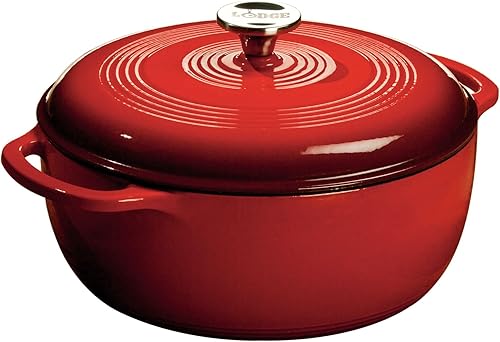
The two Lodge Essential Enamel Dutch Ovens are conventional pots with lids, not skillet lids. They hold 6 qt each and have an enamel coating over cast iron.
The Overmont 5QT Double Dutch Oven has a pre-seasoned cast iron pot and a lid that doubles as a skillet. Overmont describes using that lid for frying eggs, searing steaks and sautéing vegetables.
The word “double” here refers to the dual-use pot and skillet design. It doesn’t mean the pot has twice the capacity or a second pot inside it.
When is a skillet lid useful?
A skillet lid is useful when you’ll cook on it separately, such as for frying or searing. If you mostly use the Dutch oven to simmer or bake with its lid on, that feature may not change how you cook.
One example is browning food on the skillet lid while preparing another part of a meal in the pot. It can also help when you want to move from one cooking surface to another without reaching for a separate pan.
But be realistic about the tasks you repeat. If you already have a skillet you like, or usually cook one thing at a time, the extra surface may get little use.
The skillet lid also needs a safe place to rest when removed. Think about counter space, where you’ll set down a hot lid and how you’ll hold it securely.
Double Dutch oven vs Dutch oven for bread
Either style can serve as a covered cast iron pot for baking, but the skillet lid matters most when you’ll use it as a pan too. Lodge describes its double Dutch oven as suitable for baking bread, and Overmont describes its model for sourdough baking.
For a bread baker who often fries, sears or sautés, the skillet lid may help combine useful cookware. For someone who mainly wants a covered vessel for bread, the conventional design may be enough.
Check the exact care and temperature guidance for your cookware before putting it in the oven. Follow the recipe’s directions for heating, handling and removing a heavy pot.
Which style is easier to use every day?
A conventional Dutch oven is simpler if you want one pot and one lid to manage. A double Dutch oven adds flexibility, but the skillet lid can be awkward if you have limited room or find heavy cookware hard to handle.
Both styles in this comparison are cast iron. The Lodge models weigh 13.1 lb for the double Dutch oven and 13.5 lb for the red enamel Dutch oven; the Overmont weighs 13 lb.
Those weights make handling an important part of the choice. Consider whether you can lift the pot and lid separately, move them from stove to oven, and wash them safely.
The double design doesn’t make cast iron lighter. It changes what you can do with the lid.
What if you want easier cleanup?
Choose a finish based on the care you’re comfortable with. A French oven vs Dutch oven comparison can help explain the enamel terminology.
The Lodge Essential Enamel Dutch Ovens have an enamel coating, while the Lodge Double Dutch Oven and Overmont are described as seasoned or pre-seasoned cast iron.
The enamel Lodge models are described as dishwasher safe, but hand washing with warm, soapy water and a nylon brush is recommended. Their enamel surface stands up to acidic ingredients and doesn’t react with food.
The Overmont is pre-seasoned with vegetable oil. Its care instructions recommend drying it after washing and lightly oiling the inside.
Check the instructions for the exact pot and lid you buy, since the care needs depend on the finish. If you're comparing other cooking methods too, see Dutch oven vs Crock-Pot.
Is an enamel Dutch oven better than a double Dutch oven?
Enamel and double Dutch oven describe different things: enamel is a finish, while double refers to a lid that also works as a skillet. You can compare them by asking whether surface care or a second cooking surface matters more.
The Lodge Essential Enamel models offer a 6 qt pot with an enamel finish. The Island Spice Red and Oyster White versions have the same listed capacity and oven-safe temperature, with different colors.
The Lodge Double Dutch Oven and Overmont are cast iron designs with skillet lids. They suit someone who wants that pan use as part of the set.
A skillet lid doesn’t tell you whether cookware has an enamel finish. Check the exact model details, then decide whether you prefer an enamel-coated surface or a traditional seasoned cast iron surface.
For a separate look at covered pots and broad oven cooking, read Dutch oven vs roaster. If you’re deciding between cookware shapes for braising, see Dutch oven vs braiser.
Which of these Dutch ovens should you choose?
Choose the Lodge Double Dutch Oven if you want the lid to work as a skillet, and choose a Lodge Essential Enamel model if you want a 6 qt enamel pot. The Overmont is another double design for cooks who want a skillet lid and outdoor cooking use.
The Lodge Double Dutch Oven combines a Dutch oven and skillet in one design. Lodge describes it for oven, stovetop, grill and campfire cooking.
The Island Spice Red Lodge Essential Enamel Dutch Oven offers a conventional pot-and-lid setup. Its enamel finish stands up to acidic ingredients, and the pot is oven safe up to 500°F.
Choose this version if its color fits your kitchen better. The enamel pot is stovetop compatible and oven safe up to 500°F.
Overmont describes this double Dutch oven for use in ovens, on gas stoves, grills and campfires. Its skillet lid can be used for frying, searing and sautéing.
What should you check before buying?
Check the capacity, weight, finish and care directions for the exact model. Those details help you judge whether the pot will fit your meals and whether you’ll be comfortable handling it.
Capacity varies among these options: the Lodge double Dutch oven is described as a 5 qt pot, Overmont as a 5.5 qt pot, and both Lodge enamel models as 6 qt. Think about the amount you usually cook rather than choosing by shape alone.
Then consider how the cookware will fit your storage. A double Dutch oven has a lid that can function as a skillet, so plan where both pieces will go when you’re using them separately.
Check whether the model suits your cooking surface and intended use. The enamel Lodge pots are described as compatible with gas, electric, ceramic and induction cooktops; Overmont also describes its cookware for gas and induction stovetops.
If you’re shopping for a separate lid or a covered pot, compare Dutch ovens with lids and lids for enameled Dutch ovens. Check fit and care guidance for the specific cookware you own.
The choice between a Dutch oven and double Dutch oven
Pick a conventional Dutch oven if a fitted lid is all you need, and pick a double Dutch oven if you’ll use the lid as a skillet. For Dutch oven vs double Dutch oven, the better choice is the one that matches how you cook and what you can comfortably lift and store.
The Lodge Double Dutch Oven and Overmont offer the skillet-lid design. The Lodge Essential Enamel models offer a 6 qt enamel pot with a conventional lid.
We score each option based on its specs and features for this comparison. Your best fit depends on whether you value a second cooking surface, an enamel finish or a particular capacity.
Frequently asked questions
What is a double Dutch oven?
A double Dutch oven is a pot with a lid that can also be used as a skillet. The design gives you a covered cooking vessel and a second pan, often with dual handles, in one cookware set.
Check the exact model to confirm how its lid is shaped and what uses its maker describes.
Is a double Dutch oven better than a regular Dutch oven?
A double Dutch oven is better if you’ll use the skillet lid for frying, searing or sautéing. A conventional Dutch oven is simpler if you mainly need a pot and a fitted lid for simmering, braising or baking.
Both styles can be useful for covered cooking.
Can a Dutch oven skillet lid go in the oven?
It depends on the exact cookware and its temperature guidance. The Lodge Double Dutch Oven is described as oven safe, while the Overmont is described for oven use; check the care instructions for your model before heating the lid or skillet.
Does a double Dutch oven need different care?
Care depends on the material and finish. Seasoned cast iron should be dried after washing and lightly oiled, while enamel cookware has a different surface and care guidance.
Follow the instructions for your specific pot, lid and handles.