Dutch Oven vs Crock-Pot: Which Should You Choose? (October 2026)
Choose a Dutch oven for stovetop-to-oven flexibility, or a Crock-Pot for slow cooking while you handle other tasks. Your meal routine and how much attention you can give it matter more than the cooking method alone.
On this page (7 sections)
Choose a Dutch oven for stovetop-to-oven flexibility, or a Crock-Pot for slow cooking while you handle other tasks. The Dutch oven vs Crock-Pot choice depends on whether you want control across cooking steps or a pot designed to work unattended.
A Dutch oven can go from stovetop simmering to oven baking, roasting or braising. For the background behind the cookware's name, read why it is called a Dutch oven.
See how that covered-pot design compares with a double Dutch oven that has a skillet lid. A Crock-Pot is an electric slow cooker with settings for low or high heat and, on this model, a warm function.
Both can suit soups, stews and braised meals, but they fit different routines. If your recipe starts by browning ingredients and moves into the oven, choose the Dutch oven; if you want to set a slow-cooking meal before a busy day, consider the Crock-Pot.

 Best for stovetop-to-oven meals
Lodge Essential Enamel Cast Iron Dutch Oven
Dutch oven vs Crock-Pot: what is the main difference?
A Dutch oven is versatile cookware, while a Crock-Pot is an electric appliance built for slow cooking. The Dutch oven gives you stovetop and oven options, while the slow cooker handles low or high cooking with less attention.
The 6-quart Lodge Essential Enamel Cast Iron Dutch Oven works on the stovetop and is oven safe up to 500°F. Compare it with Le Creuset Dutch ovens if you are considering another enameled option.
Cast iron retains heat, and the enameled surface is suitable for acidic ingredients.
The Crock-Pot 7-Quart Manual Slow Cooker has high and low slow-cooking settings and a warm function. Its removable stoneware can be used in the microwave or an oven up to 400°F, but it isn't designed for stovetop use.
That difference changes the order of your cooking. Brown ingredients on the stove in the Dutch oven, then move it into the oven if the recipe calls for it; the Crock-Pot is for meals that can cook slowly in its stoneware.
Which suits your everyday cooking routine?
Choose the Crock-Pot if you want to start cooking and turn your attention elsewhere; choose the Dutch oven if you prefer to manage the cooking steps. Your schedule can make either method more useful.
The Crock-Pot's manual controls keep the process simple: select high or low, then switch to warm when the food is ready to serve. Crock-Pot describes this model as suitable for cooking while you work or handle daily tasks.
A Dutch oven asks for more involvement. You may need to brown ingredients, stir a stovetop simmer or check the oven according to the recipe.
When does the Crock-Pot make more sense?
The Crock-Pot fits recipes that benefit from a long, steady cook and don't require browning in the same pot first. Its 7-quart capacity can suit larger batches, and the removable stoneware and lid are dishwasher safe.
This can be a practical choice when your day is busy and a meal can cook without frequent intervention. Follow the recipe's directions for filling, timing and safe use.
When does a Dutch oven make more sense?
Choose a Dutch oven when your recipe needs a stovetop start, a change in cooking method or oven heat. The Lodge's 6-quart enameled cast iron body is suitable for simmering, braising, roasting and baking.
Its versatility also helps if you want one pot for more than slow-cooked meals. Learn how French ovens compare with Dutch ovens when comparing cookware names and finishes.
For more on what makes a good Dutch oven, compare capacity, material, care and the kinds of recipes you cook.
Can you use a Dutch oven as a slow cooker?
A Dutch oven can cook a slow-cooked recipe, but it doesn't provide the same set-and-leave routine as an electric slow cooker. Use a stovetop or oven method intended for your recipe, and monitor the cooking as directed.
On the stovetop, keep the heat low and check for steady simmering rather than a hard boil. In the oven, the pot can hold a steady cooking environment, but you'll still need to follow the recipe's temperature and timing.
Don't leave a burner running unattended. If you want to walk away while a meal cooks, the Crock-Pot is the more natural fit.
The reverse comparison also helps clarify the choice: a roaster oven used as a slow cooker is a separate appliance question, with its own controls and operating guidance.
Which is more versatile?
The Dutch oven handles a wider range of cooking steps and recipes. The Crock-Pot is more focused, which can be an advantage if slow-cooked meals are the main job.
Use the Dutch oven for stovetop browning, simmering, braising, roasting and baking. Its enamel coating also supports marinating and refrigerating food, according to the product details.
The Crock-Pot centers on slow cooking and warming. Its removable stoneware can also go in the microwave or an oven up to 400°F, which adds some flexibility for serving and reheating.
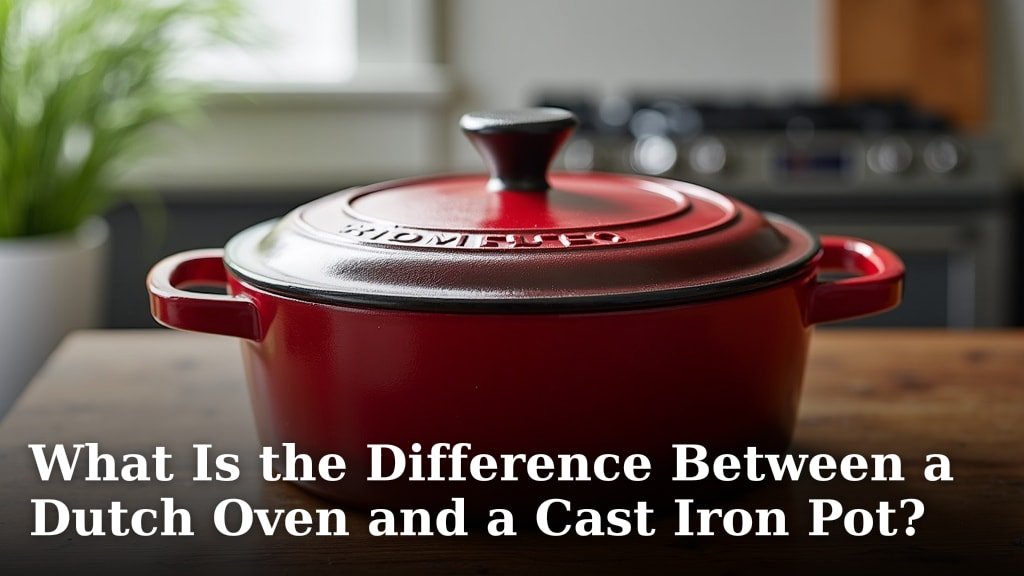
A cast iron pot and a Dutch oven can overlap, but their shape and finish affect how they work in a kitchen. See the difference between a Dutch oven and a cast iron pot if you're deciding between cookware styles.
Which is easier to clean and store?
The Crock-Pot has dishwasher-safe removable parts, while the Dutch oven is heavier cookware that benefits from careful hand washing. Consider cleanup and lifting as part of your everyday use.
The Crock-Pot lid and stoneware are dishwasher safe. Its stainless steel exterior has black accents and practical plastic handles.
The Lodge Dutch oven is dishwasher safe, but hand washing with warm, soapy water and a nylon brush is recommended to help maintain the enamel. Cast iron cookware is heavy: the red version weighs 13.5 lb, and the oyster white version weighs 14.9 lb.
Think about where each piece will live. A Dutch oven needs a sturdy shelf you can reach, while the slow cooker needs cabinet space for the appliance and its cord.
How do the two Lodge Dutch ovens compare?
The red and oyster white Lodge Dutch ovens share the same stated 6-quart capacity and stovetop-to-oven range. Choose between them by finish and the specific model's details.
The Island Spice Red version is oven safe up to 500°F and weighs 13.5 lb. The Oyster White version is also described as oven safe up to 500°F, with a stated weight of 14.9 lb.
Both are enameled cast iron and suit stovetop cooking. Hand washing is recommended for care, even though the pots are described as dishwasher safe.
For single-pot cooking, browse Dutch ovens for one-pot meals. If you want to compare another electric cooker, read Dutch oven vs Instant Pot.
Which should you choose for your meals?
Let your common recipes and available time guide the decision.
Choose the 7-quart Crock-Pot when you want high or low slow cooking and a warm setting for serving. Choose the 6-quart Lodge when you want a pot that can move from the stovetop to the oven for browning, braising or baking.
If your main question is which cookware type fits your kitchen, start with Dutch oven vs roaster. The best choice is the one that matches how you cook on an ordinary weeknight.
Frequently asked questions
Can you use a Dutch oven as a slow cooker?
You can slow-cook in a Dutch oven on the stovetop or in the oven, but it needs more attention than an electric slow cooker. Use a recipe written for the method, keep the heat low, and check the pot and liquid as it cooks; don't leave a stovetop burner unattended.
Is a Crock-Pot the same as a slow cooker?
Crock-Pot is a brand name commonly used for electric slow cookers. The 7-quart manual Crock-Pot here has high and low slow-cooking settings and a warm function, while slow cookers from other brands may have different controls and features.
Which is better for searing meat?
A Dutch oven is the more suitable choice for a recipe that starts with browning on the stovetop, since it is stovetop cookware. This Crock-Pot's removable stoneware can be used in an oven up to 400°F, but its stated features don't include stovetop cooking.
Which is better for cooking while you're away?
A slow cooker is made for cooking while you handle daily tasks, and this Crock-Pot offers high and low settings plus a warm function. A Dutch oven needs more monitoring on a burner or in the oven, so follow the recipe and stay within the method's safety guidance.
What size should you choose for family meals?
Compare the recipe's batch size with the pot's capacity. This Crock-Pot holds 7 quarts, while the Lodge Dutch ovens hold 6 quarts; the Crock-Pot's capacity is larger, but the right choice also depends on whether you need unattended cooking or stovetop-to-oven flexibility.