
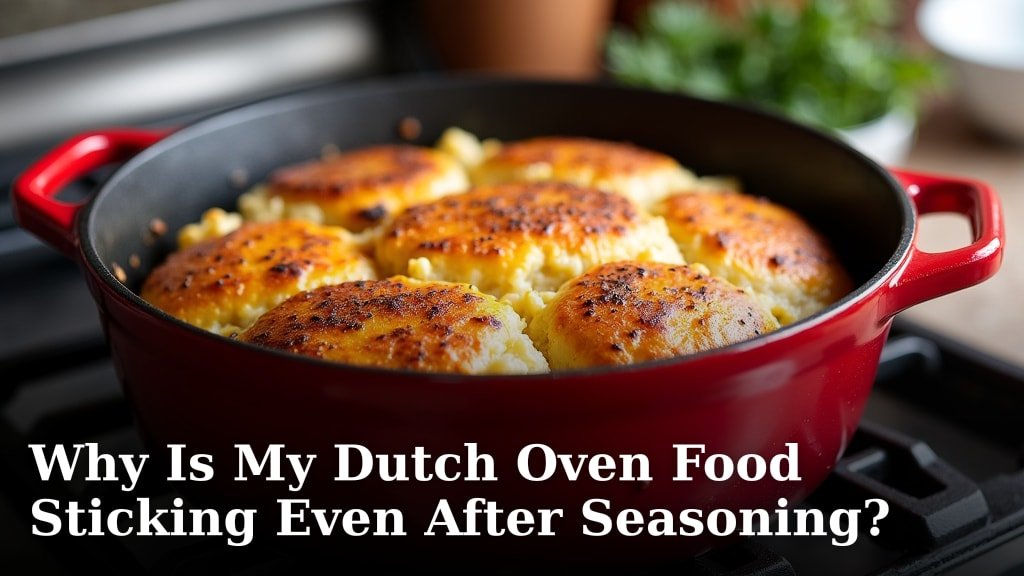
Your Dutch oven is sticking because the seasoning layer isn’t quite right or hasn’t been maintained. This usually happens due to improper heating, not enough oil during seasoning, or harsh cleaning methods. Don’t worry, it’s usually a fixable problem!
Even with proper seasoning, some sticking can occur if the heat is too high or if acidic foods are cooked for long periods without care. You might also be accidentally stripping away that hard-earned seasoning with the wrong cleaning tools. We’ve found that consistent, gentle care is key to preventing this headache. Your beloved Dutch oven can be non-stick again with a little attention.
- Seasoning Issues: The most common cause is an incomplete or damaged seasoning layer.
- Incorrect Heat: Cooking too hot can cause food to stick, even on seasoned cast iron.
- Harsh Cleaning: Scrubbing too hard or using abrasive cleaners can remove seasoning.
- Food Type: Very acidic foods can sometimes break down seasoning over time.
Let’s walk through exactly why this might be happening and how to get your Dutch oven back to its non-stick glory.
Troubleshooting Your Sticking Dutch Oven Issues
It’s frustrating when your Dutch oven sticks. You’ve seasoned it, you think you’re doing everything right, but your food still ends up glued to the bottom. Don’t despair! This is a common problem with cast iron, and usually, there’s a simple fix. We’ve looked into why this happens, and it often boils down to a few key areas: the seasoning itself, how you’re heating it, and how you’re cleaning it.
Let’s break down the most common culprits behind that sticking food. We want to get you back to happy, non-stick cooking as soon as possible.
The Science Behind Your Seasoning: Why It Matters
Seasoning isn’t just a fancy word for cooking in a pot. It’s a protective layer that forms on your cast iron. This layer is made of polymerized oils. When oil heats up beyond its smoke point, it transforms into a hard, plastic-like coating. This coating fills in the microscopic pores of the cast iron.
Think of it like a non-stick pan, but one you build yourself. A good seasoning layer prevents food from touching the raw iron. It creates a smooth, slippery surface. If this layer is weak, incomplete, or damaged, food will find spots to cling to.
Is Your Seasoning Layer Truly Ready?
One of the biggest reasons for sticking is that the seasoning layer just isn’t robust enough. This can happen if you rush the seasoning process. You need multiple thin coats of oil, baked at a specific temperature for a set time. Each coat builds upon the last. This can happen if you rush the seasoning process; our guide explains how to season a cast iron Dutch oven for the first time.
We found that many home cooks might apply oil but not heat it long enough. The oil needs to reach its smoke point to polymerize properly. If it cools down before it truly changes, you just have greasy cast iron, not seasoned cast iron.
Signs of Weak or Incomplete Seasoning
How can you tell if your seasoning is the issue? Look for a few tell-tale signs. Is your Dutch oven dull or patchy in spots? Does it look uneven, with some areas shinier than others? These are indicators that the polymerization didn’t happen uniformly. It means you have areas where food is more likely to stick.
Also, consider how old your Dutch oven is. If it’s brand new, it might need a few more rounds of seasoning. If it’s old but suddenly started sticking, something may have damaged the existing layer. We’ll cover those causes next.
How Heat Affects Your Seasoning
Even a perfectly seasoned Dutch oven can develop sticking issues if you don’t manage the heat correctly. Cast iron holds heat exceptionally well. This is great for even cooking, but it also means it can get very hot, very quickly.
Cooking at excessively high temperatures is a primary reason for food sticking, even on well-seasoned cast iron. High heat can break down the polymerized oil layer. It essentially burns off the seasoning, leaving food to bond with the metal. Many experts suggest using medium heat for most cooking in cast iron.
The Danger of Too Much Heat
Imagine throwing a delicate piece of fish into a smoking hot pan. It’s going to stick. Your Dutch oven is similar. When the pan is too hot, the proteins in your food seize up and bond to the surface before they can cook through and release. This is true for searing meats as well as cooking vegetables.
We recommend preheating your Dutch oven gradually. Start on low heat and slowly increase it. This allows the metal to expand evenly. It also gives you better control over the final cooking temperature. Always let your Dutch oven reach the desired temperature before adding food. This often means 5-10 minutes on medium-low heat.
The Role of Oil and Fat During Cooking
Seasoning is the foundation, but the oil or fat you use during cooking acts as the lubricant. It’s the final barrier between your food and the seasoned surface. Not using enough fat is a simple but common reason for sticking.
When you’re searing, sautéing, or frying, a visible layer of fat is necessary. This fat fills in any microscopic imperfections and keeps food from making direct contact with the cast iron. You might think you’re saving calories by using less oil, but in cast iron, it can lead to a sticking nightmare.
Choosing the Right Cooking Fat
Some fats are better than others. Fats with a high smoke point are ideal. These include:
- Avocado oil
- Grapeseed oil
- Vegetable oil
- Lard
- Butter (though it can burn at high heat, so use with care or mixed with other oils)
We found that a good rule of thumb is to use enough oil so that the food is lightly coated. For searing, you want enough oil that it shimmers but doesn’t smoke excessively. If you’re cooking something that releases its own fat, like bacon or fatty cuts of meat, you might need less added fat initially.
Cleaning: The Silent Seasoning Killer
How you clean your Dutch oven can be just as important as how you season it. Harsh cleaning methods are notorious for stripping away that hard-earned seasoning. It’s like going backward after all your efforts.
Cast iron is not dishwasher safe. The harsh detergents and prolonged moisture will corrode the metal and destroy the seasoning. Even hand-washing can be problematic if you’re not careful. Cast iron is not dishwasher safe, and our guide explains why you can’t put a Dutch oven in the dishwasher.
What NOT to Do When Cleaning
Avoid these common cleaning mistakes:
- Metal scrub brushes: These are too abrasive and will scratch off the seasoning.
- Steel wool: Similar to metal brushes, it’s too harsh.
- Abrasive cleaners: Think scouring powders or harsh dish soaps. They can break down the polymerized oil.
- Soaking: Leaving your Dutch oven to soak in water can lead to rust and weaken the seasoning.
- Dishwasher: As mentioned, this is a definite no-no.
We found that many people use a bit too much elbow grease with stiff brushes, thinking it will get it cleaner. But with cast iron, gentleness is key to maintaining its non-stick properties.
The Right Way to Clean Your Dutch Oven
After cooking, let your Dutch oven cool down slightly. It should be warm, but not scorching hot. This makes cleaning easier and safer.
Here’s a generally accepted method:
- Scrape out food bits: Use a wooden spoon or a plastic scraper to remove any large food particles.
- Rinse with hot water: Use hot water and a soft sponge or a nylon brush. For stubborn bits, a gentle scrub is usually enough.
- Use a tiny bit of mild soap (if needed): Modern dish soaps are much milder than they used to be. A drop or two of mild dish soap is generally okay for well-seasoned cast iron, according to many cooking guides. It helps remove greasy residue.
- Rinse thoroughly: Make sure all soap residue is gone.
- Dry immediately and completely: This is critical. Use a towel to dry it thoroughly. Then, place it on a low heat burner for a few minutes to ensure all moisture evaporates.
- Apply a thin layer of oil: While still warm, rub a very thin layer of cooking oil all over the inside surface. Wipe off any excess. This protects against rust and helps maintain the seasoning.
This routine ensures your seasoning stays intact and your Dutch oven is ready for its next use. We’ve found this method works wonders for preserving the pan’s integrity.
Food Types That Can Challenge Seasoning
While a well-seasoned Dutch oven should handle most foods, some types can be more challenging. Highly acidic foods are the main culprits here.
Things like tomatoes, wine sauces, citrus juices, and vinegars are acidic. When cooked for extended periods, these acids can slowly break down the polymerized oil layer. This is especially true for newer or less robust seasoning.
Acids and Cast Iron: A Delicate Balance
If you’re making a long-simmering tomato sauce or a coq au vin with wine, you might notice a slight change in your seasoning afterward. This isn’t necessarily a disaster, but it means you’ll want to be extra diligent with cleaning and re-seasoning.
The National Center for Home Food Preservation suggests that cooking acidic foods in cast iron for short periods is generally fine. However, prolonged cooking times can affect the flavor and the seasoning. If you find your food tastes a little metallic after cooking acidic dishes, this is a sign the seasoning might have been compromised.
Managing Acidic Foods Effectively
The key is to minimize the time these acidic foods spend in direct contact with the seasoned surface.
- Cook for shorter periods: If possible, finish cooking acidic dishes in a ceramic or enamel pot.
- Use a thinner layer of seasoning: If you notice sticking with acidic foods, consider giving your Dutch oven an extra layer or two of seasoning.
- Clean promptly: Don’t let acidic foods sit in the pot after cooking.
It’s about understanding the limitations and working with them. For most everyday cooking, your Dutch oven will be more than capable. It’s the long, slow cooks with highly acidic ingredients that require a bit more attention.
Quick Checklist: Get Your Dutch Oven Back on Track
Here’s a quick recap of what to do if your Dutch oven is sticking:
- Assess your seasoning: Is it dull, patchy, or uneven?
- Check your heat: Are you cooking on medium or medium-low heat?
- Use enough cooking fat: Don’t skimp on the oil or butter.
- Clean gently: Avoid abrasive tools and harsh detergents.
- Dry completely: Always towel dry and then heat on low.
- Re-season if needed: Apply a thin coat of oil after cleaning.
By following these steps, you can troubleshoot most sticking issues and restore your Dutch oven’s non-stick performance. It just takes a little know-how and consistent care.
Conclusion
It’s clear that a sticking Dutch oven isn’t usually a sign of a faulty pot, but rather a sign that something in your seasoning or cooking routine needs a little adjustment. We’ve seen that weak seasoning, improper heating, not enough cooking fat, and harsh cleaning are the most common culprits. Don’t get discouraged if you’ve run into this issue! By understanding how cast iron seasoning works and applying these gentle care methods, you can easily restore your Dutch oven’s non-stick performance. Your next step is to carefully assess your current cleaning and heating habits, and be ready to apply a fresh, thin layer of oil after your next wash.
Frequently Asked Questions
Can I use my Dutch oven for acidic foods at all?
Yes, you can use your Dutch oven for acidic foods, but with some caution. Prolonged cooking times for highly acidic ingredients like tomatoes or wine can sometimes affect newer or less robust seasoning. We found that shorter cooking times are generally fine, and prompt cleaning afterward is key.
How often should I re-season my Dutch oven?
You don’t need to re-season your Dutch oven after every single use. If you’re gentle with cleaning and drying, the existing seasoning should last a long time. We recommend re-seasoning if you notice the surface becoming dull, patchy, or if food starts sticking more frequently.
What’s the best way to store my Dutch oven?
Store your Dutch oven in a dry place. Make sure it’s completely dry before putting the lid on. If you store the lid on, placing a paper towel in between can help absorb any residual moisture and prevent rust.
My Dutch oven has rust spots. How do I fix it?
Rust means the protective seasoning layer has worn away. You’ll need to scrub off the rust with steel wool or a stiff brush. Then, clean, dry thoroughly, and immediately re-season the entire pot multiple times to rebuild that protective layer.
Is it okay to use a little dish soap when cleaning?
For well-seasoned cast iron, a tiny amount of mild dish soap is generally okay. We found that modern dish soaps are much gentler than older formulas. It can help remove greasy residue, but always rinse thoroughly and dry immediately afterward.
